
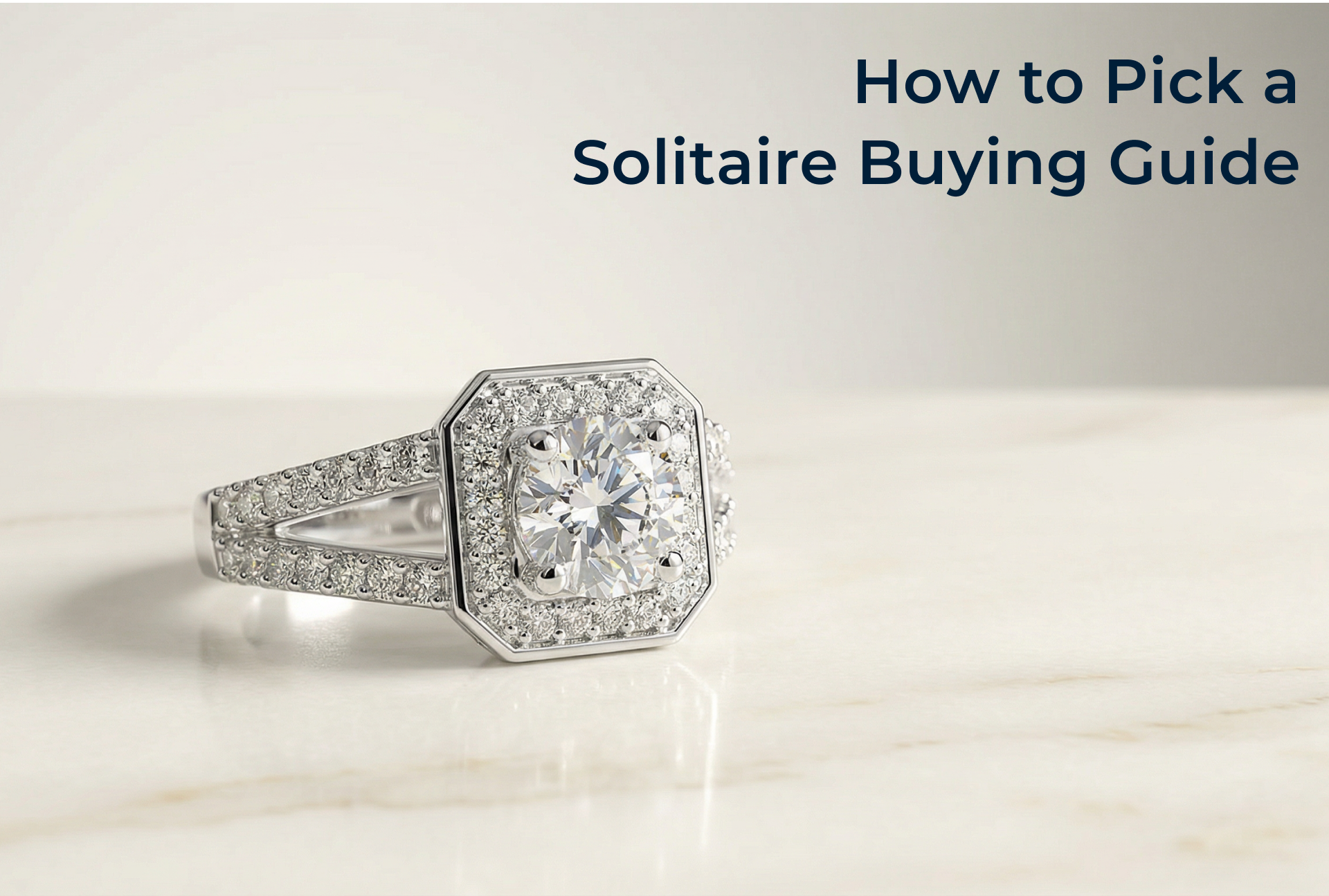
Choosing a solitaire diamond is daunting, particularly if it is for an engagement ring, something so personal. Browsing for the perfect one seems like a never ending array, doubting whether we are making the right decision. But do not worry, we have got you covered with a good solitaire buying guide.
A solitaire is a single diamond placed into a plain band, so the gemstone can truly speak for itself. It is simple yet elegant, looks classy, sophisticated, and frequently used for proposals since it represents chastity and devotion. If you are picking an initial solitaire diamond or refurbished an antique ring, this blog will guide you through selecting a solitaire that is in harmony with your style, price range, and values.
We will take you from a starter to expert advice, from choosing solitaire diamonds in solitaire to deciding which solitaire is ideal for an engagement ring. Once you have done all that, you will be ready to purchase a solitaire diamond which glitters just the way you imagine it.
The 4Cs of Solitaire Diamonds Explained
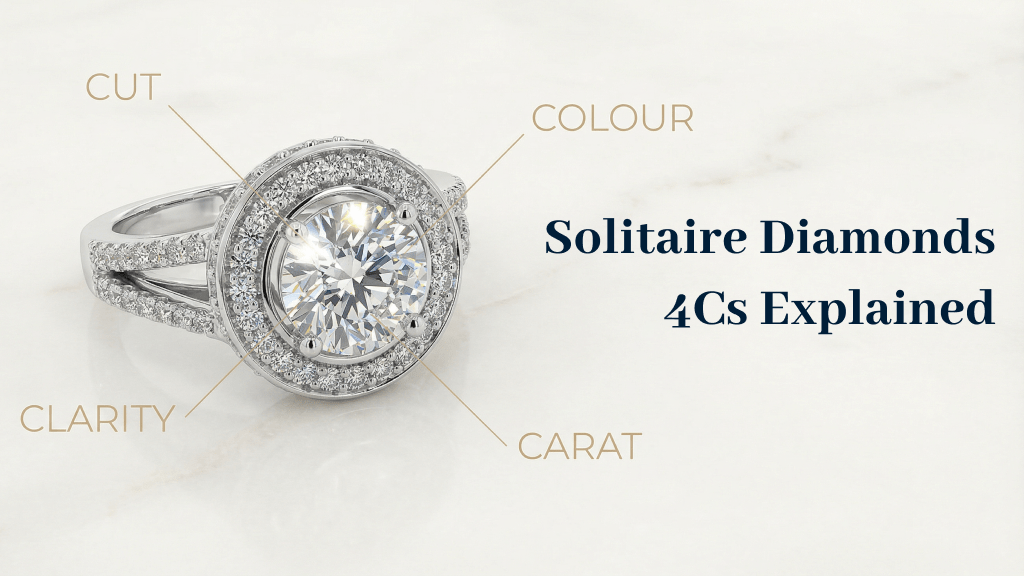
No guide to solitaire rings would be complete without discussing the 4Cs—cut, colour, clarity, and carat weight. They are the standards that are established by organizations such as the GIA, and with them a diamond is defined as being of quality and value. Utilize them as building blocks for how to choose a solitaire ring.
Cut takes precedence, and it is less shape than the efficiency with which the diamond releases light. A well-cut diamond sparkles beautifully, and even a modest-sized stone will be striking. The round brilliant cut is the most ideal solitaire cut for engagement rings because it boasts 58 facets that yield the most fire and brilliance. Steer clear of poor cuts—no matter what else the other attributes, they will make the diamond appear lackluster.
Colour then follows, coloured from D (colourless) to Z (light yellow). Virtually everyone prefers near-colourless or better to maintain that icy appearance. Remember, setting the diamond in yellow gold can hide faint hues.
Clarity gauges inclusions (internal flaws) and external imperfections. Flawless (uncommon and expensive) through Included (obvious to the naked eye). VS1 or VS2 clarity is a good compromise for solitaires—imperfections are small and do not take away from beauty.
Last but not least, carat weight is all about size, yet size is not everything. The biggest may not be the best. A 1-carat diamond can also be brighter than a 2-carat when the other Cs are better. You get that effect with balance in single diamond purchasing tips: invest more in cut and clarity than in pure size.
Knowing these prevents you from falling into traps. Take your time—it’s worth it.
Buying Solitaire: Pre-Purchase Checklist
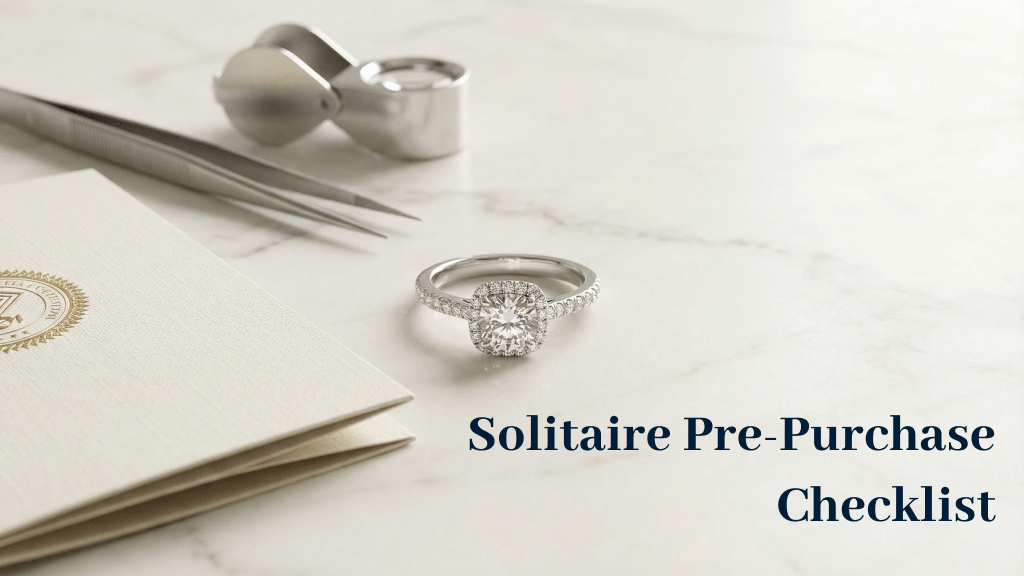
In addition to the 4Cs, practical advice on diamond shopping for solitaire buying is out there. Begin with a budget; solitaires can cost at approximately ₹16,600–₹4,150,000 in Indian Rupees, depending on quality.
Certification is not negotiable. Always demand a GIA or IGI report—it guarantees the diamond’s specs and safeguards against replicas. Check that the laser engraving on the girdle lines up with the cert number.
Also think about the setting, and the surroundings. Prong settings (four or six) are timeless for solitaires, allowing light to strike the diamond from all sides. Choose a metal to suit your lifestyle—platinum for strength, gold for coziness. Do not forget about fluorescence. Certain diamonds fluoresce when exposed to UV light, which can make lower colours appear better but will cloud high-colour stones.
Ethical diamond procurement is more critical than ever. Insist on conflict-free diamonds. And always compare prices among several jewelers.
How to Buy Solitaire Diamond Online

Online shopping provides a universe of possibilities for buying solitaire diamonds online, but wisely. Reputable sites such as BlueStone provide zooming and 360-degree views so that you may examine virtually.
Find sites with free shipping, return, and resizing policies. Search for reviews and safe payments. Find sites with GIA-certified stones.
A pro move: use their diamond search tools to filter by 4Cs and price. But if possible, visit a local jeweler first to get a feel for sizes.
Online can save 20-40% compared to brick-and-mortar, but verify the seller’s credentials. With these steps, buying online feels safe and smart.
Colourless vs. Near-colourless: Which to Choose?

When selecting a solitaire diamond, colour plays an important role in both appearance and price. Colourless diamonds with D-F grades possess no yellow tint, offering crystalline brilliance. Near-colourless (G-J) possess nuanced warmth, particularly in larger diameters, but are less expensive.
Let’s illustrate. An E-colour diamond is about as white as the driven snow, best suited to platinum setting where any colour tinge would show. A 1-carat E-colour round solitaire in yellow gold, for example, appears completely clear.
F-colour is colourless too, quite close to E but perhaps less expensive. A 3.20-carat F-colour oval solitaire, for example, provides wonderful fire without additional cost.
G-colour is on the brink of near-colourless, perfect for budget-conscious consumers. It can have soft yellow face-down, but when in a ring setting, it is hard to notice. A loose G-colour diamond demonstrates this balance. For how to choose the perfect solitaire diamond, go colourless if budget is no object; near-colourless saves without sacrificing much fire.
Lab vs. Natural Diamonds: What’s the Difference?
The natural vs lab-created diamond controversy is warming up. They are both actual diamonds, chemically the same, but with different histories.
Natural diamonds develop over billions of years below the ground, the scarcity driving the high price. Emotionally, they are gems of earth but with a price of mining troubles. Lab-grown take weeks to grow at HPHT or CVD processes, 30-50% less expensive. Pluses: ethical, earth-friendly, bigger sizes for the buck. Minuses: resale lower, since the market is younger. At the end of the day, it is a question of priorities. Both glow beautifully.
In conclusion, selecting a solitaire is all about reconciling the 4Cs, budget, and personal taste.
Frequently Asked Questions
Q1. What solitaire is best for an engagement ring?
A1. A VS clarity, G-H colour round brilliant cut is excellent value and brilliance.
Q2. Tips for buying a solitaire ring on a budget?
A2. Prioritize clarity and cut, select near-colourless, and consider lab-grown for value.
Q3. Are lab diamonds equivalent to natural?
A3. Yes, the same appearance and composition but just less expensive and moral.
Q4. What to check before buying solitaire?
A4. Check the certification, look at it under different lights, and check if the environment is good for your choice.
Q5. Is buying a solitaire diamond on the Internet safe?
A5. Yes, buying a solitaire diamond online can be safe if you take the right precautions like choosing Reputable Retailers,Verify Certification and look for policies.
Related Blogs:
- Diamond Inclusions: What You Need to Know
- Diamond Size Chart: mm vs Carat Comparison
- Diamond Carat Weight: How Size Affects Price
- Diamond Shapes Explained: Round, Princess, Oval & More
- Why GIA or IGI Certification Matters for Indian Buyers
- Diamond Buying Guide 2025: Everything You Need to Know
Leave a Reply