
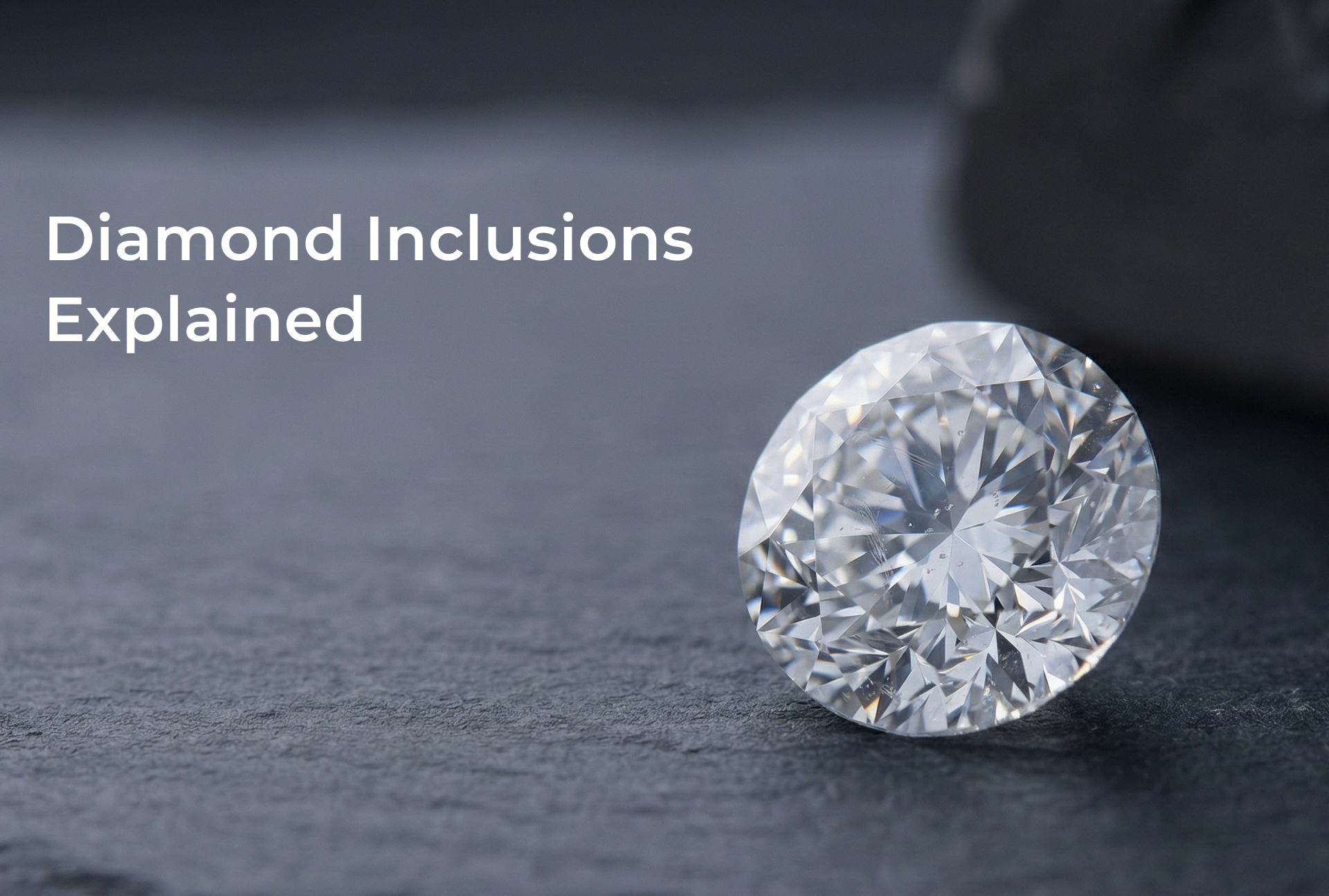
Diamonds are Infamous for being tough and brilliant, but there is no flawless diamond. Trapped in their crystal structure are nature’s own imperfections in the form of inclusions—tiny flaws formed as the diamond was growing deep beneath the Earth’s surface. Diamond inclusions are what help to grade a diamond’s clarity grade, one of the fabled 4Cs (cut, color, clarity, carat). Why? Because inclusions have an impact on the beauty, worth, and even durability of a diamond. Knowing about inclusions guarantees that you are making a sound purchase if you are purchasing one.
We are going to discuss the definition of diamond inclusions, common inclusions, and how they affect a diamond’s brilliance in this blog.
Diamond Inclusions: What Are They?

Diamond inclusions are internal flaws or features that become trapped within the stone while it formed under intense heat and pressure. Diamond inclusions may be filled with minerals, fractures, or even small diamonds inside diamonds.
They are usually microscopic and cannot be observed by the naked eye, but more noticeable or large ones can be observed under magnification or even without it. Inclusions are graded from Flawless (no inclusions) to Included (visible inclusions that can detract from transparency and brilliance). They do not necessarily render a diamond “bad”. Many eye-clean diamonds (those with no visible inclusions) do possess minute inclusions that do not detract from beauty.
Inclusions are formed naturally and are unique to a diamond, just like fingerprints. They can lower the price of a diamond if they interfere with light transmission, but those that are minor tend to be invisible. Gem laboratories like the GIA graph inclusions on reports to show their type, size, and position.
Types of Inclusions
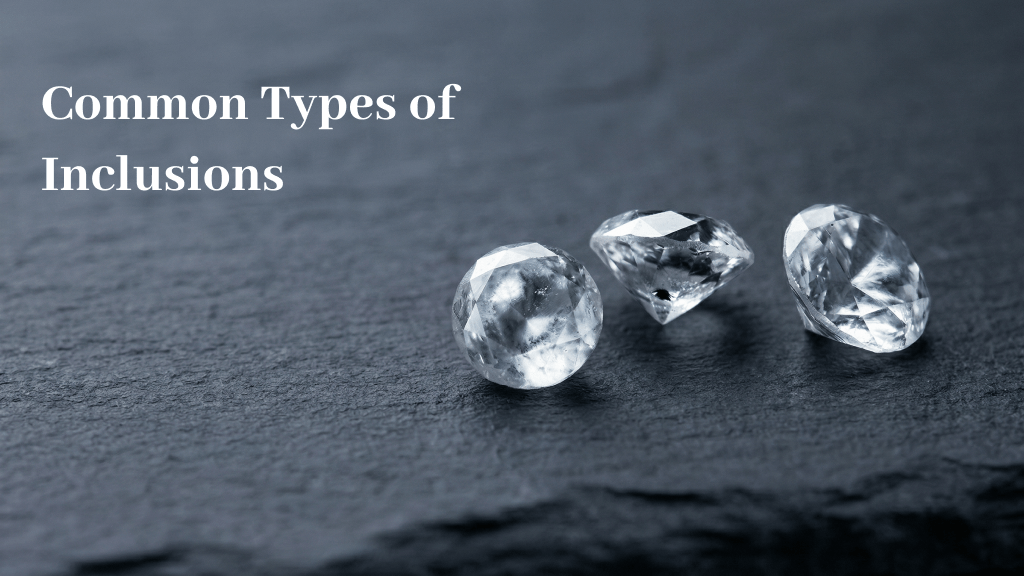
There are several kinds of inclusions, each with its own distinguishing features. Three of the most prevalent ones we will describe here are feathers, crystals, and clouds. These can vary in visibility and impact.
Feather Inclusions
A feather inclusion is a small internal break or crack that appears like a feather with the magnifying glass. White, clear, or shiny based on orientation. Small ones are not a problem and cannot be seen without a loupe, but those of medium size or larger closer to the surface or girdle (edge) can be durability issues, likely to chip the diamond.
- Visibility: Low to moderate; typically only with 10x magnification.
- Durability Concern: More in regions exposed to considerable stress, such as the corners of princess-cut diamonds, or if reaching the surface.
Crystal Inclusions
Small mineral inclusions trapped within the diamond, like garnet or carbon, are referred to as crystal inclusions. They appear as white, black, or coloured spots. White crystals can be less visible, but dark crystals are more noticeable and may even block light reflection if they are in the centre.
- Appearance: White or colourless crystals have a low appearance, while dark crystals have a moderate to high appearance.
- Durability Concern: Typically low, unless it is large or surface-reaching.
Clouds of Pinpoint Inclusions
Clouds of tiny dots, or aggregates of pinpoint inclusions, form clouds, which are milky or foggy patches. They are named because they are hazy, which gives a dense or large diamond a milky appearance.
- Visibility: Moderate visibility, more apparent in lower grade clarities such as SI2.
- Durability Concern: Low, but dense clouds can reduce transparency.
Effects upon Brilliance

The ability of a diamond to return light and create that distinctive sparkle is referred to as brilliance. Through light ray deflection or absorption, inclusions can make this impossible. For instance:
- Feathers: When visible or reflexed, they can impede light courses, restricting scintillation (glitter) and fire (colour flashes).
- Crystals: Black crystals, particularly those lying beneath the table facet, entrap light and generate shadows and opaque areas.
- Clouds: Clusters of dense inclusions scatter light, making it reminiscent of milk or clouds, reducing overall luminance.
These inclusions will not likely decrease brilliance in higher clarity grades (VVS-VS). However, they can reduce the brilliance of the diamond in SI. To find out about the real-world impact, always watch high-definition films or view live; certificates do not explain how light behaves.
Conclusion
Diamond inclusions are a natural part of the one-of-a-kind characteristics of every stone. Even if brilliance and clarity are affected, most diamonds with minor inclusions are stunning and cheaper. For the most value, seek eye-clean stones in VS2-SI1 clarity and always search for pictures or videos that have been zoomed. Steer clear of huge clouds or feathers on the surface if durability is a priority. You can select a diamond that blazes with brilliance without emptying your wallet if you understand the varieties like feathers, crystals, and clouds. Happy hunting!
Frequently Asked Questions About Diamond Inclusions
What are diamond inclusions?
Inherent flaws that developed during the diamond’s formation deep within the Earth are known as diamond inclusions. They could be tiny minerals, fissures, or empty spaces like feathers, clouds, or crystals. They have an impact on a diamond’s clarity grade, which ranges from Flawless (no inclusions) to Included (visible flaw). The majority of inclusions are too small to see with the naked eye, visible only under magnification, and they do not affect value or beauty.
Do inclusions lower brilliance?
Yes, inclusions can lessen brilliance by absorbing or dispersing light. Heavy clouds add haziness, while black crystals cast shadows. Inclusions dull sparkle in SI2 or worse, but the effect is negligible in high clarity grades (VVS-VS). To assess light performance, always look at high-resolution images.
Are all inclusions detrimental to diamonds?
No, most inclusions, especially in VS2-SI1, are not visible to the naked eye and will not affect durability or beauty. They can lower diamond prices without sacrificing fashion.
Is a diamond made weaker by inclusions?
Long feathers near the surface or girdle is only one of a number of inclusions that can compromise durability and render the diamond more susceptible to chipping. Clouds and crystals, except if they are prevalent, do not usually have any effect on toughness.
How do I know if a diamond has inclusions?
All inclusions must be viewed with a jeweler’s loupe or microscope with 10x magnification. High-definition videos exist on the internet from which retailers such as James Allen can be watched examining inclusions. Always do these yourself or view them in person to ensure the diamond looks clean to the eye.
Related Blogs
- What is VVS Clarity in Diamonds?
- Should You Buy SI Diamonds?
- Internally Flawless Diamonds: Are They Worth It?
- Flawless Diamonds: The Pinnacle of Perfection
- What Does ‘Included’ Mean in Diamond Clarity?
- Why GIA or IGI Certification Matters for Indian Buyers
Leave a Reply