
Hi there, diamond lover! If you’ve ever stood in a jewellery shop gazing at a glinting rock, trying to figure out why one diamond appears whiter than the next, you’re not alone. Diamond colour is that stealthy but vital detail which can make or destroy the loveliness and worth of a gem. Here in this guide, we shall explore diamond colour grading in detail from D to Z. Whether you are planning to purchase a diamond ring, enamoured with some stunning diamond earrings, or dreaming of solitaire rings, being informed about diamond colour will help you make a better choice. So let’s Sparkle on!
Why Diamond Colour Matters

Diamond colour describes the presence (or lack) of colour in a diamond. Most diamonds are not completely colourless; they are imbued with faint colours by trace elements such as nitrogen when they form deep within the Earth’s crust. It was the Gemological Institute of America (GIA) who developed the diamond colour grading scale back in the 1950s to make this standard. It goes from D (colourless) up to Z (light yellow or brown). Why begin at D? Well, previous scales had A, B, and C, but GIA simply wanted to begin anew to prevent confusion. This is now the gold standard for grading diamond colour, and it is used internationally.
A higher grade (closer to D) signifies less colour, greater brilliance, and typically a costlier price tag. But here’s where the human element comes in: Not all individuals require a D-grade diamond. A lot of people choose slightly coloured ones that appear perfect to the naked eye without breaking their bank for other pleasures in life, such as a vacation of your dreams.
The Diamond Colour Grading Scale: A Step-by-Step Breakdown
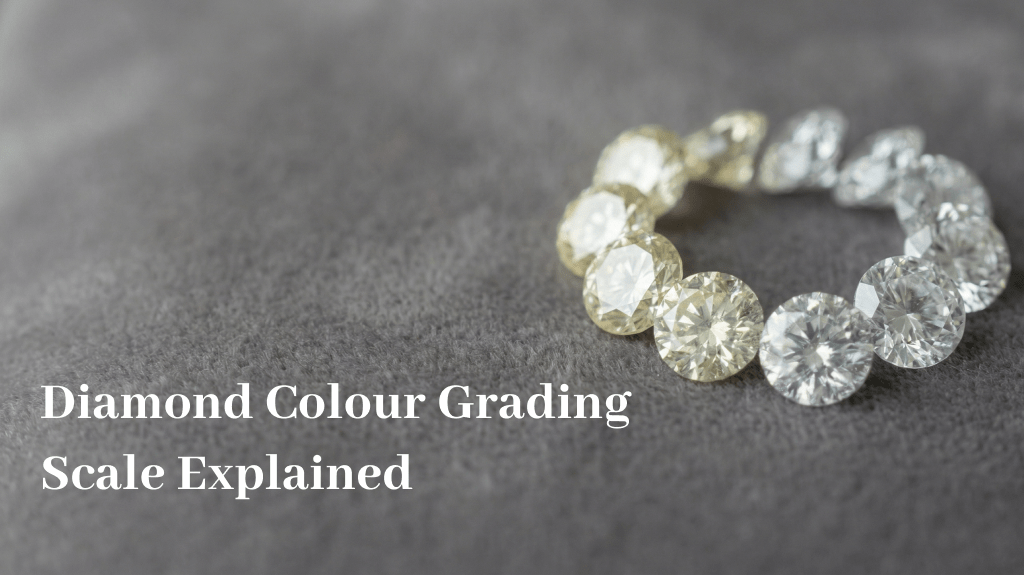
Let’s break down the scale. Diamonds are rated face-down against a white background in controlled lighting to find even the slightest tints. Expert gemologists match them against “master stones” for precision.
Colourless Diamonds (D-F)
These are the crème de la crème. D is completely colourless, such as pure ice. E and F are next, with only the smallest traces of colour that can be detected by specialists. In diamond jewellery, these grades are the brightest because they allow light to pass unimpeded without any interference, spreading sparkle to the maximum. Why go for them? For premium items such as solitaire rings, where everything matters. But seriously, unless you’re a collector or you have no budget constraint, F or D makes little difference to most eyes. Did you know: just around 1% of diamonds that come out of mines are D-colour!
Near Colorless Diamonds (G-J)
This is where value and visibility converge. G and H diamonds have a hint of warmth, but under normal circumstances, such as on diamond earrings, they look white. I and J register a little more colour, particularly in larger stones, but they’re still gorgeous. Most jewellers say G-H is the top colour for diamonds if you’re splitting the difference between quality and price. They’re 20-30% less expensive than D-F but are virtually indistinguishable when set into yellow gold or platinum. I’ve seen many couples choose these for engagement rings and never hesitate, more cash in the wallet for the band or custom etching.
Faint Yellow Diamonds (K-M)
There, the tint becomes apparent, such as a pale champagne colour. K is weak, and M tends towards yellow. These are ideal for vintage-themed diamond jewellery or when you prefer a golden warmth. Don’t overlook them! Set in rose gold, an intentional-looking K-M diamond looks fine. Additionally, they’re affordable! Often 50% less than higher grades. If you prefer distinctive solitaire jewellery, this quality provides character without compromising size.
Very Light Yellow Diamonds (N-R)
Moving into noticeable colour territory, N-R diamonds have a definite yellow or brown hue. They’re frequently used in fashion jewellery or as accents instead of centre stones. For artistic types, these can be a success. Consider diamond earrings with N-colour gemstones and coloured gemstones for a bohemian look. But for traditional engagement items like solitaire rings, you may want to avoid higher hues unless the hue suits your fashion.
Light Yellow Diamonds (S-Z)
At the opposite end of the spectrum, S-Z diamonds display distinct colours. They’re yellow or brown and are generally the cheapest on the colour graph. These sparkle in artistry or factory application, but with fine Diamond Jewellery, they are scarce as centre pieces. Still, fancy yellow diamonds (over Z) are loved by some, graded individually and can command high prices for their rich colours, such as canary yellows on celebrities’ fingers.
Factors That Influence How Diamond Colour Appears

Colour in a diamond isn’t so much a grade thing, it’s how it interacts with other factors. Cut is the most important factor here; well-cut diamonds refract light so that slight tints disappear. Bad cuts? They magnify colour defects.
Setting also counts. White metals such as platinum make tints stand out, while yellow gold hides them. Lighting is also a trickster, fluorescent lighting can make diamonds appear more blue, while incandescent lighting turns them warmer.
Personal advice: Always see diamonds in daylight. And don’t forget, size does matter; big stones reflect more colour, so a 2-carat J may appear warmer than a 1-carat.
Choosing the Best Colour for a Diamond: Tips for Shoppers

So, what’s the ideal colour for a diamond? Well, that depends on you! For the maximum wow value without blowing the budget, opt for G-I. These provide the perfect balance in diamond colour grading, near colourless, high brilliance, and value. Budget less than that? Opt for H-J in solitaire rings. Budget more? Treat yourself to D-F for heirloom-worthy diamond jewellery. If your style is diamond earrings, even K-M can shine if designed sensibly.
Pro tip: Match with clarity and carat. A high-clarity G-colour trumps a blemished D anytime. And always purchase certified, GIA or AGS reports guarantee you’re getting the genuine article.
Beyond White: Fancy Coloured Diamonds
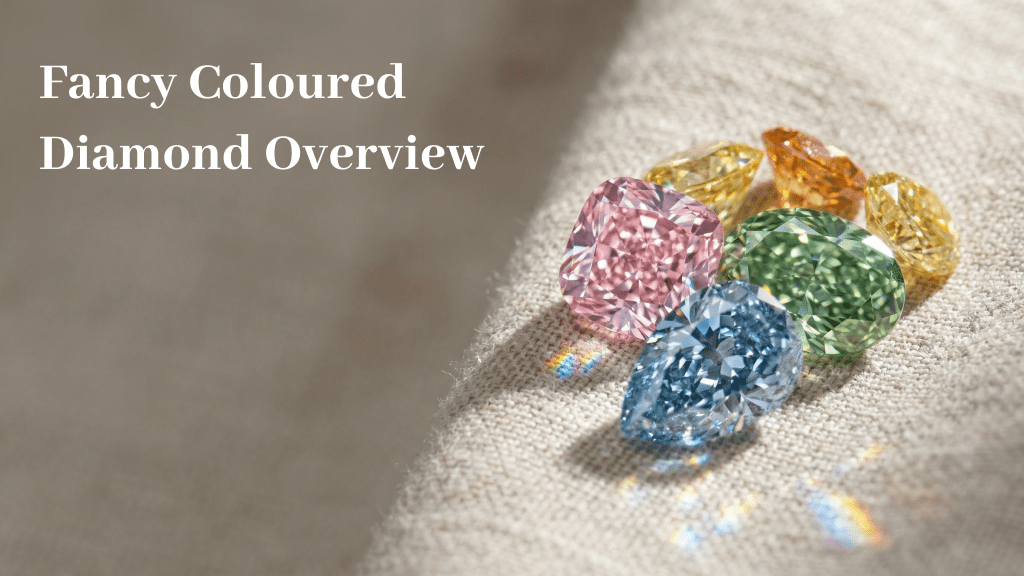
While we’re at it, let’s mention fancy-coloured ones. Those are past Z, in shades like pink, blue, or green, due to special impurities. They’re scarce and expensive, the Hope Diamond is a well-known blue one. Fancy colours have their own grading. If you’re adventurous, a fancy yellow diamond ring could be your statement piece.
Wrapping Up:
Sparkle Smart, knowing diamond colour from D to Z gives you the power to make informed choices. From the crystal brilliance of a D to the rich warmth of a J, every grade has its own role to play in diamond jewellery. Set your sights on what you like best to the eye, within your budget, and that says what you want to tell! Be it by diamond rings, diamond earrings, solitaire rings, or solitaire jewellery. The next time you’re out shopping, you’ll easily know your way around the grades. Happy hunting, and may diamonds always sparkle!
FAQs
What is the diamond colour grading scale?
GIA-created diamond colour grading scale is from D (colourless) to Z (slight yellow or brown). The scale quantifies the absence of tint, and D-F is the most valuable and colourless.
Is D the optimal colour for a diamond?
D is the optimum colour for colourless diamonds, yielding the greatest brilliance. Nevertheless, the optimum colour diamond for you depends on price and choice, most similar to G-H for great value without noticeable tint.
How does diamond colour affect price?
Increased quality (D-F) costs more due to rarity. As you go to G-J, prices decrease without losing good looks. K-Z provides substantial savings but with a more distinguishable tint.
Can a lower colour grade of a diamond be hidden?
Yes! Yellow gold settings can cover subtle tints, and good cuts maximise sparkle to reduce colour visibility. Always check under alternate lights to be sure.
Are fancy coloured diamonds included in the D-Z scale?
No, fancy colours (such as pink or yellow) are graded independently for colour intensity and hue. They’re less common and usually more costly than white diamonds on the D-Z scale.
Related Blogs:
- 10 Facts About Diamonds We Bet You Didn’t Know!
- How to Choose a Solitaire? A Buying Guide
- Diamond Inclusions: What You Need to Know
- Diamond Size Chart: mm vs Carat Comparison
- Diamond Carat Weight: How Size Affects Price
- Diamond Shapes Explained: Round, Princess, Oval & More
- Why GIA or IGI Certification Matters for Indian Buyers
- Diamond Buying Guide 2025: Everything You Need to Know
Leave a Reply