
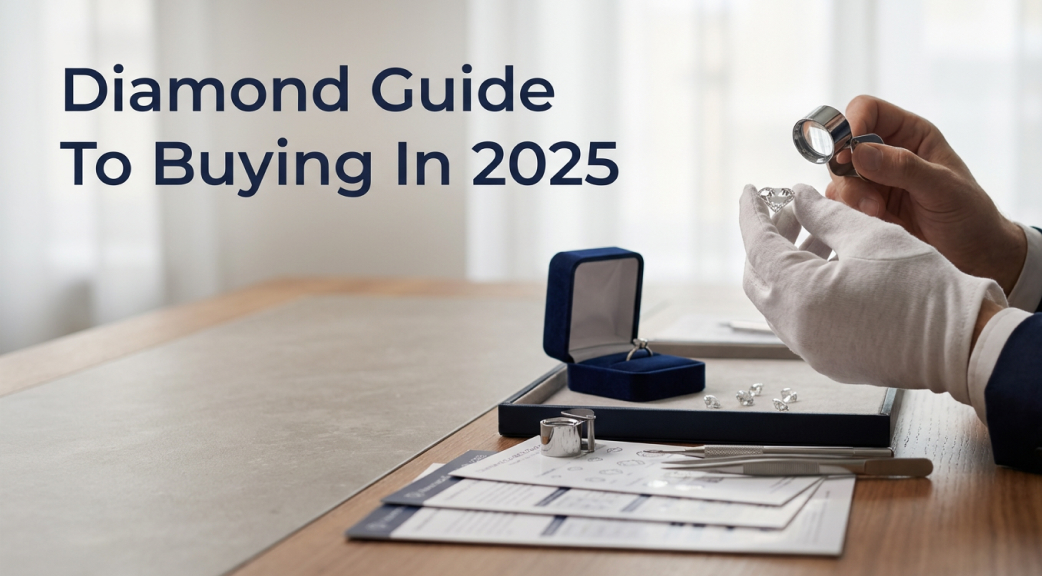
Diamonds have been the ultimate emblem of love, commitment, and expenditure for centuries, yet buying one in 2025 takes more thought than ever. As more demand is made for environmentally friendly alternatives such as laboratory-grown diamonds, volatile world prices, and increasing focus on ethically sourced diamond.
This diamond buying guide will help you to have all the information you will need to make your ideal purchase. Whether purchasing an engagement ring, earrings, or a neckless, investing the time to know how to buy a diamond will be worth it by preserving your money and acquiring a gem that will sparkle for a lifetime.
The diamond trade is also booming in the nation, powered by cultural events such as festivals and weddings. Lab-grown diamonds are the in-thing now since they are cheap and eco-friendly, typically 70-80% cheaper than natural diamonds. Natural diamonds are still in demand since they are scarce
The Indianized 4Cs: Conforming to Local Palates vs. Global Benchmarks

The 4Cs—Carat, Cut, colour, and Clarity—are the world diamond measurement standard, but cultural and market considerations impart a local flavor in India. Indians desire greater carats on status symbols, particularly wedding sets, where expensive stones translate to good fortune.
Carat: Diamond weight, not size
One carat = 200 milligrams.
In India, 1-2 carat stones are more sought after by customers for engagement rings since they are a trade-off between being seen and expensive. For example, a 1-carat diamond would cost anything from ₹1.5 lakhs to ₹7 lakhs depending on quality. Keep in mind, however, that carat does not equal value; a small well-cut stone might be more beautiful than a large imperfect one. Indian consumers will be forced to search for “magic sizes” such as 0.90 carats that are virtually the same as 1 carat but are priced lower because of price floors.
Cut: Which is literally the most significant C, cut is the quality of the way in which the diamond is cut in order to bend light and possess brilliance and fire.
In India, where diamonds are mounted in fancy gold ornaments, a good cut (an Excellent or Very Good grade) is desirable to provide maximum brilliance. Round brilliant cuts are jeweller staples here for traditional solitaires, but fancy shapes such as oval or cushion cut are selected to match current fusion jewellery style. A poor cut will dull an expensive diamond, so check polish and symmetry at all times.
Colour: The diamonds range from D (colourless) to Z (light yellow).
Yellow gold hoops being standard in India, the market, yellow diamonds (G-H) colour grades serve and are affordable since the gold masks pale colours. White diamonds (D-F) are stepped up for white gold or platinum jewellery. Fancy colour diamonds such as pinks and blues are currently fashionable among youth consumers, led by Bollywood stars.
Clarity: It ranges from internal flaws (inclusions) to external flaws (blemishes), from Flawless (FL) to Included (I3).
Indians like VS1-VS2 clarity where inclusions are scarce and are not found with the unaided eye and dictate value and cost. Eye-clean stones are the best option for daily wear, particularly in a tropical climate where dirt would highlight blemishes. Lab diamonds liked by Indians will also be less included, so a wise choice for those that need high-clarity. Always examine the stone in daylight and utilize tools such as loupes.
Certifications: IGI vs. GIA – Authenticity in 2025

No diamond buying guide would be worth reading without mention of certifications guaranteeing 4Cs and origin. Two of the most important labs in India are the Gemological Institute of America (GIA) and the International Gemological Institute (IGI). GIA is best known perhaps for its rigorous, uniform grading, particularly for natural diamonds.
It is world standard, with reports featuring laser inscriptions for traceability. GIA certification is more expensive and time-consuming, however. IGI, having offices in Antwerp but an Indian stronghold, is a popular choice with cultured diamonds because it is less expensive and has quicker turnover. Though IGI grading is as accurate, it is sometimes said to be a shade more lenient on colour and clarity compared to GIA. Use GIA for expensive natural diamonds for resale value in the future for Indian consumers and IGI for imitation or low-quality ones. Never use anything without a lab report.
BIS Hallmark: A Seal of Trust for Indian jewellery

Hallmarking of gold and silver ornaments is mandatorily carried out in India to confirm purity. BIS graded diamond quality since 2008, classifying polished diamonds by cut, colour, clarity, and carat. Although not strictly mandatory in the case of diamonds, hallmarked ornaments confirm authenticity of the metal, a matter of utmost concern while setting diamonds in gold.
Verify your product for BIS logo, purity mark (for example, 916 for 22K gold), jeweler’s mark, and year code. This safeguards against under-marketing and customer trust. Scan and identify hallmarks in real-time using the BIS Care app. With compulsory hallmarking of gold to become operational in 2025, and IGI/GIA certs, twin certification is available.
Step-by-Step Guide to Buy a Diamond

In mind where to purchase a diamond? These are the 2025 steps.
- Budget: Invest 2-3 months’ salary, after-tax like 3% GST in India.
- Online buying: Utilize websites for online try-on.
- Type of selection: Natural for investments, lab-created for ethos
- Go see jewelers: Compare in person; negotiate off-season months such as July-August for a discount.
- Analyze and verify: Under the microscope and get valuations.
- Purchase responsibly: Look for certification to prevent conflict diamonds.
Indian Pricing in 2025: What to Expect
Indian diamond prices are varying depending on type, quality, and region. Natural rounds averaging 1-carat are retailing at ₹3-5 lakhs in 2025 and their lab-grown versions selling at ₹50,000-₹1 lakh.
Taxes are 3% GST, and making charges (5-15%). Prices of lab-grown diamonds are fixed, but natural diamonds will vary with demand. Purchase during Diwali or Akshaya Tritiya to save a discount. Diamonds in India will be more affordable than the USA if of the same quality, but check sources.
Frequently Asked Questions
Q1. What is the best time to purchase diamonds in India?
The best time to purchase diamonds in India is the Holiday season sale price drop in November-January, July-August low-demand sales, off-season.
Q2. Is it worth buying lab-grown diamonds?
Yes, you get the same look, less expensive, ethical, best value for budget shoppers.
Q3. How is IGI different from GIA?
GIA is tougher on naturals whereas IGI is stronger on lab-grown grading.
Q4. What is the BIS Hallmark of diamond?
BIS hallmark ensures metal purity of jewellery and introduces standardization in diamond grading.
Q5. How much does 1 carat diamond cost in India?
1 carat diamond costs ₹1.5-7 lakhs for natural, less for synthetic, depending on 4Cs.
Related Blogs:
- Diamond Inclusions: What You Need to Know
- Diamond Size Chart: mm vs Carat Comparison
- Diamond Carat Weight: How Size Affects Price
- Diamond Shapes Explained: Round, Princess, Oval & More
- Why GIA or IGI Certification Matters for Indian Buyers
Leave a Reply