

You might have come across grading terms like VVS, VS, SI, and I, when you visit a jeweller shop to buy diamonds. But have you ever thought what the grade “I” could mean? The grade “I” in diamond clarity stands for Included, which is one of the lower clarity levels in diamonds.
What exactly does ‘included’ mean in diamond clarity? Is it a wise decision to buy such diamonds? these are some of the questions that might be buzzing in your mind. This blog will help you answer these questions by explaining everything you need to know about I1, I2, and I3 clarity diamonds, their beauty, value, and role in the world of budget friendly jewellery.
What is Diamond Clarity

At first, hearing the term Clarity used in the context of diamonds can be confusing for you. Let’s understand what this term means.
The term Clarity in the context of diamonds is used to refer, how “clean” a diamond looks, both to the naked eye and under magnification.
You might be aware that diamonds are formed deep in the Earth under extreme heat and pressure. So, this natural process often leaves behind tiny inclusions (internal flaws) and blemishes (external marks) in the diamonds during their formation.
Clarity grades are assigned to diamonds based on the number, size, and visibility of these inclusions on the diamond, therefore checking the clarity grade of your diamond while buying becomes an essential task.
If we talk about the GIA clarity scale for diamonds, it ranges from Flawless (FL) to Included (I1, I2, I3), which gives buyers an idea about how clean their diamond looks.
What Does ‘Included’ Mean in Diamond Clarity?
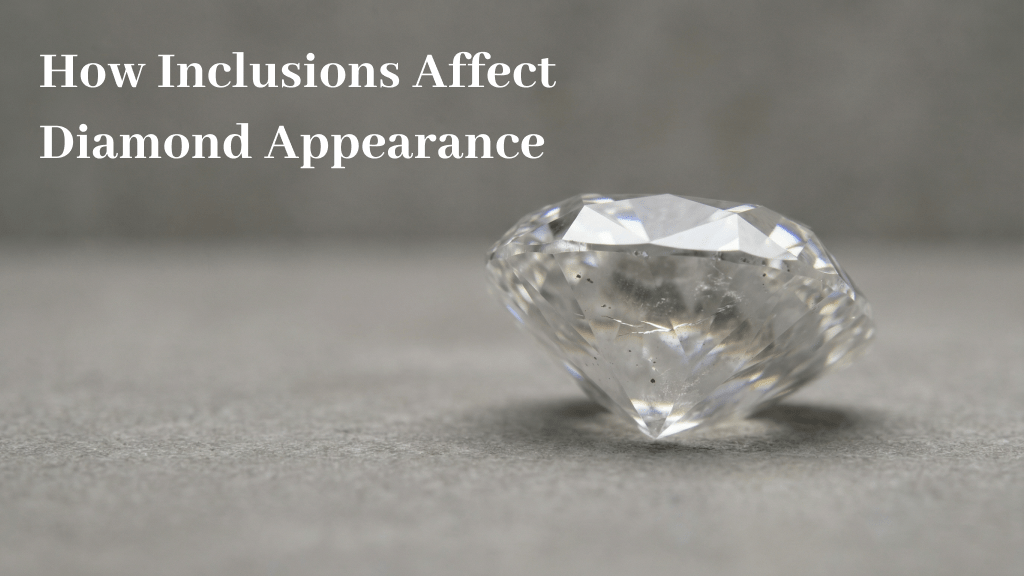
You might be wondering what does the word ‘included’ mean, when we talk about a diamond being graded as Included (I1, I2, or I3).
The inclusions in your diamond are visible under 10x magnification and often noticeable to the naked eye.
The inclusions on your diamond can appear as black spots, cloudy areas, feathers, or cracks inside the diamond.
But remember, the visibility of inclusions directly affects your diamond’s sparkle and transparency.
Types of Included Diamonds: I1, I2, and I3 Clarity

There are three types of included diamonds – I1, I2, I3 clarity diamonds. Knowing the features of each type of diamond can help you make informed and wise decisions, if you are planning to buy included diamonds for yourself.
I1 Clarity Diamonds
I1 clarity diamonds are considered best in the Included category.
If inclusions are small and off to the side, then those I1 diamonds can still appear fairly clean to the naked eye.
I1 clarity diamonds are often used in Diamond Rings where settings can hide inclusions thereby giving you an elegant chic look.
I2 Clarity Diamonds
If we talk about I2 clarity diamonds, the inclusions are very noticeable to the naked eye without magnification.
Inclusions in I2 clarity diamonds may affect brilliance and durability, so make sure you choose this diamond after inspecting it thoroughly.
I2 clarity diamonds are commonly used in fashion jewellery where budget is the priority for many budget-conscious buyers.
I3 Clarity Diamonds
I3 clarity diamonds are the lowest clarity grade you can find in diamonds.
In I3 clarity diamonds, you can spot inclusions very easily with the naked eye, and it can compromise both the beauty and strength of your diamond.
Generally, no one would prefer to buy a diamond which has visible inclusions, but you can find I3 diamonds typically in lower-priced jewellery or small accent stones in Diamond Earrings.
How Do Inclusions Affect a Diamond’s Look?
If your diamond has inclusions, it can affect its overall look and visual appearance, so be careful when you buy diamonds with inclusions. These are the ways in which inclusions can affect your diamond’s look.
- Inclusions can make your diamond look cloudy (less brilliance).
- Your diamonds can appear spotted (black carbon inclusions), if it has inclusions. Such diamonds may not look visually appealing therefore they can spoil your look instead of elevating it.
- You may find cracks (feathers or fractures) in your diamond which has inclusions, so choose your favourite diamond wisely.
Bonus tip: Not all inclusions in your diamond are equally visible to the naked eye. The location, size, and colour of your diamond matter a lot. For example, an inclusion near the edge can be hidden under a prong in a Solitaire Ring, so you can flaunt it confidently.
Why People Still Buy Included Diamonds

In today’s world, people are still buying included diamonds. Yes, you heard it right, even though inclusions are visible to the naked eye in included diamonds, people still buy them. Do you know the reasons? let’s find out:
- Affordability – Included diamonds are significantly cheaper that is why people are buying included diamonds.
- Bigger Size for Less Money – For budget-conscious buyers, included diamonds can be an excellent choice because they can afford a diamond of larger carat size at the same budget.
- Everyday Jewellery – Not everyone looks for perfection in their diamond, some use Included diamonds for their Diamond Earrings or casual jewellery where clarity is not the main priority.
- Sentimental Value – People who care more about owning a diamond than its clarity grade, are generally inclined towards buying included diamonds.
Pros and Cons of buying Included Diamonds
Before buying Included diamonds, make sure you take into account the following pros and cons of buying Included diamonds, so that you can make the right choice.
| Pros | Cons |
|---|---|
| Affordable, lowest price range | Visible inclusions (eye-visible flaws) |
| Larger carat diamond for the same budget | Lower brilliance and sparkle |
| Works for casual or everyday jewellery | Durability concerns (I2 and I3 clarity grade diamonds) |
| Diamond inclusions can be hidden in settings | Poor resale value |
Difference Between I1, I2, and I3 Diamonds
Understanding the difference between I1, I2 and I3 diamonds is important for you to buy the perfect diamond that suits your unique needs. The table below will help you compare how I1, I2 and I3 diamonds are different from each other.
| Clarity Grade | Visibility | Brilliance | Best Use |
|---|---|---|---|
| I1 | Some inclusions visible | Good, if inclusions are small or located on the sides of the diamond | Engagement rings, Solitaire rings |
| I2 | Very visible inclusions | Reduced brilliance | Earrings, fashion jewellery |
| I3 | Obvious inclusions | Very low sparkle | Small accents, budget jewellery |
Expert Tips for Buying an Included Diamond
- If you are someone for whom the sparkle of a diamond matters more, then you can go for I1 diamonds instead of I2/I3 diamonds.
- Choosing diamonds which have brilliant cuts (round, princess) can be a smart choice, if you want to mask inclusions of your diamond while getting the extra sparkle.
- In order to hide flaws of your diamond, use strategic settings like prongs, bezels, or halo designs.
- Avoid diamonds with step cuts (emerald, Asscher) since they reveal inclusions of the diamond more clearly, thereby spoiling the visual appeal of your diamond.
- Always buy certified diamonds (GIA, IGI) so that you can check for accurate clarity grading, and get the diamond which offers value for money.
Included Diamonds: Worth It or Not?

Now the question is whether you should buy an included diamond or not? Consider these things before making a decision of buying included diamonds.
- If you’re looking for budget-friendly Diamond Jewellery or want a bigger stone without spending too much — yes, especially I1 clarity.
- If brilliance, prestige, and resale value matter more — no, go for SI or VS clarity instead.
In the end, it comes down to what matters more to you: budget or perfection.
Final Thoughts
After reading this blog, now you would know that the term ‘included’ in diamond clarity refers to visible flaws inside the diamond.
While I1, I2, and I3 clarity diamonds may not be the perfect diamond for you, but they still have the ability to fulfill the dream of many budget-conscious buyers, who wish to own a diamond once in their life.
Remember, if you’re choosing a Diamond Ring, Diamond Earrings, or Solitaire Jewellery, go for an I1 clarity diamond which can offer beauty and sparkle to you at a fraction of the price, just remember to view the diamond carefully before purchase.
After all, it’s not just the clarity of diamond that matters to people, for some it’s important how their diamond reflects love, memories, and the sparkle of life.
Frequently Asked Questions (FAQs)
What does ‘included’ mean in diamond clarity?
In diamond clarity ‘included’ means that the diamond has visible internal flaws (inclusions) that can often be seen with the naked eye without magnification.
Are I1 diamonds good quality?
I1 diamonds can still look beautiful if inclusions are small and located near the edges of the diamond. They are the best option in the “included” category.
Can you see flaws in I2 and I3 clarity diamonds?
Yes, inclusions in I2 and I3 diamonds are visible to the naked eye. Therefore, it can reduce the sparkle of your diamond affecting its visual appearance. So, make the decision of buying I2 or I3 clarity diamonds wisely.
Are included diamonds cheaper?
Yes, the good news is that included diamonds are the most affordable clarity grade diamonds, which makes them ideal for budget-conscious buyers.
Should I buy an included diamond for an engagement ring?
If budget is a concern for you, then you can choose an I1 clarity diamond and pair it with a strategic setting. Avoid I2 and I3 for engagement rings as they may have visible inclusions spoiling the lasting brilliance for your diamond.
Related Blogs
Leave a Reply