
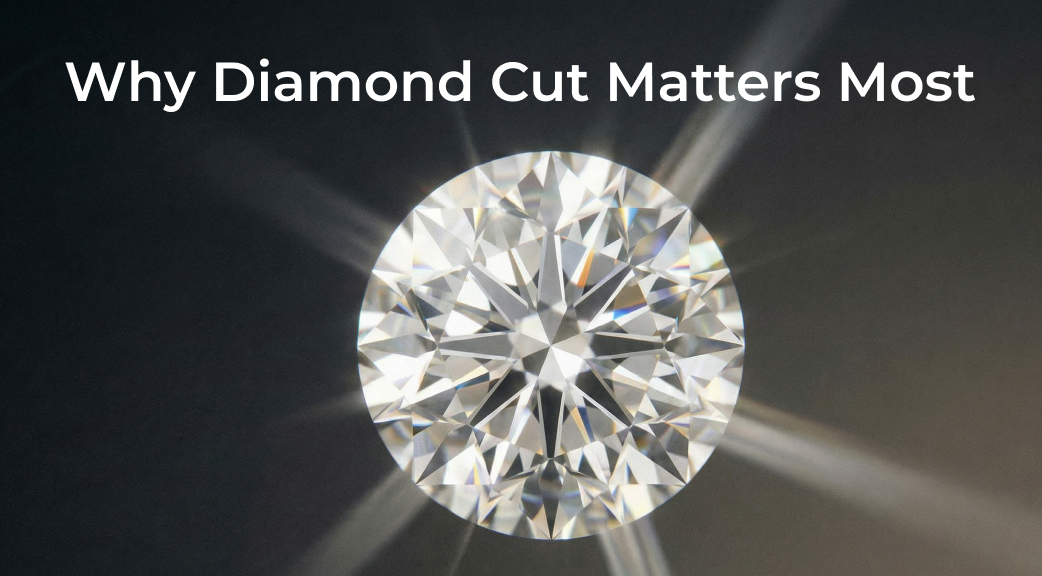
Hey there, diamond enthusiasts! we’re going to dive into why the diamond cut is the hidden hero of sparkle, why diamond cut quality is everything, and what the best diamond cut is for your bling. If you’re on the market for an engagement ring or just simply want to know more about these little sparklers, I’m going to break it down for you in easy, uncomplicated terms. So let’s get sparkling!
What Exactly Is a Diamond Cut?

First things first, let’s get on the same page as to what we’re talking about here when we say ‘diamond cut’. It isn’t exactly the shape, i.e., round or princess (although that’s included). The diamond cut is a measure of how well a diamond has been faceted and shaped out of its natural rough state. Consider it the art that takes a dark stone and turns it into a light show. Diamonds are created deep within the Earth, but they’re not attractive straight out of the earth. A highly skilled cutter applies precision equipment to build facets, those flat, bright surfaces that engage with light.
The objective: To create the maximum capacity for the diamond to reflect and bend light, producing that unmistakable shine. A low-quality diamond cut can make an otherwise high-quality stone appear dull and lifeless, while a high-quality one can elevate a low-grade diamond above its weight.
I recall learning this for the first time. I was assisting a friend in choosing a ring, and we laid out two diamonds side by side. One was larger but had little sparkle; the other was smaller but made the room shine. The difference? Diamond cut quality. It’s like the difference between a gourmet dinner and fast food. Both will fill your belly, but one will sensitise you.
Why Does Diamond Cut Affect Sparkle So Significantly?

Sparkle isn’t magic; it’s science! The diamond cut directly influences three key elements: brilliance, fire, and scintillation.
- Brilliance: This is the white light that reflects back to your eye from within the diamond. A good cut diamond behaves like a mirror, reflecting light effectively. Cut too shallow, light leaks out the bottom; too deep, and it gets out the sides. The sweet spot? Proportions that return most light straight back up.
- Fire: Ever notice those colourful flashes? That’s fire. The breaking of light into colours. The perfect diamond cut angles facets to reflect white light in a spectrum, such as a teeny-tiny prism bash.
- Scintillation: This is the sparkle you see when the diamond is transferred. The pattern of light and dark areas as facets reflect light at different angles. It’s what makes diamonds twinkle under lights.
Without an excellent diamond cut, these factors lack punch. Think of hosting a party without music or lights…humdrum! A better cut means the diamond maximises its performance, particularly in mixed lighting. That’s why professionals tend to declare that cut is king when it comes to the 4Cs (cut, colour, clarity, carat).
In my conversations with jewellers, they’ve both spoken about how customers have come to regret cutting corners on cuts. One guy purchased a “bargain” diamond online, and when it arrived, it was missing that wow factor in person. Lesson learnt: Emphasise diamond cut quality versus mere size.
Understanding Diamond Cut Quality Grades

All cuts are not equal, and grading systems enable us to compare. The Gemological Institute of America (GIA) evaluates diamond cut quality on a scale: Excellent, Very Good, Good, Fair, and Poor. Here’s a brief explanation of the following:
- Excellent: The best of the best. These diamonds return almost all light, creating maximum sparkle.
- Very Good: Still lovely, with minimal light loss. Best for budget-conscious buyers who will not compromise much in terms of fire.
- Good: Good sparkle, with some light lost. Adequate for wear and tear, but less prominent.
- Fair and Poor: Skip these if sparkle is important. They appear dim because too much light is lost.
What are they putting into these grades? It’s a combination of proportions (such as table and depth percentages), symmetry (how facet rows match up), and polish (smoothness of the surface). GIA has the most precise grading for round brilliants, but less standardised versions are applied to other shapes such as ovals or marquises.
Pro tip: Never fail to check the certificate. A GIA or AGS report will specify the diamond cut quality, preventing you from overpaying for a poor stone.
Key Factors That Define a Great Diamond Cut

Going deeper, several technical details make or break a diamond cut. Don’t worry, I’ll keep it basic.
- Proportions: Depth (how high the diamond is) and table (flat top facet). Ideal proportions depend on the shape, but for rounds, try 59-62% table and 53-58% depth. Nail this, and light reflects beautifully.
- Symmetry: Facets need to mirror one another perfectly. Asymmetrical cuts reflect light poorly, dulling sparkle.
- Shapes: The round brilliant is commonly considered the most sparkling diamond cut because its 58 facets are designed to maximise light return. But fancy shapes such as cushion or radiant can be brilliant with good cutting. Just remember that long shapes may develop more “bow-tie” spots (darkenings) if not properly proportioned.
I once consulted with a cousin regarding her wedding band diamonds. She opted for princess cuts, but we prioritised diamond cut quality to make them shine as brightly as rounds. The outcome? A ring that turns heads.
Selecting the Best Diamond Cut for You

So, what diamond cut is optimal? It’s all about your style and needs.
- For optimal fire: choose a round brilliant with excellent diamond cut quality.
- For individuality: Experiment with emerald (step-cut for sophistication) or pear (teardrop for drama), but make sure to find high cut grades.
- Budget tips: Search for “Ideal” or “Signature” cuts from organisations such as AGS. And don’t forget, lab-grown diamonds can provide better cuts at lower prices without guilt.
When shopping, view diamonds in different lights, natural, fluorescent, and dim. Use tools like the ASET (Angular Spectrum Evaluation Tool), if available, to see light performance.
In the end, the perfect cut is one that puts a smile on your face every time you see it. Don’t pursue perfection; pursue what feels right.
Wrapping It Up: Cut Your Way to Sparkle
There you go, a step-by-step guide to why the diamond cut is essential for that irresistible glint. From learning about diamond cut quality to choosing the optimal diamond cut, it’s all about the interplay between light and those facets. Happy shopping, and may your diamonds never fail to dazzle!
Frequently Asked Questions (FAQs)
What is diamond cut versus diamond shape?
Diamond cut is the quality of faceting and proportion that impacts sparkle, whereas shape is the outline, such as round or oval. Any good cut improves any shape.
Why is round brilliant the ideal diamond cut for sparkle?
Its 58 facets are specifically designed to reflect light in the best way, providing ultimate brilliance, fire, and scintillation above any other shape.
How do I check the quality of a diamond cut without a certificate?
Look at the diamond carefully in different lights. But always get a GIA or AGS cert for sureness.
Can a poor diamond cut be fixed?
No, unfortunately. Recutting tends to reduce carat weight and value. It’s wise to choose well in the first place.
Related Blogs:
- Diamond Size Chart: mm vs Carat Comparison
- Diamond Carat Weight: How Size Affects Price
- Diamond Shapes Explained: Round, Princess, Oval & More
- Why GIA or IGI Certification Matters for Indian Buyers
- Diamond Buying Guide 2025: Everything You Need to Know
Leave a Reply