

Diamonds catch our eyes with their sparkle. These shining stones symbolize love, wealth, and mystery from deep beneath the earth. But diamonds are not all the same. Most people consider the top four aspects: how it is cut, its colour, how transparent it is, and its weight. However, diamonds also have a science aspect that runs deeper. We categorize diamonds according to what chemicals they contain.
In this blog you will get to know about the Type II diamond. If you need to know what a Type II diamond is, we will make it easier for you with the help of this blog.
Understanding Diamond Classification Types
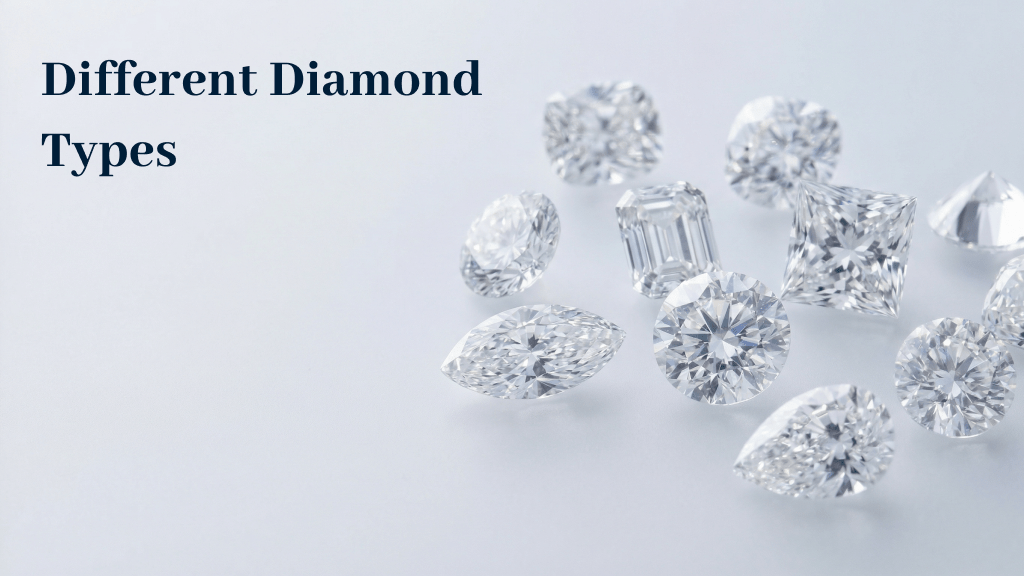
Learn how we sort Type II diamonds before you can appreciate them.
Experts categorise diamonds into two major groups, Type I and Type II, based on minor elements like boron and nitrogen in their constituent parts. These tiny details, which are invisible to the human eye, change the diamond’s behaviour and appearance, including its colour and reaction to heat.
Because they contain nitrogen, Type I diamonds make up the majority of diamonds (about 98%).Type Ia ones are the normal type with nitrogen pieces agglomerated, which may introduce a faint yellow hue. Type Ib are rarer, with isolated nitrogen pieces, and they exhibit intense colours such as bright yellow or orange.
Type II shakes things up. These have nearly no nitrogen extras, so they are cleaner on the inside. It is incredible how little things can make such a difference.
What Is a Type II Diamond?

So, what is Type II diamond? Simply put, it is a diamond lacking lots of nitrogen in its crystal structure. This purity sets it apart. But Type II is further divided into two categories: Type IIa diamond and Type IIb diamond.
Type IIa Diamond
They are the cleanest ones. No nitrogen or boron you can detect. Type IIa diamonds are extremely transparent and take heat better than any diamond. They are primarily no colour at all, but some pick up fun colours like pink or red from shape imperfections, not inclusions. A famous one is the big Cullinan diamond, cut for the UK king’s jewels.
Type IIb Diamond
These are more distinguished with pieces of boron, not nitrogen. Blue or gray colour is added by boron and allows them to conduct electricity—such as in a wire! The Hope Diamond, that huge blue one in the museum, is Type IIb. They are really rare, only 0.1% of diamonds.
Both types prove why Type II diamonds are desirable: no usual extras make them look good and sparkle in jewellery.
Why Type II Diamond Is Rare

The main question that arises: why is a Type II diamond uncommon? Long, long ago, deep in the hot, compressed middle of the Earth, bits of carbon formed diamonds. Nitrogen is abundant wherever there is, so most of them take some. Type II ones form where there is little nitrogen, which is strange and does not happen often.
Statistically, Type II diamonds are less than 2% of good natural diamonds unearthed. Type IIa is around 1-2%, while Type IIb is less common at 0.1%.Because of their scarcity, they are more expensive, and celebrities and kings buy them as keepsakes for their families. They are more desirable since their purity typically receives high no-colour ratings, like D.
Interesting fact: Because workers control things to prevent extras, lab-created diamonds are typically Type IIa.But naturals? Like trying to find a small pin in high grass. That is why unusual diamond types such as these draw big attention when it comes to purchasing.
Add a Type II diamond to your products if you want something exceptional. These gems enhance everything, whether it is simple solitaire rings, excellent diamond earrings, or stunning diamond jewellery.
Because of their very rare occurrence and purity, type II diamonds are very valuable stones in the world of jewellery. Type IIa and Type IIb diamonds possess uncontrolled clarity and distinct colours, from crystal-clear colourless to enchanting blues and even very rare pinks, since they hold very little to no nitrogen content, as opposed to the more prevalent Type I diamonds.They make up less than 2% of all diamonds excavated, of which Type IIb make up a mere 0.1%. They were formed in the rare nitrogen-poor regions deep within the Earth’s crust billions of years ago. Due to their exceptional rarity and stunning brilliance, they are considered high-end diamond jewellery, including traditional solitaire rings, sophisticated diamond earrings, and captivating diamond rings.Type II diamonds shine as nature’s rarest treasures, perfect for anyone looking for a truly exceptional piece to mark life’s special moments, whether you are captivated by their scientific uniqueness or just enchanted by their breathtaking beauty.
FAQs
Q1. What is the difference between Type II diamonds and Type I diamonds?
A1. Type II diamonds contain no or little nitrogen extras, whereas Type I ones have some. Such purity provides Type II with better see-through and unique characteristics.
Q2. Is Type II diamond more expensive than other types?
A2. For the most part, yes, due to rarity and being extremely clear. They are more expensive than the other types.
Q3. Are Type II diamonds colourable?
A3. Yes! Most of them are not coloured, but Type IIb become blue with boron, and Type IIa become pink from crystal flexes.
Q4. How do diamonds get tested for type?
A4. Jewelers use clever equipment such as spectroscopy to detect extras in very small levels. You must have special material to test.
Q5. Where can I buy genuine Type II diamond jewellery?
A5. Look for stones that have evidence from quality sellers or auctions. Always view reports from places such as GIA to verify type and quality.
Related Blogs
- Which Diamond Type Is Best? Understanding the 4 Types of Diamonds
- Natural vs Synthetic Diamonds: How to Know the Difference
- Kohinoor Diamond: History, Value & Where It Is Now
- Which Rashi Can Wear Diamonds? Astrology & Zodiac Guide
- How to Identify a Real Diamond: Expert Tips & Tests
Leave a Reply