
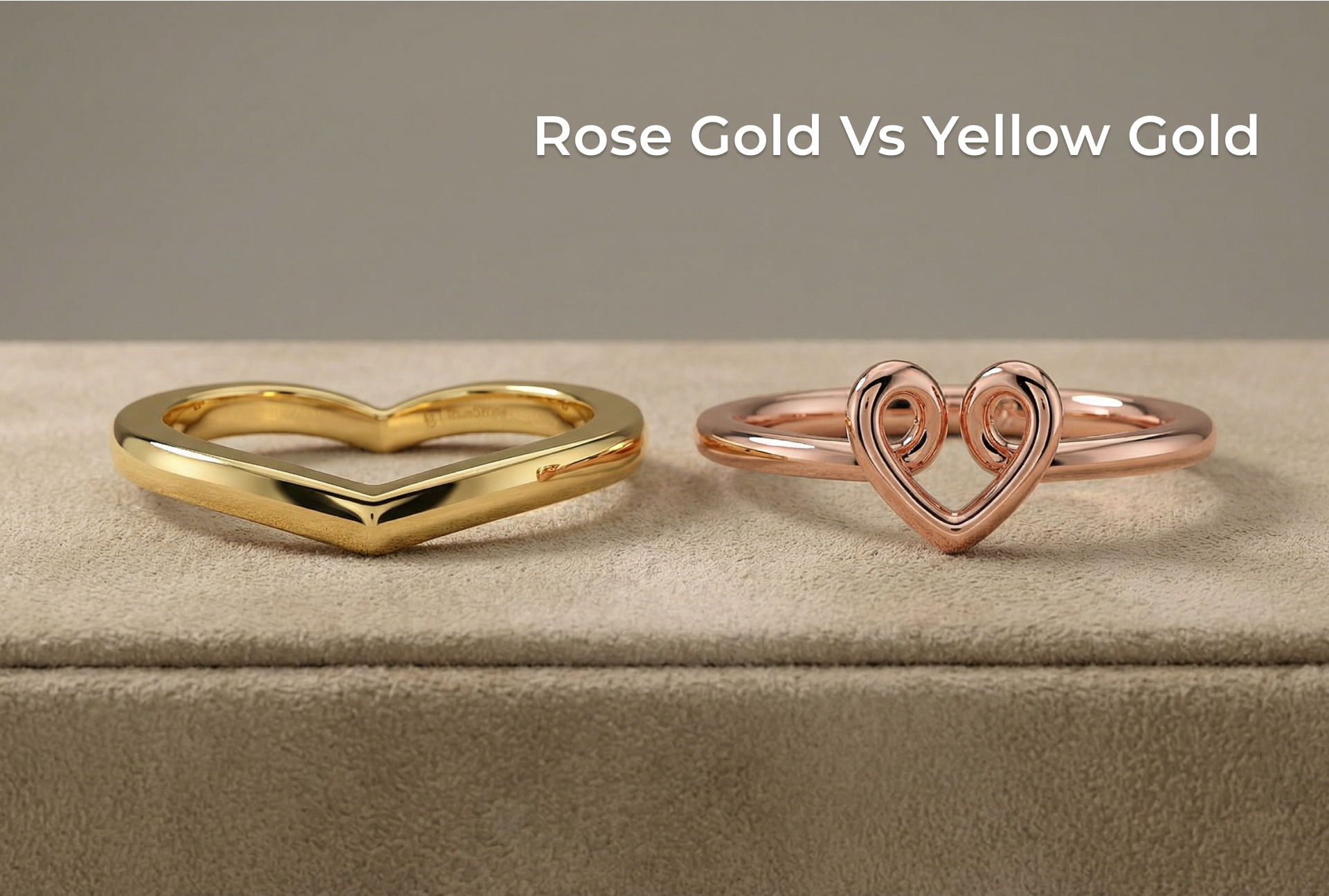
Selecting the colour of the metal you are wearing is one of the most crucial decisions you will make while purchasing jewellery. Rose gold and yellow gold are two of the most well-liked and classic options among the many available. Yellow gold has a classic charm with its warmth, it holds traditional value, timeless glow, while rose gold, which has a pinkish tint, adds a hint of romance and contemporary elegance.
But the actual key is to understand the color of gold that best suits your skin color. If worn properly it can bring out your best features, make your complexion look more beautiful, and improve your overall appearance. In this guide, we will know the difference between rose gold vs yellow gold, looking at their individual characteristics and you will find out which one is best for your skin type, so that you can look confident in your choice.
What Is Rose Gold?

Rose gold is a lovely form of gold that is known by its warm, soft pinkish light. It is actually an alloy—a combination of gold mixed with copper and often a touch of silver. The copper content is what makes rose gold have that particular blush color, with higher levels of copper giving a more intense color, and lower levels creating a paler, more pastel color.
History and trends
The origin of rose gold goes back to 19th-century Russia, where it was initially called “Russian gold.” Its beauty immediately made it the preferred choice of aristocrats as well as jewelers of that time. It went in and out of fashion over the years but experienced a significant comeback in the 2010s, with luxury brands such as Tiffany & Co. and international tech firms such as Apple, which reintroduced rose gold finishes in devices such as the iPhone and Apple Watch. Due to which it was made a trend globally.
The aesthetic look of Rose gold
One of the charms of rose gold is its symbolism. Its soft pink colors are usually linked to love, romance, and femininity, yet still convey a sense of modern sophistication. Rose gold looks equally comfortable on both warm and cool skin tones, making it a universally appealing appearance for jewellery, watches, and accessories.
Rose gold jewellery is now not just a jewellery preference, it has become a statement. It is an ageless beauty.
What Is Yellow Gold?

Yellow gold is the most traditional and classic type of gold, valued for its natural warm color and its beauty. 24K gold in its pure state is too moldable to be used practically, so it is mixed with other metals like copper, zinc, and sometimes silver in order to add hardness and strength. The proportion of pure gold and other metals will establish its karat value. Like, 18K yellow gold contains 75% pure gold and 25% alloy metals, giving it a rich golden glow, while 14K yellow gold, with 58.3% pure gold, is slightly lighter in color but stronger and more resistant to scratches.
History and trends
The past of yellow gold has a history of thousands of years and is the oldest and most iconic materials used in jewellery and art. The ancient Egyptians called it “the metal of the gods”. Likewise, cultures in India, China, and Europe have, for centuries, linked yellow gold with prosperity, richness, and spiritual value. Unlike some metals, which go up and down in trend popularity, yellow gold has always been a symbol of luxury through the ages. Designer names such as Rolex, which decorate their classic designs with yellow gold to showcase its timelessness.
Visual appeal
Yellow gold emits a warm, sunny brightness that makes it particularly enhancing to medium to dark skin tones. Its color brings depth and richness to any design, from traditional designs that have complex patterns to modern styles that are simple and elegant. Aside from its prettiness, yellow gold also has an aura of eternity and holds cultural significance as well , passed down as family keepsakes. Yellow gold jewellery is still one of the world’s favorites today.
Defining Skin Tones

Skin tone refers to the natural color of your skin surface, from fair, light, medium, olive, tan, to deep.
Cool, Warm, and Neutral Undertones
- Cool undertones: Pink, red, or blue undertone. Veins appear blue/purple, and silver jewellery is most flattering.
- Warm undertones: Yellow or golden undertone. Veins appear green, skin tans easily, and gold jewellery looks best.
- Neutral undertones: Combination of both. Veins appear bluish-green, and silver and gold both look good.
How to Identify Your Undertone
Inspect your veins in daylight, blue/purple indicates cool, green indicates warm, and a combination indicates neutral. Jewellery is also another indicator: silver prefers cool, gold prefers warm.
Rose Gold vs Yellow Gold: Matching to Skin Tones

| Aspect | Rose Gold | Yellow Gold |
|---|---|---|
| Best Undertones | Works well with cool and neutral undertones since its pale pink blush diminishes cooler skin. | Best for warm and neutral undertones, which will make golden or olive skin look great. |
| Skin tones | Enhances fair, light, and medium skin by imparting warmth without overpowering. | Suites olive, tan, and dark skin, creating a warm, sunlit glow. |
| Vibes | Radiates a romantic, trendy, and understated look. | Captures an ageless, dramatic, and high-end texture. |
| Strength | Overall it is strong, but with more copper content can be somewhat open to fading or tarnish in the long run. | Naturally tarnish-resistant, keeping its shine and luster longer. |
| Price | Generally priced on par with yellow gold, although this can fluctuate based on copper content and karat. | Held to be the classic choice, most commonly found in all karats and generally a little less difficult to acquire. |
Frequently Asked Questions
Q1. Which gold color is more suitable for cool skin tones?
A1. Rose gold generally works better for cool skin tones. Its rosy undertone works with blue or pink undertones to produce a balanced, appealing look. Experiment with rose gold rings or necklaces to get an attractive look on fair to medium skin.
Q2. Does yellow gold complement warm or dark skin tones?
A2. Yes, yellow gold looks fantastic on olive, tan, or dark skin and is ideal for warm skin tones.
Q3. Can yellow and rose gold be worn together?
A3. Absolutely! Combine a rose gold bracelet with a yellow gold ring for an even, contemporary look. Just make sure the pieces have a similar design aesthetic.
Q4. Is rose gold strong or yellow gold?
A4. Both are hard, subject to the karat (i.e., 14K is harder than 18K). Rose gold could potentially fade slightly over a long period due to its copper component, but yellow gold is resistant to tarnish with good maintenance.
Q5. How do I determine my skin’s undertone in order to select the ideal gold?
A5. Inspect your veins on your wrist: blue/purple indicates cool, green indicates warm, and a combination indicates neutral. Alternatively, observe whether silver (cool) or gold (warm) jewellery appears preferable against your skin.
Related Blogs
- 14kt vs 18kt Gold: Is the Lower Karat Worth It?
- 18kt vs 22kt Gold: Which is Better for Rings & Daily Wear?
- What Is Rose Gold: Know All About Rose Gold Jewellery
- Trendy Gold Earrings Designs for Girls in 2025: From Minimalist to Statement Styles
Leave a Reply