
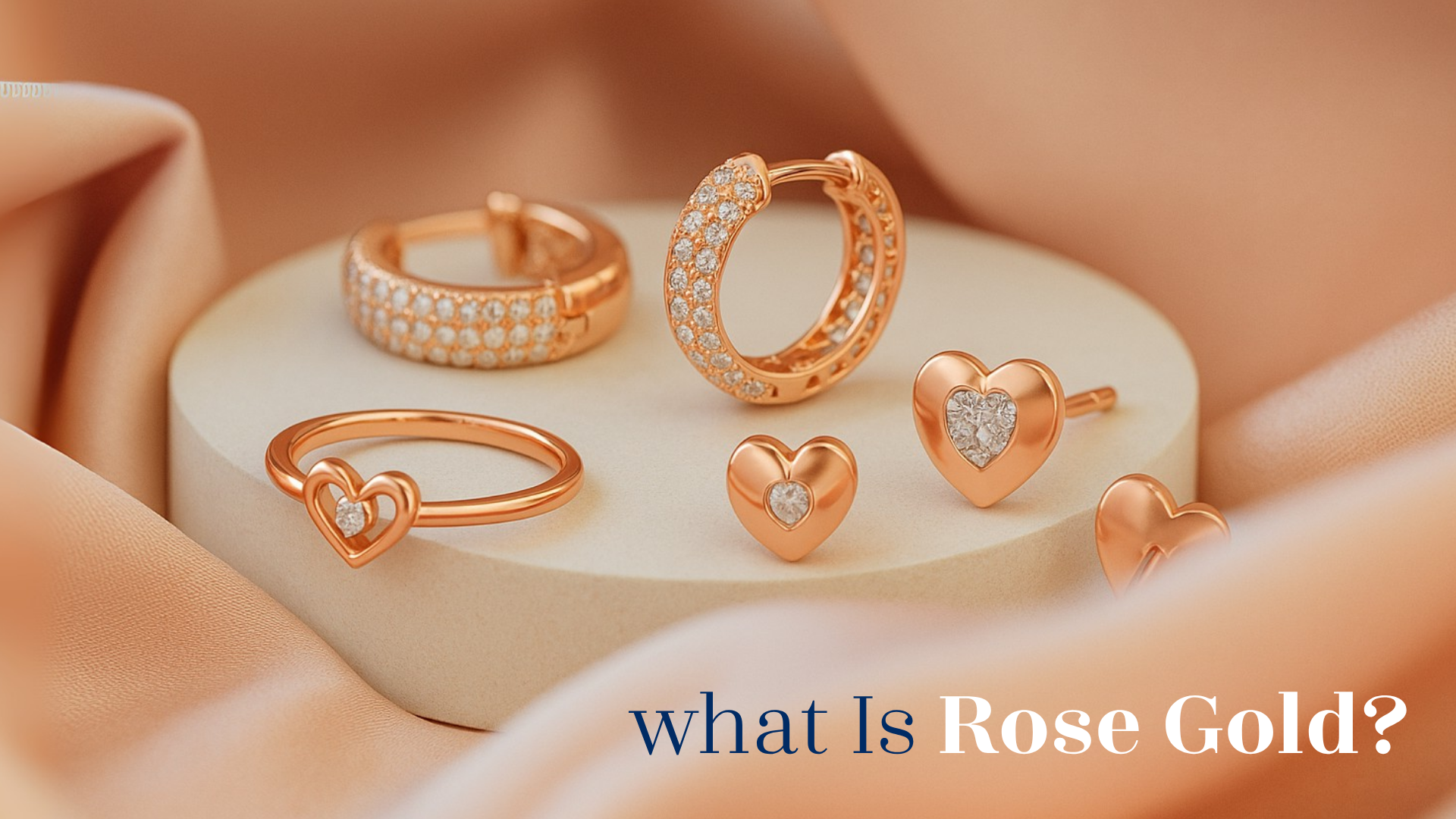
Rose gold is a delicate and sophisticated shade that blends the warmth of the gold with the softness of the pink. With its romantic blush and modern elegance, it has quickly become a favourite when it comes to jewelry.But what exactly is rose gold? How is it different from gold? How does it compare to yellow or white gold in terms of prices and quality?
These are some questions that have sprung up with the increasing popularity of rose gold. Lets try and understand what rose gold exactly means, how it is different from other metals, the reason behind its increasing demand and the difference between rose gold and yellow gold.
What is rose gold? An alloy or a metal?
Rose gold, also known as pink gold and red gold, is an alloy (mix of metals) primarily consisting of gold and copper. Copper is the element that gives rose gold its distinctive pinkish-red hue. Depending on the ratio, rose gold can range from a subtle pink blush to a deeper, redder tone, which is why it is also known as pink gold and red gold.
This blend of pink and red gives rose gold its warm and romantic look. Making it a modern yet timeless piece of jewellery. Due to copper, rose gold is fairly more durable as compared to yellow gold.
Is Rose Gold Real Gold?

Yes, rose gold is real gold. It contains genuine 24K pure gold, similar to yellow or white gold, but is mixed with other metals such as copper for color and strength. Copper and silver are the elements that give rose gold its color of reddish pink tone.
For better clarity, here is a breakdown of metals used in creating rose gold:
- 18K rose gold = 75% pure gold + 22.5% copper + 2.5% silver
- 14K rose gold = 58.5% pure gold + 41.5% copper/silver
As we can clearly see, rose gold has a much different formation formula than metals such as gold and silver. So, while it is not 100% gold, it is still just as authentic as yellow/white gold.
Oftentimes, rose gold can be slightly cheaper than yellow or white gold of the same carat. This is because copper is cheaper than silver or palladium and, unlike white gold, manufacturing of rose gold does not require rhodium plating. So yes, while rose gold can be cheaper than white gold, price differences are usually minor and vary on the basis of karat, design and brand.
How Is Rose Gold Made? The Science Behind the Shade
Rose gold is created by alloying pure gold with copper and occasionally silver, depending upon the shade required by the customer. To simplify, here’s the breakdown of alloy formation:

- Gold (yellow) + Copper (red) = Rose gold (pink)
As we can clearly interpret from the given equation, higher copper content results in a ‘redder’ shade of rose gold. Whereas adding a small amount of silver softens the tone to a lighter pink. This process does not require the use of dyes or artificial coating as the color is present in the metal itself.
Why Rose Gold Jewellery is Popular & Uses

Rose gold jewellery refers to any ornaments or trinkets crafted using rose gold, like rings, necklaces, bracelets, earrings, etc. People love rose gold jewellery for its wildly romantic yet sophisticated look. Its versatility and suitability for all skin tones adds to its appeal and its modern but vintage aesthetic has made it a hit amongst designer jewellery and engagement rings.
Today, rose gold jewellery is not just for women. Men’s jewellery and watches have also embraced this elegant alloy. Hence making it a favourite of both genders.
The timeless appeal of rose gold and exquisite glamour make it a forever popular choice of jewellery. Rose gold jewellery symbolises love, compassion and warmth. These factors make rose gold jewellery the perfect choice for events such as engagement, anniversaries and wedding occasions.
Features of Rose Gold
An alloy
Firstly, what sets rose gold apart from other metals is the fact that it has copper in it. Hence it is an alloy. This makes rose gold stronger and more durable than pure gold. Copper reduces its chances of being tarnished, making it more practical and durable as compared to yellow/white gold.
Versatile and chic
Secondly, rose gold is very versatile and suits all skin tones. This has made it a popular jewellery choice, ranging from necklaces and watches to rings and earrings. Its soft and unique blend of colour gives it a timeless look, making it a staple in every wardrobe.
The romantic look of rose gold has made it a popular choice for romantic gestures aand romantic events such as engagements, anniversary gifts.
Why should you invest in rose gold? pocket friendly!
Not only is rose gold aesthetically appealing and can be a good investment for its durability and long term value appreciation, it is also more affordable than yellow gold. This is because rose gold sometimes incorporates copper and silver alloys which are less expensive than gold. The more copper in alloy, the more pink the rose gold would be and lower would be the overall gold content.
Hence , its mixture makes it more affordable and appealing as compared to yellow gold.
How to take care of Rose Gold Jewellery?

To keep your rose gold jewellery bright and shining, here are some easy every day tips.
- Clean it regularly- It is suggested to gently wash your rose gold jewellery with warm water and any mild soap or detergent. Use a brush to rub the surface in a circular motion.
- Avoid harsh chemicals- To protect the longevity of rose gold jewellery, avoid exposure to crude chemicals such as chlorine and bleaching materials since they tend to cause discolouration.
- Proper storage- The rose gold items should be kept in a soft cloth or jewellery box to to avoid unnecessary scratches. Avoid storing multiple pieces of jewellery in the same box or cloth to minimize cases of scratching on the other piece.
- Professional check ups- it is advisable to take all your rose gold jewellery to a jeweller once a while to get it properly checked and cleaned. This helps in finding any loose settings or potential problems that can then be rectified quickly.
In conclusion, we can safely say that the innovation of rose gold stands testament to how traditional and contemporary designs can beautifully co-exist in craftsmanship. While its popularity has seen fluctuations throughout history, rose gold continues to remain a beloved classic and an elegant alternative to the traditional yellow gold.
Frequently Asked Questions About Rose Gold
Yes, due to its durability and timeless aesthetic, rose gold is suitable for daily wear. The added copper makes it stronger than yellow gold, especially in 14K and 18K form. The only precautions required are generic instructions required for maintenance of all jewelry. Like avoiding exposure to harsh chemicals and saline water to maintain its shine.
No, rose gold does not tarnish, but it may start darkening slightly over the years due to oxidation of the copper element present in it. However, this actually gives it a vintage look, and a quick session of polishing can restore it to its original shine.
Rose gold may cause a reaction in people who are sensitive to copper. If you have metal allergies, 18K rose gold is usually safer than 14K as the 18K rose gold has higher gold content and lower percentage of potentially allergenic metal like copper.
Yes, rose gold can be resized and repaired like any other gold alloy. However, it is slightly harder to work with, as compared to yellow gold due to the presence of copper . Hence, the jeweller so chosen, to repair the jewellery should be experienced in the arena of rose gold.
Rose gold looks great on all skin tones, but it especially flatters warm, neutral, and olive complexions, as its soft pink hue adds a mellow glow to the skin. Making it a popular choice for engagement rings and statement jewellery pieces.
Related Blogs
Know the Right Hand & Finger to Wear Your Engagement Ring
How to Wear Rings on Multiple Fingers – Styling Tips
Everything to Know Before You Buy a Promise or Pre-Engagement Ring
When Rings Don’t Budge: Easy & Safe Ways to Remove a Tight Ring
All About Solitaire Rings: Meaning, Styles & Buying Tips
How to Wear a Tortoise Ring: Benefits, Finger Placement & Vastu Rules
How Men & Women Wear Their Wedding Rings in India
Leave a Reply