
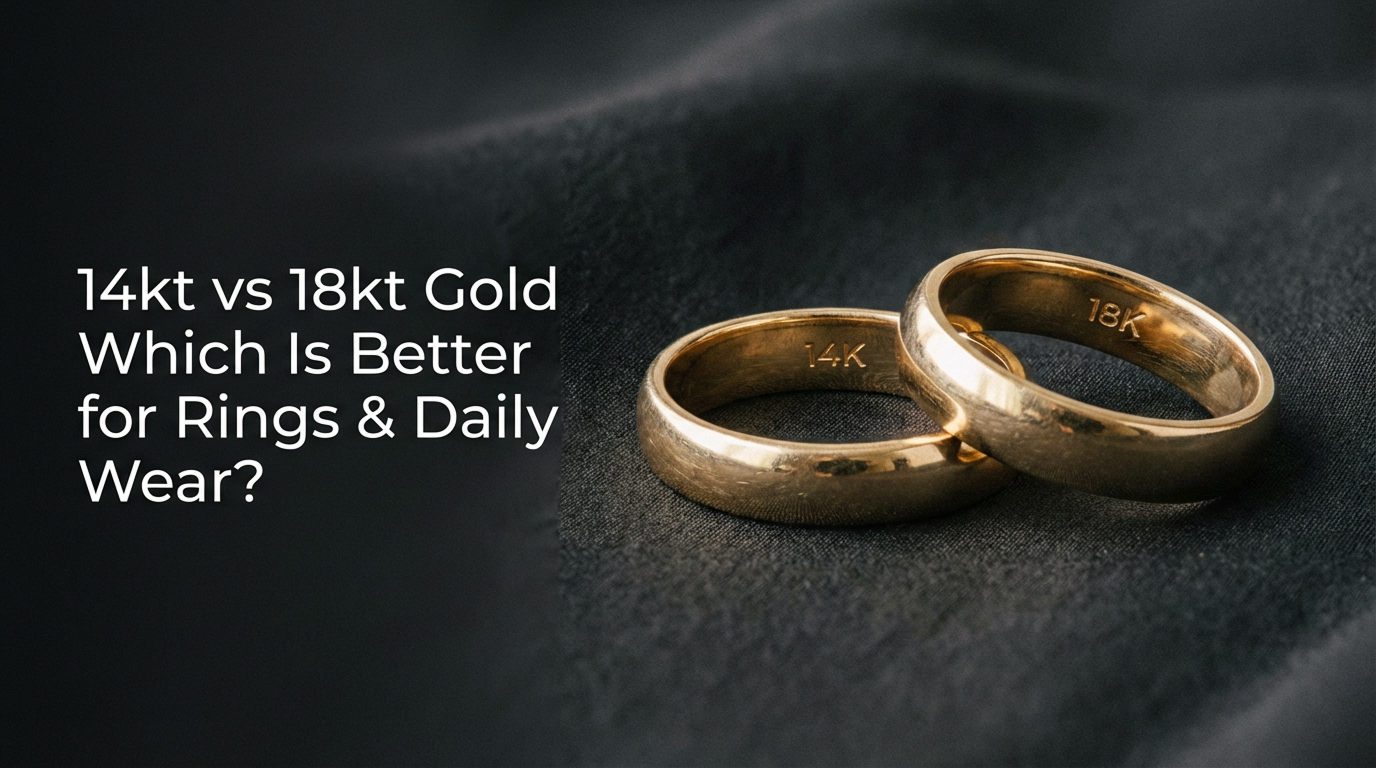
For most of us gold is an emotional investment but still an investment nevertheless. When we are looking into making a gold purchase, especially for daily wear, like gold rings and necklaces, the choice between carats becomes crucial. Which carat you should go for, how the carat system works and which ones would best suit your personal preferences and style are just some questions that cross your mind. While both are popular, and both look similar, 14kt gold and 18kt gold differ in terms of their purity, durability and practicality.
So, to help you make the choice between carats and find you the most perfect gold ring for daily wear, we will be comparing exactly how 14kt is different from 18kt gold.
What Does ‘Carat’ in Gold Mean?

Many of us are unaware of what the term ‘carat’ even means. Carat is a measure of the fineness of gold. It basically measures how heavy and pure the jewellery is. Since pure gold is soft and prone to bending, jewellers mix it with other metals like copper, silver, nickel, or palladium to improve its durability.
Here is a quick breakdown of different karats of gold for your reference:
Gold Purity Table:
| Karat | Gold Purity % | Alloy Metals % | Common Use |
|---|---|---|---|
| 24kt | 99.9% | 0.1% | Extremely pure, used for Coins, bars, investment |
| 22kt | 91.6% | 8.4% | High-purity jewellery, useful for making wedding ornaments |
| 18kt | 75% | 25% | Comparatively low purity, daily wear jewellery, especially useful in gemstone settings |
| 14kt | 58.3% | 41.7% | Low-purity, good for highly durable everyday jewellery |
When you are out shopping for fine jewellery, you must have observed two carat options for gold jewellery quite frequently: 14 kt gold and 18 kt gold. While both are real gold and valuable, they differ in their composition, durability, price, colour and purpose. So, is 14kt gold worth it as compared to its higher purity counterpart? Let us determine that by the end of this blog and help you make the smartest choice for your next gold purchase.
What’s the Difference Between 14kt and 18kt Gold?

What is the difference between 14kt and 18kt gold? How exactly are their features, such as purity, durability and colour, different from one another? These are some questions that commonly pop into our minds when we think of making a gold purchase. Here are some basic differences between 14kt gold and 18kt gold:

| Feature | 14kt Gold | 18kt Gold |
|---|---|---|
| Gold Content | 58.3% pure gold | 75% pure gold |
| Alloy Content | 41.7% other metals (e.g., copper, silver, zinc) | 25% other metals |
| Color | Slightly lighter/yellower | Richer, deeper yellow hue |
| Durability | More durable and scratch-resistant | Softer and more prone to scratches |
| Price | Less expensive | More expensive due to higher gold content |
| Weight | Lighter | Heavier due to more gold |
| Hypoallergenic | May cause reactions (more alloys) | More hypoallergenic |
| Common Uses | Everyday jewelry (rings, chains, etc.) | Luxury or fine jewelry |
| Tarnish Resistance | Lower (can tarnish over time) | Higher resistance to tarnish |
| Value Retention | Lower resale value | Higher resale value |
Strength: Is 14kt Gold Stronger?

Yes, because it has a higher content of alloys, 14kt gold is overall more resistant than 18kt gold. It is also harder and more resistant to dents and scratches because of its higher alloy content. This is the reason why 14kt gold is a very functional option for everyday wear, particularly when it comes to everyday items such as wedding bands, engagement rings, and bracelets.
On the other hand, 18kt gold, while still durable and practical, is considerably softer and more prone to denting as compared to 14kt gold. This makes 18 kt gold ideal for occasional wear and more luxury-orientated jewellery, as they are not exposed to daily wear and usage.
Colour: Which Gold Looks Better?
The answer to this question is quite subjective. It cannot be a black-and-white decision but somewhere in between, as neither one of them can be objectively stated to be better. This is so because the look of jewellery depends upon the wearer as well.
Going with the 18kt gold means choosing a warmer and radiant yellow tone screaming luxury. Owing to its 75% pure gold content, it is used often for high-end jewellery articles.
As for the 14kt gold, it gives a more subdued, whiter and paler appearance due to a mix of more alloy metals. This is a good choice for those rooting for a minimalist and everyday wear look. .
Price: Is 14kt Gold More Affordable?
Oh yes! Owing to its lower gold content and a blend of alloy metals, the 14kt gold offers significantly fewer expenses.
A call for those who keep an eye out for budget-friendly, durable, minimalist jewellery that is resistant to scratches.
YES, 14kt gold is your lucky charm.
However, if you’re someone seeking a high-status look or looking for a long-term investment, 14kt gold might not be your thing.
Allergies: Which Karat is Safer for Sensitive Skin?
Skin sensitivity calls for making the right choice, especially when considering daily wear items such as rings. Hence, we should always check for allergens before buying.
Higher carat gold means lesser allergenic alloy metal content like nickel; hence, it is less prone to trigger an allergic skin reaction.
This is why 18kt gold is the most ideal option owing to its lesser alloy content and hypoallergenic tendencies. This makes it even perfect for everyday wear on sensitive skin. Although, wonderful news for your pocket – nowadays, a lot of 14 kt gold articles are hypoallergenic and nickel-free. More true when it comes to celebrated jewellers.
Conclusion: Is the Lower Karat Worth It?

If you’re someone who values prestige, a luxurious look or has skin sensitivity, lower-karat gold might disappoint. However,
Considering and comparing most parallels – YES! 14kt gold is worth it.
- Resistant to scratches and dents
- More intricate designs
- More durable for everyday wear
- Minimalist, modern appearance
- Price affordability
- Your go-to choice
IT DELIVERS!
It is absolutely noteworthy here that it is again subjective, which choice you make depending on your taste, preference, lifestyle, skin tone and pocket.
FAQs on 14kt vs 18kt Gold
1. Does 18kt gold tarnish more than 14kt?
No, 18kt gold is completely resistant to tarnish. 14kt gold is resistant as well; however, it may show signs of surface wear over time due to its higher alloy content.
2. Can I wear 14 kt gold every day?
Yes, you can wear 14kt gold every day. Actually, 14kt gold is among the most common options for daily jewellery, as it is so versatile and durable.
3. Is 18kt gold suitable for engagement rings?
Yes, 18kt gold is suitable for engagement rings. However, it is extremely soft and requires high maintenance. If you are okay with the upkeep required for an 18kt gold ring and love the rich yellow hue that it has to offer, then an 18kt gold ring can be quite a luxurious and tempting choice.
4. If both 14 kt and 18 kt are regarded as gold, then why does 18 kt gold cost more?
As it is very pure and fine, 18kt gold is much costlier. It carries approximately 75% pure gold, while 14 kt gold only contains 58.3% gold.
5. Is 14kt gold actual gold?
Yes, 14kt gold is actual gold. It includes 58.3% pure gold and is considered to be solid gold in the majority of countries.
Related Blogs
Leave a Reply