

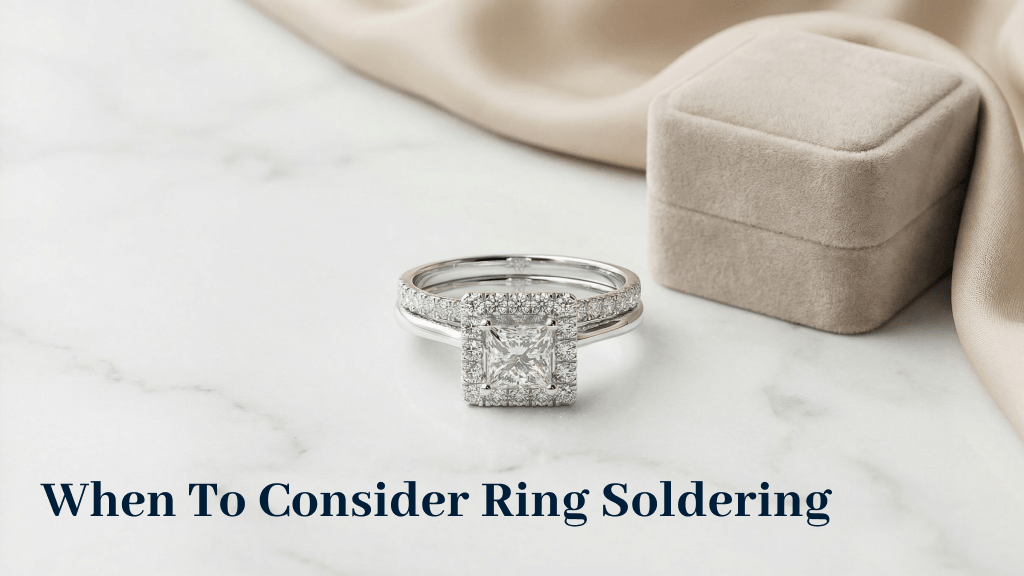
Many brides-to-be face a simple but very important question after the wedding: Should I get my engagement ring and wedding band soldered together? Ring soldering is the process of permanently joining two or more rings usually an engagement ring and wedding band into one single unit with a tiny amount of precious metal. The result is a seamless-looking stack that never spins, rubs, or separates. It is a popular choice, but it is not for everyone.
In this blog, we will break down the real pros of ring soldering, the often overlooked cons of ring soldering, and situations when you should or should not do it.
The Pros of Ring Soldering

1. No More Spinning or Twisting
One of the biggest complaints about wearing an engagement ring and wedding band separately is spinning. Low-profile settings, straight wedding bands, or fingers that taper dramatically often cause the rings to rotate out of alignment. Soldered rings stay perfectly centered forever, no more reaching down to fix a sideways diamond in the middle of dinner.
2. Reduced Wear and Tear
When two rings rub against each other daily, both shanks and any side stones take a beating. Over years, you can see visible scratches, thinning metal, or even loose stones. Soldering eliminates that constant friction, meaning less jewellery maintenance and fewer trips to the jeweler for polishing or repair.
3. A Clean, Unified Look
For many individuals, it is simply a matter of aesthetics. Soldered rings resemble a single, custom-designed contour set rather than two stacked rings. If you love that sleek, minimalist vibe, this permanent join can be very appealing.
4. Harder to Lose One Ring
It is rare, but rings can slip off especially during cold weather or after weight loss. Soldered rings mean you can only lose both or neither, which many find reassuring.
5. Comfort for Some Wearers
A surprising number of people report that soldered rings feel more comfortable because there is no gap or sharp edge between the two bands to catch on gloves, pockets, or hair.
The Cons of Ring Soldering—and Why Many Jewelers Hesitate to Recommend It

1. Resizing Becomes Expensive or Impossible
This is the biggest drawback. Resizing soldered rings usually requires cutting them apart. Some settings especially eternity bands or tension rings cannot be resized at all once soldered. Fingers fluctuate in size throughout life, so resizing issues can become a problem.
2. You Cannot Wear Them Separately
If you like wearing just your wedding band to the gym, while travelling, or during chores, soldering removes that flexibility. Separation requires a jeweler and an additional fee.
3. Future Design Changes Become Complicated
You may want an upgrade, a reset, or a new band in the future. Soldering locks the design together, making changes more difficult and expensive.
4. Potential Heat Damage During Future Repairs
Any future repair tightening prongs, replacing stones, plating requires heating the whole set. Heat-sensitive gemstones (morganite, opal, emerald) may be at risk, and repeated heat exposure can weaken metal.
5. It Is Essentially Permanent
Although a jeweler can separate soldered rings, it always leaves a tiny extra-metal scar. Some people feel psychologically “trapped” once their rings are permanently joined.
When You SHOULD Consider Ring Soldering
- Your rings already fit and finger size does not often fluctuate.
- Your straight wedding band spins constantly and drives you crazy.
- Your rings have simple bands or low-profile designs that allow resizing later.
- You love the look of a single, unified ring set.
- You do not expect major life changes like pregnancy or extreme weight changes soon.
When You Should Skip It—or At Least Wait
- You are still within the first 1–2 years of marriage, let your fingers “settle”.
- You expect pregnancy or have a job/health issue causing swelling.
- Either ring is an eternity band or set with delicate gemstones all around.
- You enjoy mixing and matching jewellery or sometimes wearing just one ring.
- You like upgrading or redesigning your jewellery every few years.
Pro tip from jewelers: Wait at least one year before soldering. Let your rings go through seasonal changes, heat, workouts, and everyday life. If spinning still annoys you after 12–18 months, soldering may be the right choice.
Alternatives to Soldering
If you want the benefits without the commitment, try:
- Ring connectors or ring guards
- Custom-shaped wedding bands that nest around your engagement ring
- Clear plastic ring adjusters
Final Thoughts
Ring soldering is neither good nor bad, it is a personal choice based on your lifestyle, finger stability, and design preferences. Many women swear by their soldered sets; many others wish they had waited. Live with your rings unsoldered for at least a year. If spinning annoys you and your size remains stable, soldering might be the perfect solution. If you love flexibility, keep them separate.
Your rings, your rules.
FAQs
Q1. How much does ring soldering usually cost?
A1. It can range from ₹4,500 – ₹12,000 depending on the jeweler, metal type, and number of solder points.
Q2. Can any rings be soldered together?
A2. Almost any rings can be soldered, but eternity bands, tension settings, and some rose-gold/platinum combinations can be difficult or risky.
Q3. Is soldering really permanent?
A3. It is semi-permanent. A jeweler can cut them apart, but there will be a small amount of added metal afterward.
Q4. Will soldering damage my diamonds or gemstones?
A4. Not if done by an experienced jeweler. However, repeated future repairs involving heat can increase risk slightly.
Q5. When is the best time to solder my rings?
A5. Wait 12–24 months after the wedding to allow for natural finger-size fluctuations.
Related Blogs:
- How to Choose the Perfect Platinum Love Band for Your Partner
- What is a Pyrite Stone? Who Can Wear a Pyrite Stone Ring?
- Choosing the Perfect Ring Setting for Your Diamond Shape & Budget
- What Is a Cluster Ring? Understanding the Sparkle, Style & Benefits
- Ring Size Changes: Why Your Ring Feels Tight or Loose

Leave a Reply