
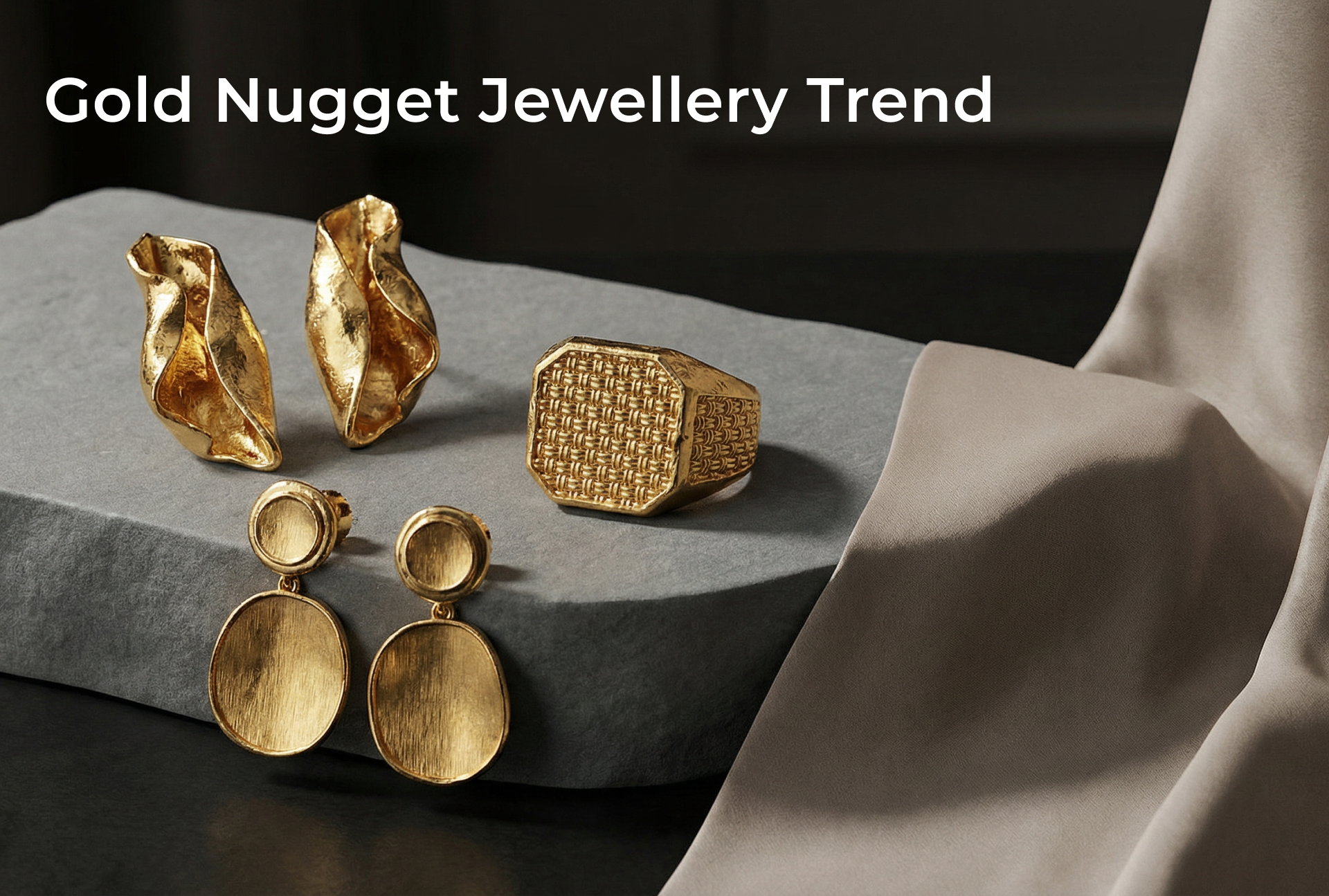
For decades, intricate filigree, dazzling polki, and perfectly polished gold have been synonymous with Indian jewellery. But in 2025, a radically different aesthetic is knocking on our doors. The gold nugget jewellery trend. Raw, imperfect, organically shaped pieces that look like they were just plucked from a riverbed are taking over runways, red carpets, and Instagram feeds worldwide.
From Rihanna’s molten gold chokers to Bella Hadid’s chunky raw gold rings, the untreated look is the ultimate luxury flex of the moment. The question on every Indian jewellery lover’s mind is: can this rugged, textured gold jewellery trend find a home in a country that worships symmetry and shine?
What exactly is Gold Nugget Jewellery?

Also sometimes referred to as raw or organic gold, gold nugget jewellery utilizes gold in its most raw state. Instead of melting the metal down and casting and polishing it to a mirror finish, it is hammered and torch-fired—or almost left untouched—to retain natural craters, ripples, and matte surfaces. The result: bold, sculptural pieces—thick bangles, big pendants, asymmetrical earrings, and collars that look like liquid gold, frozen mid-flow.
Unlike traditional minimal gold jewellery, nugget pieces scream individuality. Unlike heavy Indian bridal jewellery, they feel effortless and almost bohemian; and unlike machine-made ornaments, every single piece is unique.
Why the World Is Obsessed in 2025

1. The “Imperfect is Perfect” Movement
Gen Z and millennials are rejecting over-perfection. The same generation that embraced natural textured hair and no-makeup makeup is now embracing textured gold jewellery that celebrates flaws.
2. Celebrity & Influencer Push
Deepika Padukone wore a raw gold statement cuff to Cannes 2024. Alia Bhatt layered molten gold rings for a promotional event. International stars like Zendaya and Rosé of BLACKPINK have also made raw gold chokers their red-carpet staple.
3. Sustainability Angle
Many designers are using recycled gold and ethically mined nuggets, making sustainable gold jewellery a strong selling point. Consumers feel less guilty buying a ₹5 lakh raw gold necklace when it is marketed as “earth-friendly”.
4. Investment Value
These items are perceived as investment wearables in India because they often use higher gold weight (20k–22k) and require less labour than intricate kundan or temple work.
Will India adapt to the raw gold trend?

Indians are emotionally, culturally, and financially attached to gold. So will we trade our shiny 22k gold sets for matte, “dirty-looking” nuggets?
Signs That Say YES:
- Urban India is already experimenting—some brands’ limited-edition raw gold collections sell out quickly.
- Brides increasingly want lighter, contemporary reception looks—raw gold collars with ivory lehengas photograph beautifully.
- Men’s jewellery is booming. Chunky raw gold rings and bracelets are the new status symbol.
- South India (Kerala, Tamil Nadu) already loves matte-finish heavy gold; nugget textures feel like a natural evolution.
Challenges That Say Maybe Not Yet:
- Older generations equate shine with purity—matte nuggets may seem “unfinished”.
- Higher making charges due to hand-beaten craftsmanship; tough for Tier-2/3 buyers.
- Daily wear practicality—textured surfaces can snag fabric and accumulate dirt.
How Indian Designers Are “Indianising” the Trend

Jewellers are adding a desi twist instead of copying the trend outright:
- Molten Ganesha by Amrapali: raw gold with a tiny emerald-eyed deity carved inside.
- Sabyasachi’s 2025 “Raw Opulence” line: textured gold nuggets paired with uncut diamonds and Basra pearls.
2025 Forecast: Where Is This Headed in India?

- Bridal jewellery: Layering raw gold statement necklaces over polki or emerald sets.
- Everyday luxury: Thin-stacked nugget rings and tiny ear cuffs as the new “office gold”.
- Men’s market: Raw gold bracelets and signet-style rings expected to grow 40%.
- Regional variations: South India goes heavier and matter; North India prefers rose-gold nuggets with meenakari accents.
According to a recent KPMG report, 28% of Indian consumers under 35 are willing to try “non-traditional” gold designs in 2025–2026—the highest percentage ever recorded.
Final Verdict
Yes, gold nugget jewellery is coming to India, but it won’t replace our love for polished gold—it will sit alongside it. Think of it as the cool younger sister who wears ripped jeans to a family wedding—rebellious, yet still pure gold. Whether you’re a bride-to-be seeking a modern twist, a young professional building your collection, or simply tired of traditional designs, 2025 is the best time to explore raw, organic, textured gold jewellery.
FAQs
Q1. Is gold nugget jewellery pure gold?
A1. Most pieces are made of 22k or 20k gold, sometimes with 18k alloys for added strength. Always check the hallmark.
Q2. Why is raw gold jewellery more expensive than regular gold?
A2. Higher gold weight + handmade finishing + low production output results in higher making charges, often ₹8,000–₹15,000 per gram versus ₹800–₹2,000 for machine-made jewellery.
Q3. Can I wear nugget jewellery daily?
A3. Yes, for lightweight pieces like rings and thin bangles. Heavy statement pieces are best saved for occasions, as the texture can snag fabrics.
Q4. How do I clean textured gold jewellery?
A4. Clean them with a soft baby toothbrush in mild soap water. Avoid ultrasonic cleaners—they can damage the organic texture.
Q5. Which Indian celebrity started the raw gold trend?
A5. While global stars popularised the look, Deepika Padukone’s raw gold cuff at Cannes 2024 and Alia Bhatt’s molten rings in 2025 brought the trend to India.
Related Blogs:
- What is White Gold? How Much Is White Gold Worth?
- Gold Jewellery Myths vs Facts: What You Really Need to Know
- Buying Jewellery Online? Here’s How to Do It Safely
- 9 Essential Tips for Buying Coins & Bars in 2025
- Is Gold a Good Investment in 2025? Should You Buy or Sell Now?
Leave a Reply