
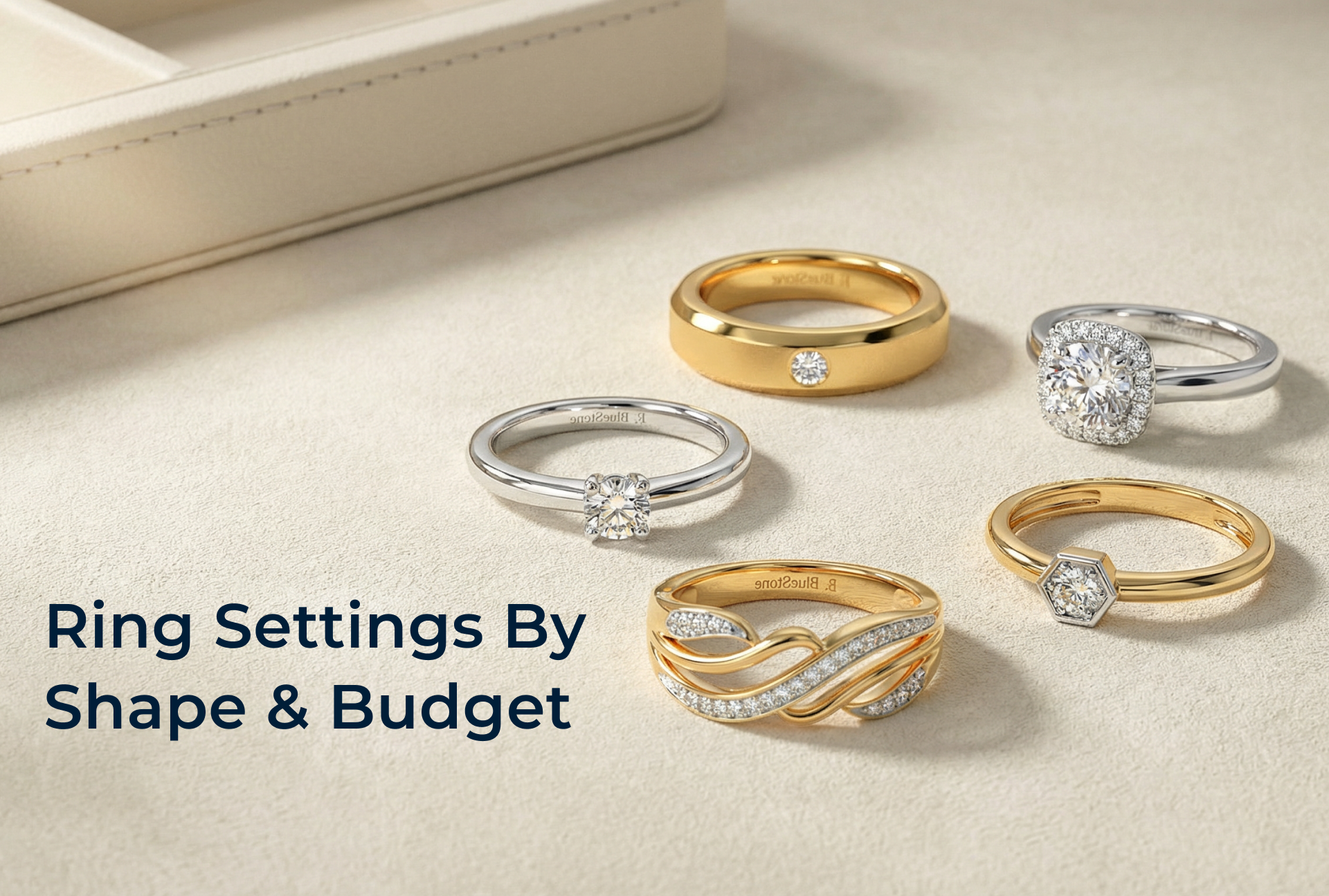
Buying a diamond ring is one of the most thrilling times in one’s life, but it can be really overwhelming. With so many ring settings, shapes of the diamond, metal options, and prices available, how do you decide what’s right for you? This ring setting guide will help you gain a better understanding of the best ring settings, how to match a setting with your diamond shape, and how to choose a style that fits your budget.
Whether you are looking for timeless elegance or a more modern design, here is a complete guide for diamond ring settings along with comparisons and some expert tips.
What is a ring setting?

A ring setting is the design that holds your diamond in place. It affects:
- The overall appearance of the ring
- How much the diamond sparkles
- How safe the stone is
- Durability of the ring
- Total cost
This makes it important to learn how to choose ring setting options wisely.
Popular Ring Setting Types Explained

Here are the most popular ring settings today, including their pros, cons, and who they suit best.
1. Solitaire Setting
The queen of all engagement ring settings, the solitaire features a single diamond with no side stones.
- Best for: Those who want the diamond to stand out.
- Budget tip: Works beautifully for small diamonds, as the simplicity makes the stone appear larger.
- Durability: Good for daily wear.
2. Halo Setting
A center diamond surrounded by a circle of small diamonds (halo).
- Best for: Adding sparkle and making the diamond seem 20–30% larger.
- Budget tip: One of the best affordable ring settings, as you can purchase a smaller centre diamond without compromising the look.
3. Pavé Setting
Tiny diamonds are set close together along the band.
- Best for: Glamorous, elegant look.
- Durability: Good, but not ideal for rough, everyday use.
4. Bezel Setting
A metal rim completely or partially surrounds the diamond.
- Best for: People with active lifestyles; extremely secure.
- Durability: One of the strongest settings.
- Budget tip: Great to protect larger diamonds.
5. Three-Stone Setting
One large centre diamond with two side stones.
- Best for: Symbolism (past, present, future).
- Budget tip: Side stones can enhance the centre diamond.
6. Old Fashioned Setting
Inspired by antique designs, filigree, milgrain, and handcrafted details.
- Best for: Romantic and artistic tastes.
- Budget tip: Requires more craftsmanship—can be more expensive.
Ring Settings for Diamond Shapes
Different diamond shapes look their best in specific settings. Here is a clear comparison to help you choose.
1. Most Flattering Setting for a Round Diamond
Round diamonds sparkle the most and pair beautifully with:
- Solitaire
- Halo
- Pavé
These are the best settings for maximum brilliance.
2. Best Ring Setting for Oval Diamond
- Halo setting (makes it look larger)
- Solitaire setting (classic and clean)
- Bezel setting (very secure)
3. The Best Ring Setting for Princess Cut
- Channel settings
- Four-prong solitaire
- Halo
4. Emerald Cut Diamond Settings
Emerald cuts show clarity more than sparkle. They work best in:
- Three-stone
- Halo
- Bezel
They look luxurious but may require higher clarity grades.
5. Cushion Cut Diamond Settings
- Halo (very popular)
- Vintage settings
- Split shank settings
6. Pear & Marquise Diamond Settings
- Halo
- Bezel
- V-prongs for protection
How to Choose a Ring Setting for Your Diamond
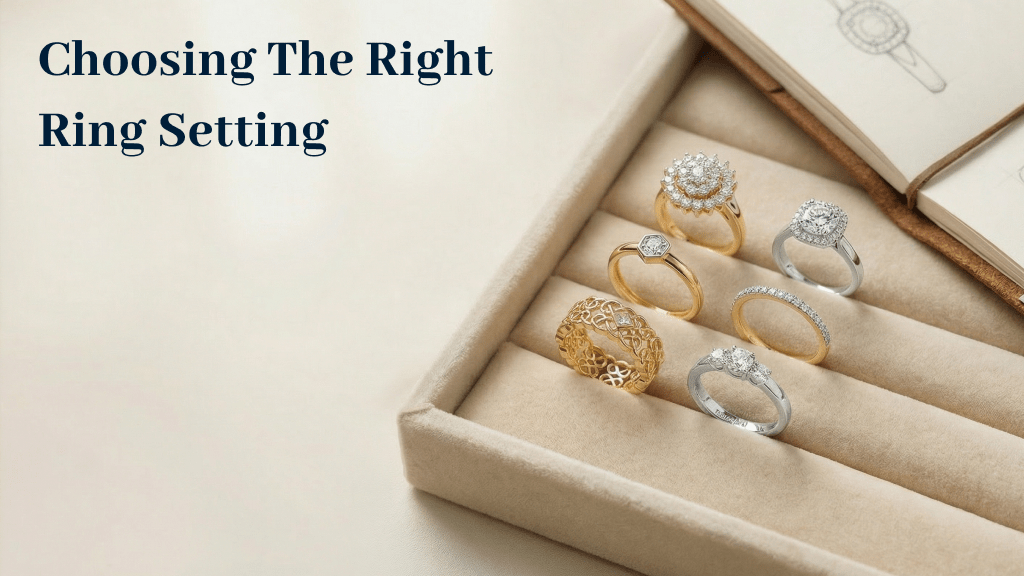
1. Look at Your Diamond’s Shape
Round stones love solitaires. Fancy shapes like pear and marquise need protective prongs.
2. Decide Your Wear Style
- Daily wear: Bezel, Solitaire, Cathedral
- Casual or glam: Halo, Pavé, Vintage
3. Consider Durability
The most durable ring settings include: Bezel, Channel, Four-prong solitaire.
4. Check Your Budget
Always check your budget and then choose the right one.
5. Decide Your Style
- Minimal: Solitaire
- Modern: Bezel or tension
- Glam: Halo or pavé
- Symbolic: Three-stone
- Vintage lover: Antique motifs
How to Choose a Ring Setting for Your Diamond Shape & Budget – Step by Step

- Choose your diamond shape first.
- Choose a setting that can protect it yet complement that shape.
- Match the setting according to your budget.
- Decide durability based on lifestyle.
- Try different rings to see what suits your hand.
Ring Settings for Small Diamonds
Smaller stones appear larger in halo, pavé, and cathedral settings. These maximize sparkle and visibility.
Ring Settings for Everyday Wear
The best long-lasting options include Bezel, Four-prong solitaire, and Channel settings. These are secure and comfortable for daily use.
Conclusion
Choosing from the many diamond ring settings does not have to be puzzling. When you understand your diamond shape, your lifestyle, and your budget, selecting the best ring settings becomes simple. Whether you want a subtle solitaire or a bold halo, the right setting will bring out the brilliance of your diamond and reflect your personal style.
FAQs
Q1. What are the best ring settings for maximum sparkle?
A1. Halo and pavé settings offer the most sparkle because the small diamonds enhance the centre stone.
Q2. Which ring setting is the most durable?
A2. Bezel settings are the strongest since they fully secure the diamond.
Q3. What is the best ring setting for round diamonds?
A3. Solitaire, halo, and cathedral settings are the most popular and enhance brilliance.
Q4. How do I choose a ring setting for my budget?
A4. For affordability, pick solitaire or halo; for mid-range, pavé or three-stone; for luxury, choose vintage.
Q5. Which ring settings are best for everyday wear?
A5. Bezel, channel, and four-prong solitaires are well-suited for daily wear because they are the most resilient.
Related Blogs:
- How to Style Diamond Jewellery with Your Engagement or Cocktail Gown: Tips for Every Neckline
- Diamond Carat Weight: How Size Affects Price
- What Is a Type II Diamond and Why Is It Rare?
- VS Diamonds: Meaning, Price, and Comparison
- What is VVS Clarity in Diamonds?
- Diamond Inclusions: What You Need to Know
Leave a Reply