
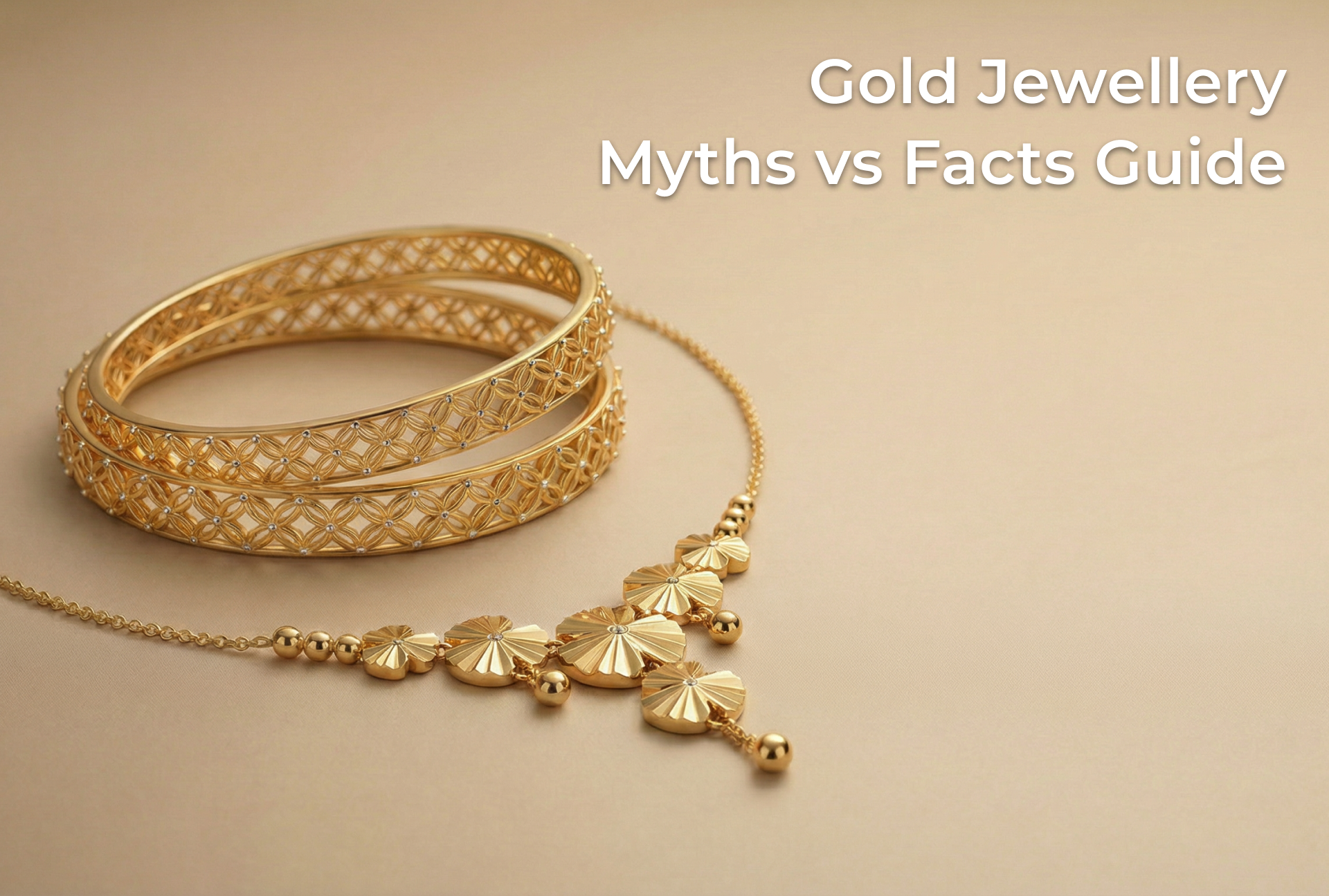
Gold jewellery is not just a shiny adornment; it has been a symbol of wealth, beauty, and cultural heritage for centuries. From heirloom bangles passed down through generations to delicate chains worn every day, gold jewellery holds a special place in every Indian household.
However, over the years, several myths about gold jewellery have circulated, leading to confusion among buyers. In this guide, we’ll bust the most common gold jewellery myths and share the real facts every gold buyer should know.
Myth 1: Higher Karat Gold Means Better Quality Jewellery

Many people believe that the higher the karat, the better the gold jewellery. While 24K gold is the purest form (99.9% gold), it’s also too soft to make durable jewellery.
Fact: The strength of gold jewellery depends on the alloy mixed with gold. Metals like copper, zinc, or silver are added to improve durability.
- 22K Gold: Contains 91.6% gold — perfect for traditional designs like bangles and chains.
- 18K Gold: Contains 75% gold — durable and ideal for diamond or gemstone-studded jewellery.
- 14K Gold: Contains 58.3% gold — affordable and great for everyday accessories.
Myth 2: Gold Jewellery Always Looks the Same

Some people assume gold only comes in the classic yellow tone we’re used to seeing. That’s not true — gold can be crafted in many beautiful shades.
Fact: Gold’s colour depends on the metals it’s alloyed with. The popular types include:
- Yellow Gold: The timeless, traditional favourite.
- White Gold: Sleek and modern, created by mixing gold with white metals like palladium or nickel.
- Rose Gold: A romantic blend of gold and copper, popular in contemporary designs.
Myth 3: Real Gold Will Never Tarnish or Lose Its Shine

While gold doesn’t corrode, it can appear dull over time due to moisture, air, or body oils.
Fact: Even real gold needs care. The metals in its alloy can react to the environment. To preserve your gold’s shine:
- Store jewellery in a soft pouch or box to prevent scratches.
- Avoid contact with perfumes, lotions, or sweat.
- Clean with mild soap and warm water to remove dirt and restore luster.
Myth 4: All Gold Jewellery Is Expensive

Many buyers assume that gold jewellery is always costly, but that’s not true.
Fact: Gold jewellery is available for every budget. The price depends on several factors such as:
- Purity (karat value)
- Weight (grams)
- Design complexity
- Current gold market rate
From minimalist gold bracelets to elaborate bridal necklaces, there’s a gold design for every price range.
Myth 5: Gold Hallmarking Doesn’t Matter

Some buyers skip checking the hallmark, trusting the jeweller blindly — a big mistake.
Fact: Hallmarking is the official proof of purity in India. Always look for these details on your jewellery:
- BIS Logo
- Karat Mark (e.g., 22K, 18K)
- Jeweller’s Identification Mark
- Year of Hallmarking
Checking for a BIS hallmark ensures authenticity and enhances resale value.
Myth 6: Gold Can’t Be Mixed with Diamonds or Gemstones

Many think gold is meant only for plain jewellery. That’s far from the truth.
Fact: Gold is one of the most versatile metals and perfectly complements diamonds, pearls, emeralds, and rubies. In modern designs, gold and diamond rings or emerald earrings showcase sophistication and style.
Myth 7: All Yellow Metals Are Pure Gold

Just because something looks golden doesn’t mean it’s real gold.
Fact: Metals like brass and copper have a similar hue but are far less valuable. Many gold-plated items mimic the look of real gold, so always check for BIS hallmarking or have your jewellery tested by a trusted jeweller.
Myth 8: White Gold Isn’t Real Gold
Some believe white gold isn’t genuine because it doesn’t have the yellow tone of pure gold.
Fact: White gold is real gold, made by alloying pure gold with white metals such as palladium or silver, then plated with rhodium for extra shine and protection. It’s a luxurious, affordable alternative to platinum.
Myth 9: You Can’t Wear Gold Jewellery Every Day
Fact: You absolutely can! Gold is one of the most durable metals, especially in 18K or 22K forms. Minimalist pendants, rings, and earrings are designed for everyday comfort and effortless style.
Myth 10: Old Gold Jewellery Loses Its Value Over Time
Many people think that gold loses value as it ages — that’s a myth.
Fact: Gold never loses its intrinsic value. Its worth depends on purity and weight, not design or age. Old jewellery can be melted, refined, or exchanged for new designs without losing value.
FAQs
1. How do I know if my gold jewellery is real?
Look for the BIS hallmark, which certifies purity. You can also have it verified by a trusted jeweller.
2. What’s better — 22K or 18K gold jewellery?
22K is ideal for traditional designs, while 18K offers better strength for diamond or gemstone-studded jewellery.
3. Can gold jewellery lose its shine?
Yes. Regular exposure to moisture, perfumes, and sweat can dull the surface. Clean periodically to restore brilliance.
4. Why is hallmarked jewellery important?
Hallmarking guarantees purity and authenticity, protecting you from fraud and ensuring the jewellery meets national standards.
5. Does gold jewellery have resale value?
Yes. Gold has one of the highest resale values, which depends on its purity and the current market rate.
Related Blogs:
- Why Gold Costs More in Some Indian Cities Than Others
- How to Calculate the Price of Your Gold Jewellery
- What is HSN Code for Jewellery? Gold, Diamond, Silver
- What is White Gold? How Much Is White Gold Worth?
- White Gold vs Gold, Silver & Platinum: Price, Durability & Best Choice
Leave a Reply