
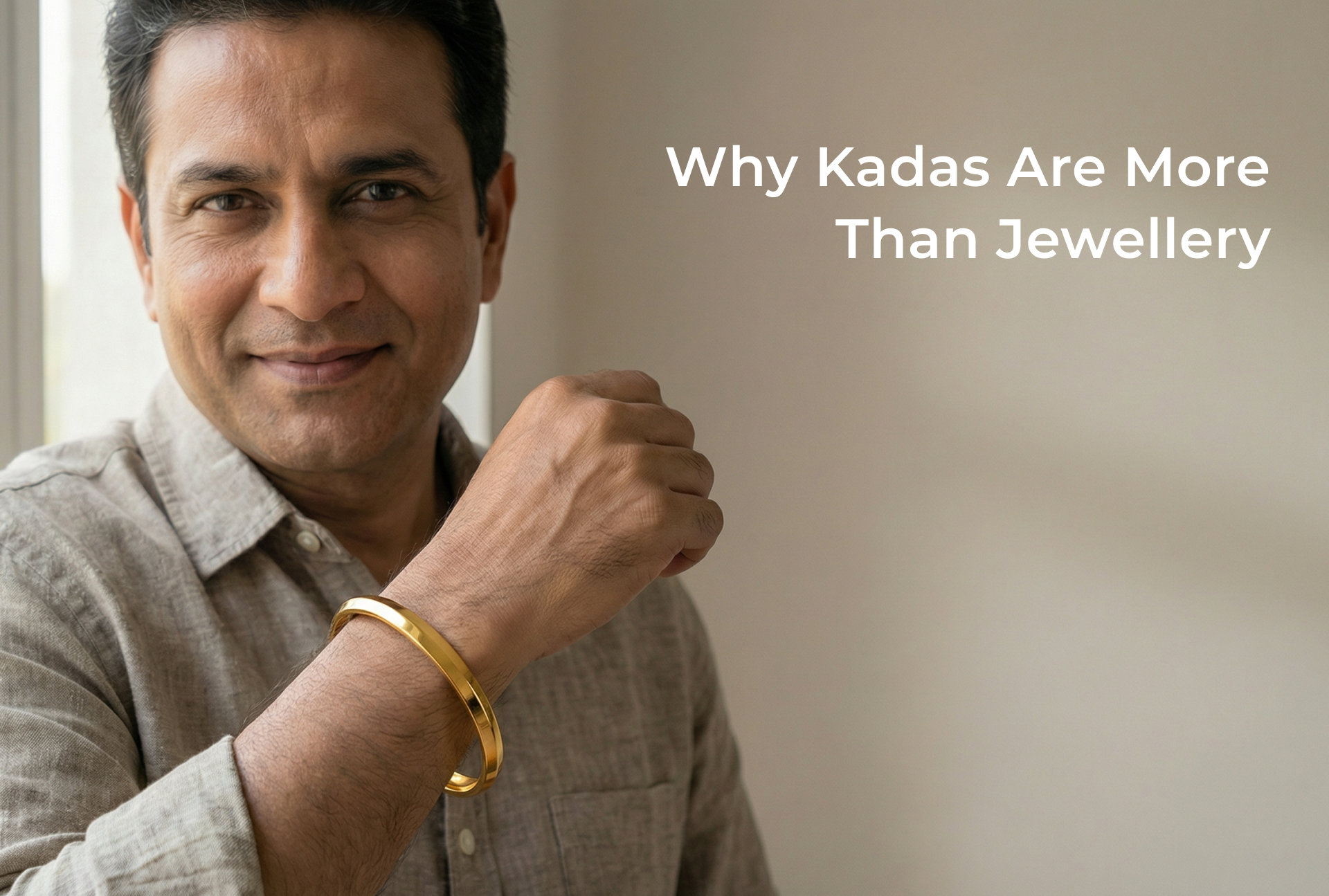
In the rainbow of Indian jewellery, where necklaces shimmer and earrings swing with fetching femininity, the kada stands as an unapologetic, bold statement of masculinity. Worn tight around the wrist, this heavy, round bangle is much more than a fashion accessory it is a cultural icon, spiritual anchor, and silent narrator of heritage. To Indian men, particularly Sikhs, Punjabis, Rajputs, and other North Indian communities, the men’s kada is not just another ornament it is strength, faith, protection, and identity.
In a world where men’s jewellery often struggles against stereotypes of vanity, the kada remains a timeless reminder of the power of adornment as a symbol of depth and devotion.
Historical Origins: From Battlefields to Daily Life
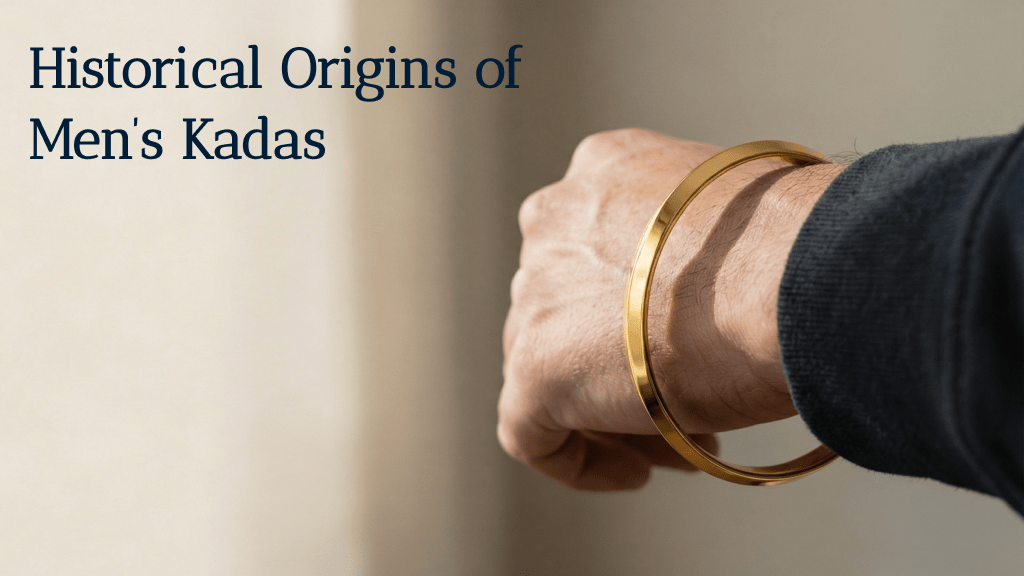
The kada traces its roots back to ancient warriors. Rajput and Sikh fighters wore heavy iron or steel bangles in medieval India not for decoration, but for protection. These kadas could repel sword strikes and acted as makeshift shields in close combat. Their circular shape represented eternity and unbreakable resolve signifying a warrior’s promise to uphold dharma (righteousness).
In Sikhism, the kada was sanctified by Guru Gobind Singh, the tenth Sikh Guru, who declared it one of the Five Ks (Panj Kakar) when founding the Khalsa in 1699. Known as the kara, it must be made of iron or steel and is typically worn on the right wrist. The kara reminds Sikhs of their duty to act righteously its circular form symbolizes God’s infinity and the wearer’s commitment to truth and virtue.
Beyond Sikhism, golden or silver kadas symbolized royalty and valor in Hindu Rajput families. Mughal miniatures depict emperors and nobles adorned with kadas engraved with lions or elephants to represent power. Even farmers in Punjab and Haryana wore simple brass kadas to ward off the evil eye. Traditionally, the kada was a man’s silent armor practical, symbolic, and enduring.
Spiritual and Symbolic Depth

Spiritually, the kada acts as a compass for moral and spiritual conduct. For Sikhs, removing the kara is akin to shedding one’s faith. It reinforces the sant sipahi (saint-soldier) ideal, blending humility with courage. Many devout Sikhs describe the kara as “a handcuff to God,” a constant reminder to remain on the righteous path.
In broader Indian culture, the kada carries protective and healing connotations. According to Ayurveda, wearing metal jewellery on the wrist balances energy channels (nadi) and neutralizes negative vibrations. It’s also believed to absorb shock during physical activity and protect the wearer from misfortune if a kada cracks, it’s said to have “taken the blow” meant for its owner.
Family heirloom kadas amplify these meanings. A gold kada passed down from a grandfather isn’t just metal it’s a legacy of blessings. Engraved with mantras or family crests, these kadas connect generations, making them emotional talismans of continuity.
Cultural Identity and Social Significance

The kada is a cultural badge of identity. In Punjab, a thick gold kada signifies pride and prosperity, gleaming under the lights of bhangra performances. For Sikhs worldwide, the steel kara represents resilience, faith, and belonging, especially post the 1984 anti-Sikh riots.
It also redefines masculinity in modern fashion. If women’s ornaments symbolize grace, the kada represents strength and steadiness. Whether seen on Bollywood stars like Akshay Kumar or Ranveer Singh, or worn subtly beneath a business suit, the kada merges heritage with style.
In community life, kadas also connect people. In gurdwaras, the soft chime of kadas during prayer fosters unity. In Punjabi villages, gifting a newborn a small kada welcomes them into cultural tradition. Today, non-Sikhs too wear kadas for spiritual reasons or as fashion statements celebrating Indian craftsmanship.
Material and Craftsmanship: A Blend of Tradition and Modernity

Traditional Sikh kadas are made of sarbloh (pure iron) or stainless steel plain, symbolizing equality. Punjabi gold kadas can weigh between 20–50 grams and often feature intricate meenakari or kundan work. Rajasthani versions use silver with tribal engravings.
Modern jewellers blend tradition with innovation. Titanium kadas offer lightweight durability, while diamond-studded or laser-engraved kadas appeal to luxury buyers. Sustainable brands now craft recycled gold kadas for eco-conscious youth, and customization like monograms or spiritual symbols makes each piece unique.
Kadas in Men’s Fashion Today and Beyond

In today’s fashion landscape, the kada seamlessly bridges tradition and trend. Urban men pair metallic kadas with leather bracelets or wear slim gold designs for weddings. On social media, influencers showcase kada stacking as a global streetwear trend, while Sikh youth abroad wear them proudly as identity markers.
Despite modern challenges such as airport restrictions or counterfeit copies flooding the market, the kada continues to thrive as a statement of cultural pride, faith, and fashion. Understanding its symbolism ensures it remains much more than just an accessory it’s a heritage in motion.
FAQs
1. How is a kada different from a kara?
A kara is the iron or steel bangle worn by Sikhs as one of the Five Ks simple and spiritual. A kada, on the other hand, can refer to any broader bangle worn by Indian men across communities, often made of gold or silver and rich in cultural or aesthetic value.
2. Do non-Sikhs have a right to wear a kada?
Yes. While the kara holds religious importance in Sikhism, kadas made from other metals are worn by Hindus, Punjabis, and people from other communities for cultural, spiritual, or fashion reasons.
3. Why is the kada worn on the wrist?
The wrist is a constant point of motion, symbolizing vigilance and awareness. Wearing the kada there reminds the wearer of responsibility, self-control, and righteous conduct at all times.
4. How do I select the appropriate kada size and material?
Measure your wrist and add 1–2 cm for comfort. Choose steel for spiritual or everyday wear, and gold or silver for festive or formal occasions.
5. Are kadas still in vogue in contemporary Indian men’s fashion?
Absolutely. Kadas now blend seamlessly with both ethnic and Western outfits. Simple steel or gold designs appeal to modern tastes while maintaining deep cultural symbolism.
Related Blogs
Leave a Reply