
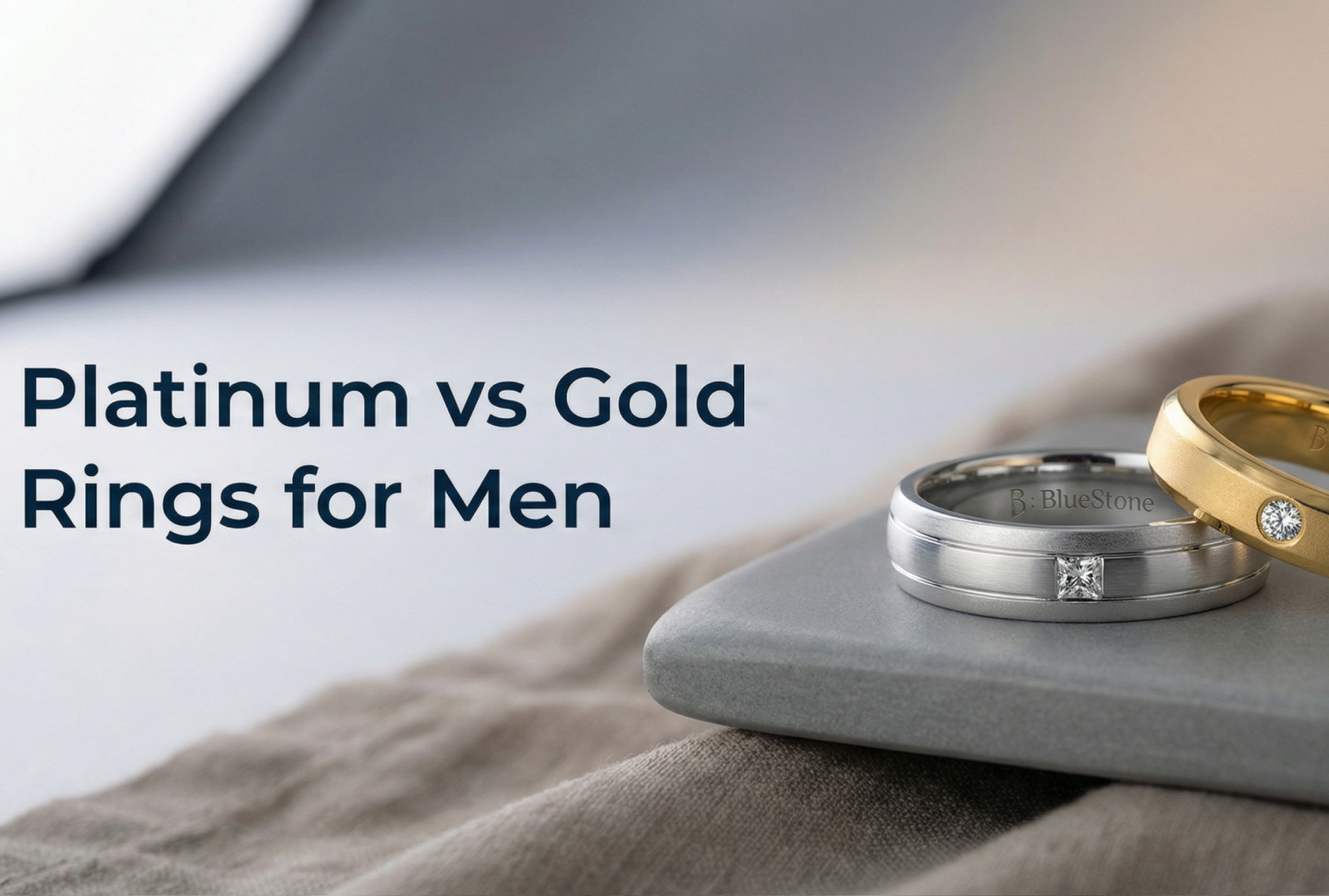
When a man selects a ring whether for marriage, commitment, or style the choice of metal becomes more than just decoration; it’s a daily companion. As we step into 2025, platinum and gold remain the leading choices in men’s jewellery. Both carry prestige and longevity, yet they cater to different lifestyles, budgets, and values.
This guide compares Platinum ring and Gold ring across durability, aesthetics, skin safety, cost, maintenance, and cultural meaning to help you decide which one truly deserves a place on your finger.
Durability & Wear Resistance

Platinum stands as the fortress of ring metals. Being about 60% denser than gold and used in 95% pure form, it resists bending, denting, and deformation exceptionally well. Everyday wear leaves behind a soft matte patina that many men appreciate for its character and it can be easily polished away without losing metal.
Gold remains the classic contender. A 14K men’s gold ring (58.3% pure) combines gold with copper or silver for toughness, but it’s softer than platinum and more prone to dents. White gold relies on rhodium plating for its brightness, which wears off in one to three years and needs re-plating.
Verdict: Platinum wins for lifelong structural strength and superior scratch resistance.
Aesthetics & Style
Platinum delivers a cool, silvery white tone that never tarnishes. Its natural color complements modern men’s aesthetics, brushed finishes, carbon fiber inlays, or black diamond details.
Gold offers warmth and variety. Yellow gold ring for men reflects tradition and prosperity; rose gold exudes a rugged romance; white gold (freshly plated) mimics platinum’s brilliance. However, white gold’s plating fades, requiring periodic care.
Verdict: Platinum suits modern minimalists, while gold caters to those who love timeless warmth or color versatility.
Hypoallergenic Properties
Platinum is naturally hypoallergenic ideal for sensitive skin. It’s nickel-free and comfortable to wear even in humid climates or during physical activity.
Gold’s skin safety depends on its alloy. 24K gold is inert but too soft; yellow and rose gold are safer than white gold, which may contain up to 15% nickel a common skin irritant.
Verdict: Platinum reigns supreme for skin comfort and purity.
Cost & Investment Value

Platinum commands a higher price a 6mm comfort fit band typically ranges from ₹1,50,000 to ₹2,65,000 due to its rarity (30x rarer than gold) and purity. However, it retains 80–90% of its value because of industrial and luxury demand.
Gold is more budget-friendly. A 14K gold ring of similar width costs ₹65,000–₹1,25,000 (as of November 2025). It’s easier to resell but requires ongoing rhodium re-plating for white gold, which adds maintenance costs.
Verdict: Platinum justifies its cost as a legacy investment; gold wins for immediate affordability.
Maintenance & Care

Platinum requires minimal upkeep just warm water, mild soap, or an annual ultrasonic cleaning. It doesn’t tarnish or lose its color and can be polished to restore shine anytime.
Gold needs more attention. White gold requires re-plating every 1–3 years; all gold variants scratch easily and react to chlorine, causing pitting and dullness.
Verdict: Platinum is perfect for those who prefer “wear it and forget it.”
Cultural & Symbolic Significance
Platinum symbolizes strength, rarity, and exclusivity. Global icons like Chris Hemsworth and Ryan Reynolds have popularized it among men who appreciate understated luxury. In India, platinum is fast becoming the choice of urban grooms seeking modern minimalism.
Gold, on the other hand, remains deeply rooted in Indian tradition symbolizing wealth, prosperity, and family heritage. For men’s Jewellery, Gold preferred for weddings and auspicious events across communities.
Trend Insight (2025): Platinum dominates minimalist, Scandinavian-inspired designs, while rose gold drives bohemian and vintage fashion. Two tone bands combining platinum and gold are rising fast among men who want the best of both worlds.
Platinum & Gold – Comparison Summary

| Aspect | Platinum | Gold |
|---|---|---|
| Composition & Purity | 95% pure (950 platinum) | 58.3% (14K) or 75% (18K); alloyed with copper, silver, or nickel |
| Density & Weight | 60% denser; heavier (~10–12g for 6mm band) | Lighter (~6–8g for 6mm 14K band) |
| Durability | Resists bending and denting; develops patina | Durable but softer; rhodium plating wears off |
| Scratch Resistance | Scratches form patina, easily polished | Shows deeper scratches on polished surfaces |
| Hypoallergenic | Nickel-free; completely safe | White gold may contain nickel; yellow/rose gold safer |
Choose Platinum if you want a strong, hypoallergenic, low-maintenance, and investment worthy ring. Choose Gold if you value tradition, budget flexibility, or diverse color options. Ultimately, the “best” metal is the one that fits your lifestyle and tells your story every day.
FAQs
1. Does platinum turn yellow like white gold?
No. Platinum’s white hue is natural and permanent. White gold, however, yellows over time as its rhodium plating wears off.
2. Can platinum rings be resized?
Yes, but resizing platinum is more complex and costly. Most jewelers can adjust the size by about one size up or down.
3. Is platinum heavier than gold?
Yes. Platinum is approximately 60% denser than gold, giving it a solid, substantial feel on the hand.
4. Which metal scratches more easily?
Both can scratch, but platinum’s scratches form a soft patina and don’t result in metal loss, while gold scratches are deeper and more visible.
5. Can I wear the ring to the gym or ocean?
Yes, for platinum it can withstand saltwater and sweat with just a quick rinse. Gold, however, is more prone to dents and chlorine damage.
Related Blogs
- Why Kadas Are More Than Just Jewellery in Indian Men’s Culture
- The Modern Man’s Guide to Bracelet Types: Chain, Cuff and Charm Explained
Leave a Reply