
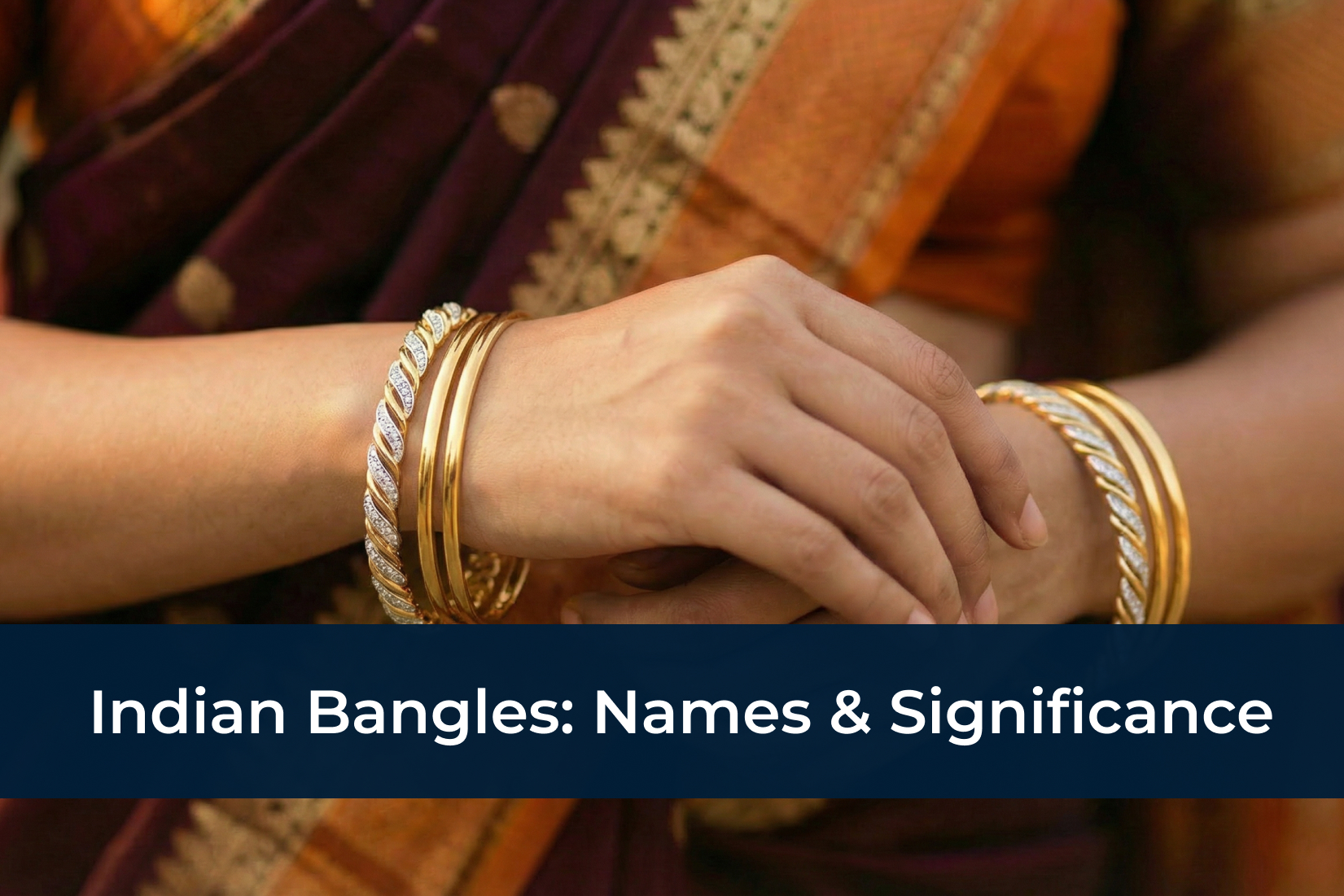
Indian bangles are not ornaments, but metaphoric coloured tradition, womanhood, and culture. They decorate women throughout India, the circular decorations ringing with every movement, providing music for mundane life and celebrations. So, what do Indian bangles appear to be? The terminology is geographically, linguistically, and form-wise diverse, as a testament to India’s extremely integrated cultural and linguistic heritage. Chudi, Chooda, Valayal, Kada, and Kangan are some of the names, and all of them have a variant meaning. In the Hindi belt, they would be referred to as Chudi, and in Tamil Nadu they are called Valayal. Indian bangles hold unprecedented significance in Indian tradition and culture.
These are symbols of wedlock, luck, and a shield against evil spirits. Arms exposed are bad luck in every culture, and hence the wrists of the bride are never exposed. Bangles are a part of rituals, festivities, and daily wear, and these are symbols of Indian jewellery culture in the real sense. From ancient Indus Valley civilization to contemporary fashion, bangles have come a long way but never lost their function and hence are classic Indian jewellery.
Varying Names of Bangles in India

In North India, particularly in Punjab, Delhi, Haryana, and Uttar Pradesh, bangles are also referred to as Chudi or Chooda. Chudi is employed to refer to thin bangles made of glass or metal, whereas Chooda refers to a set of thicker, usually ivory or plastic bangles that are used by brides.
Traveling south to Tamil Nadu, they are referred to as Valayal. These are typically gold or silver rings, with an eye to simplicity and beauty to wear on a daily basis.
Rajasthan and Punjab reference Kangan or Kada. Kangan for heavy, decorated bangles and Kada for broad, cuff-types, usually in gold or silver, meaning strength and dignity.
The classic South Indian patterns use Vanki or Vadanam, armlets or dance or wedding professional bangles that consist of heavily ornate designs such as deities or peacocks.
In Maharashtra, the Gajra Bangles are flower-shaped or curved wreath shapes, bead-formed designs, thus giving an aesthetic fashion to wear.
Glass Bangles or Churi are the symbol of Hyderabad and Uttar Pradesh because they are glittering and small, and typically Indian hand-made bangles that create a sweet ring sound.
Regional Popular Bangles of India

There is one bangle culture for each Indian state based on regional tradition.
- Bridal Chooda (Punjab & Haryana): Ivory and red bangles adorned by brides for 40 days post-wedding as symbols of wedded bliss. Punjab fashion Chooda bangles feature kalire pendants.
- Rajasthan: Renowned for Jaipur Lac Bangles crafted from lacquer resin and studded with stones or mirrors, worn on Teej and other festivals.
- Gujarat: Ivory Bangles are nuptial symbols, once made from elephant tusk but now ethical substitutes, representing chastity and loyalty.
- Maharashtra: Green Glass Bangles are worn with Paithani sarees by brides, symbolizing prosperity and fertility.
- West Bengal: Shakha-Pola consists of white conch shell (Shakha) and red coral (Pola) bangles worn by wedded women.
- Odisha and Assam: Conch Bangles made from seashells, said to ward off evil spirits.
- Hyderabad: Colourful glass bangles of Laad Bazaar, popular for Eid and weddings.
- Tamil Nadu & Kerala: Gold Kada and Valayal, narrow and dainty, passed down as family heirlooms.
- Karnataka: Kasina Bangles with coins attached that jingle as auspicious signs when dancing.
- Bihar & Jharkhand: Lac and glass bangles used in festivals with colour symbolism—red for energy, white for peace.
Various Types of Bangles Based on Material

Bangles exist in different materials with their own beauty and cultural importance, showcasing Indian diversity in craftsmanship.
- Glass Bangles: Inexpensive, lightweight, and trendy in North and Central India, they tinkle and shine symbolizing the fragility of life.
- Lac Bangles: Made from natural resin, customizable, and eco-friendly—especially popular in Rajasthan.
- Gold Bangles: Wealth symbols handed down through generations, essential in South Indian weddings.
- Silver Bangles: Affordable and embossed with designs, common in tribal jewellery traditions.
- Ivory or Artificial Ivory Bangles: Known for smoothness, particularly valued in Gujarat’s traditions.
- Metal & Plastic Bangles: Modern variants like Kada or alloy bangles blend fashion and tradition with temple motifs in South India.
Cultural & Ritual Significance

Bangles are extremely ritualistic in India and are part of major life events and festivals.
- In Punjabi weddings, Chooda is gifted to the bride by her maternal uncle as a token of blessing.
- Bengali Shakha-Pola is worn during wedding ceremonies as a symbol of marital bliss.
- Maharashtrian brides wear green glass bangles for prosperity.
- During Karwa Chauth, women wear red bangles symbolizing love and strength; during Teej, Rajasthani women wear colourful lac bangles.
- Gold and silver bangles are worn during Diwali for wealth, while Hyderabad’s Laad Bazaar lights up with glass bangles for Eid.
Daily use of bangles remains deeply tied to tradition—married women rarely leave their wrists bare, and modern trends blend heritage with daily wear gracefully.
Current Trends in Bangles

Modern bangles merge tradition with contemporary fashion. Designs like diamond-studded gold Kadas or minimalist lac bangles are now in vogue. Fashion bracelets borrow global influences like stackable designs and charm styles while retaining Indian cultural symbolism.
Conclusion
Bangles are more than ornaments—they are symbols of beauty, status, and tradition, echoing heritage stories with every “ting.” They remain beloved across generations for their emotional and cultural depth, securing their place as timeless symbols of Indian identity.
Frequently Asked Questions
1. What does different coloured bangles signify in India?
Red signifies energy and wedded bliss, green signifies fertility, white signifies purity, and gold signifies wealth.
2. Are glass bangles practiced extensively in modern India?
Yes, particularly in cities like Hyderabad and Uttar Pradesh, where they are worn both for celebrations and general adornment.
3. How are lac bangles produced?
They are manually crafted using melted lacquer resin, then shaped and adorned with mirrors or stones, especially in Rajasthan.
4. What is the meaning of the Chooda in Punjabi weddings?
It is a red and ivory bangle set given to brides as a token of new beginnings and prosperity in married life.
5. Do men wear Kada bangles?
Yes, in some cultures like Punjab, Kadas are unisex, and men wear thicker versions as symbols of strength and masculinity.
Related Blogs:
- What is the Difference Between a Bangle and a Bracelet – Complete Guide
- Most Popular Types of Bangles & How to Style Them
- What is a Bangle? Meaning, History & Cultural Significance
- What Do 7 Bangles Mean? Symbolism Explained
- Gold Bangles Guide: Designs, Styles & Buying Tips
Leave a Reply