
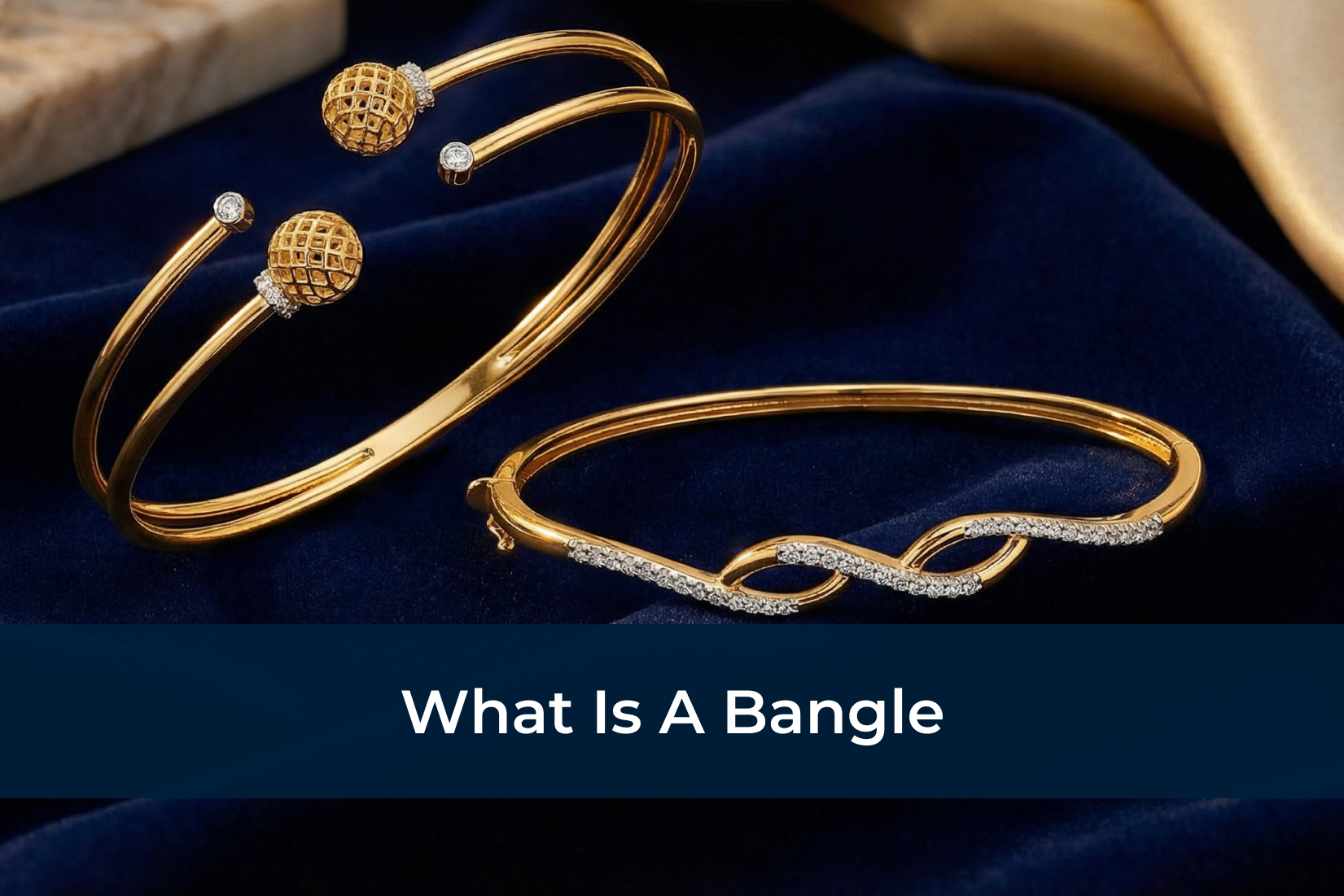
Hello, jewellery lovers! Do you recall wearing a pile of colourful bracelets and feeling that added ounce of fashion and self-assurance? Bangles have simply done this for people from every culture for over three thousand years. They’re not mere adornments… bangles carry stories, traditions, and even history.
In this blog post, we’re going on an adventure into the world of bangles, discovering what they symbolise, where they originated from, and why they’re still a popular favourite in our lives (and on our wrists) today. Whether you’re a fashionista or interested in cultural gems, you’re in the right place. Let us start by responding to the basics: Discover what a bangle is really… a rigid, round bracelet typically constructed without closure, to be slid over onto the hand. Unlike elastic bracelets or strings, bangles are inflexible and are generally worn in a set for that satisfying clink.
Bangles are available in every shape, size, and material, ranging from dainty golden pieces to colourful glass ones. But their charm is not solely physical; it is historical and symbolic as well. If you are ready to discover more, read on while we break down everything from ancient beginnings to current trends.
Discover the Rich History of Bangles

Bangles are not a recent discovery, they go back to the beginning of time. Archaeological excavations point towards the Indus Valley Civilisation (around 2600 BCE) as among the earliest civilisations where bangles were present. Excavation in Harappa revealed terracotta and shell bangles worn by women, which suggests that they were already a symbol of status and beauty then.
Flash-forward to Egypt, where bangles from gold, silver, and precious gems covered pharaohs and regular people alike. During Roman times, bangles tended to be engraved with patterns or served as money.
At the same time in Africa, people made beaded bangles from natural materials and passed them down as heirlooms. In the Middle Ages, bangles flourished in Asia and the Middle East. They became a fixture of daily life and rituals in India and are mentioned in ancient texts like the Vedas. In the Mughal period, elaborate designs using enamel and gems raised bangles to a regal level. European travellers brought back influences, which created trends in Victorian England where mourning bangles (constructed from jet or hair) indicated loss.
By the 20th century, bangles traversed seas through migration. In the Americas, silver bangles were added to the regalia of Native American tribes. Bangles fuse tradition with innovation today, but history informs us of man’s abiding love for ornamentation. How interesting that a mere loop can link us to our forebears.
Reveal the Cultural Significance of Bangles

Bangles are not only beautiful, they’re full of meaning. Discover the cultural meaning behind bangles to learn why they are donned during the biggest occasions in life. In most cultures, bangles signify prosperity, protection, and identity. In Indian culture, for example, the ringing of bangles is said to repel evil spirits and bring good fortune. Nowhere is this more glaring than in weddings and rituals. In India, part of a bride’s “solah shringar” (16 ornaments) is bangles as an important feature. Red glass bangles, or “chooda”, are presented to Punjabi brides and worn for months after the wedding to represent marital happiness. Breaking a bangle is thought to be bad luck, following beliefs regarding a husband’s longevity.
Outside of India, bangles have influence in other societies as well. Even in Western societies, bangles have penetrated symbolism, consider charm bangles amassing life milestones. But not to forget the symbolism of wearing bangles. They symbolise love, loyalty, and femininity. In some cultures, the full complement on both wrists signifies completeness in marriage. To others, such as in Chinese culture, jade bangles are health and harmony talismans. This symbolism runs deep, so much so that bangles become not just accessories; they’re cultural talismans recounting individual stories.
Learn About Traditional Indian Bangles

Where bangles are concerned, India takes centre stage with its varied customs. Discover traditional Indian bangles to enjoy the regional colour and skill. Going from Hyderabad’s busy markets to Rajasthan’s craft villages, these are lovingly handcrafted.
Materials differ extensively:Gold bangles, such as South India’s substantial “kangan”, are inherited items with temple motifs engraved on them. Rajasthani lac bangles employ natural resin overlaid with foil to give them a worn look.
Regional types add to the diversity. Making traditional Indian bangles is an art that has been passed down for generations. In a mass production world, these handcrafted treasures keep heritage alive and contribute to local economies.
Various Types of Bangles Around the World

Bangles are not limited to a single style or location. Various bangle types around the globe reflect international creativity in form, material, and use.
First, by material: Metal bangles (gold, silver, or brass) are strong and timeless, normally engraved or filigreed. Glass or acrylic ones provide affordability and a splash of colours. Wooden or bamboo bangles of Southeast Asia provide earthy warmth, while plastic ones are best for children or for everyday wear.
In design, there’s the cuff bangle, open-ended and wide for effortless wearing. Hinged bangles close with a clasp, perfect for those who have trouble putting them on. Thin bangles stacked together form a bohemian look, while chunky ones make a statement.
Internationally, designs vary: African bangles may include wires and beads, such as Kenyan “manilla” money bangles. Mexican Aztec-patterned silver bangles are found in Latin America. Even European fashion sees minimalist Scandinavian designs utilising sterling silver for everyday chic.
Whatever the kind, bangles fit with personality. Mix metal for cool or complement colors for harmony. That versatility makes them work internationally.
Contemporary Employment of Bangles in Fashion Today
Culture harmonizes with style in contemporary wardrobe. Contemporary employment of bangles in fashion today combines tradition with modern style.
The designers transform bangles in fashion parades, piling them over watches or stacking over sleeves. Personalization is also thriving… get names or birthstones engraved for emotional appeal.
Bangles lift up outfits in an instant: Combine dainty ones with sundresses for a summer feel or bold cuffs with power suits for assertiveness. They’re universal, accommodating all genders and ages.
Wrapping It Up: Why Bangles Last
From ancient relics to contemporary essentials, bangles thread their way through human history.
They’re not only beautiful, but also represent love, identity, and culture. The next time you listen to that soft clinking, recall the tale behind it. You like old-school or fashion stacks, bangles remind us to respect our heritage while we evolve.
Frequently Asked Questions (FAQs)
What is a bangle?
A bangle is a stiff, circular bracelet without a clasp, usually slipped on over the hand. They’re usually worn in sets and are found in many different materials such as metal or glass.
What is the history of bangles?
Bangles originated in 2600 BCE in the Indus Valley, going through Egyptian, Roman, and Mughal influences to become the wide variety that we find today.
Why do individuals wear bangles in cultures such as India?
Bangles in Indian culture represent marital status, prosperity, and protection, and are typically worn on weddings and festivals.
What are the most common bangle types?
Popular ones are glass bangles for color, gold for opulence, cuff designs for ease, and beaded ones for global style.
How do I style bangles in modern fashion?
Stack with watches, mix metals, or layer over long-sleeves for a hip look that honors tradition.
Related Blogs
Leave a Reply