
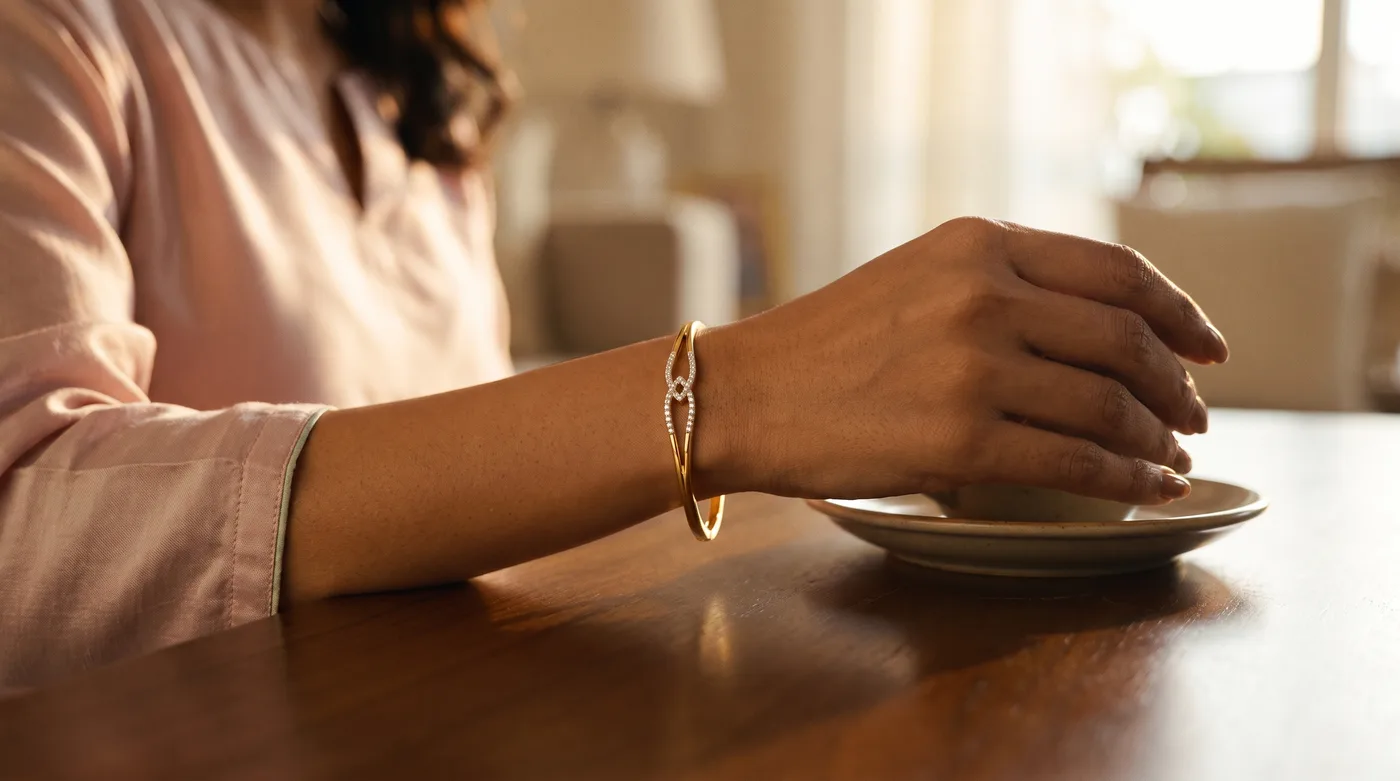
By Satyam, BlueStone Editorial
Few pieces of fine jewellery hold as revered a place in an Indian jewellery box as stone bangles. Bridging centuries of regal adornment with modern everyday luxury, gold stone bangles bring an irresistible symphony of radiant gold luster, gemstone fire, and graceful wrist movement. Whether crafted with brilliant-cut diamonds, vibrant precious rubies, emeralds, or lustrous sapphires, selecting the perfect pair requires a thoughtful balance between aesthetic glamour, structural durability, and financial transparency.
Unlike plain solid gold bangles where valuation relies solely on metal weight and gold purity, purchasing stone bangles introduces critical variables such as gemstone setting security, net gold weight deductions, clasp engineering, and alloy strength. In 2026, conscious fine jewellery buyers demand pieces that not only dazzle at weddings and festive galas but also withstand the dynamic demands of contemporary daily life. This comprehensive guide breaks down everything you must evaluate, from understanding 22K vs 18K gold alloys and decoding prong versus channel settings to mastering Indian bangle sizing and verifying mandatory BIS hallmarking.
Key Takeaways at a Glance:
- Purity and Structural Integrity: While 22K gold offers unmatched traditional yellow richness, 18K and 14K gold provide essential structural tensile strength needed to hold gemstone prongs and channels securely over decades of wear without loosening.
- Mandatory Net Weight Billing: Under Bureau of Indian Standards (BIS) and consumer protection guidelines, jewellers must strictly bill gold metal based on net gold weight after deducting the exact weight of all embedded stones. Always insist on an itemized invoice separating gold weight from stone charges.
- Setting Selection for Lifestyle: Channel and bezel settings offer sleek, snag-free security ideal for daily office wear and styling with delicate silk sarees, whereas prong and claw settings maximize optical sparkle and light refraction for grand celebrations.
- Sizing Precision: Indian bangle sizes (ranging from 2-2 to 2-10) reflect internal diameter measurements in inches and eighths. For rigid round bangles, always measure knuckle width at its widest compressed point; for hinged kadas with clasps, measure wrist circumference directly.
- BIS HUID Verification: Ensure every hallmarked gold stone bangle bears the 3 mandatory hallmarks: the BIS triangular logo, karat fineness (such as 18K750 or 22K916), and the 6-digit alphanumeric HUID code traceable on the BIS Care App.
What Are Stone Bangles and Why Choose Fine Gold Settings?
At their core, stone bangles refer to rigid or semi-rigid wrist adornments crafted in precious metals and encrusted with precious or semi-precious stones. In traditional Indian heritage, stone-studded bangles trace back to the opulent courts of the Mughal era and the regal dynasties of South India, where kundan, polki, and gemstone-encrusted kadas symbolized royalty, prosperity, and marital auspiciousness. Over generations, these elaborate ornaments have evolved into sleek, versatile silhouettes suited for the contemporary woman.
Choosing authentic fine gold stone bangles over imitation or base-metal fashion jewellery represents a significant investment in longevity, skin safety, and lasting intrinsic value. Base metals such as brass, copper, or alloys coated with flash gold plating inevitably oxidize, tarnish, and cause skin irritation when exposed to moisture, perfume, or body oils. In contrast, authentic fine gold (18K, 14K, or 22K) is naturally hypoallergenic, corrosion-resistant, and retains its warm radiance indefinitely.
Furthermore, setting precious gemstones or natural diamonds in solid gold provides permanent structural value. Authentic gold jewellery can always be certified, insured, repaired, resized, or exchanged under trusted jeweller buyback policies. When you invest in a certified gold stone bangle, you acquire a personal heirloom that holds real market value and can be cherished across generations.
Popular Stone Bangles Design Styles for Modern Women
Today’s jewellery landscape offers an extraordinary range of stone bangles design options tailored to diverse aesthetic preferences, occasions, and personal styles. Whether your wardrobe leans toward understated minimalist chic or lavish traditional opulence, understanding the architectural design categories will help you select the most flattering silhouette:
1. Classic Single-Line Eternity Bangles:
The single-line eternity bangle, often referred to as the traditional diamond line bangle, features an uninterrupted row of identically sized stones encasing the circumference of the wrist. Celebrated for its fluid geometry and refined sparkle, this design is the pinnacle of timeless sophistication. It transitions effortlessly from high-stakes boardroom meetings paired with tailored blazers to evening cocktail dinners and weekend brunch outings. Its slender profile makes it exceptionally comfortable for daily wear.
2. Hinged Kadas with Gemstone Terminals:
For those who love statement wristwear without excessive bulk, the hinged stone kada provides the ideal solution. Rather than forcing a rigid circular loop over the knuckles, a hinged kada features a discreet side hinge and a secure push-button or screw clasp. This allows the bangle to sit closer to the natural oval contours of the wrist. Modern iterations feature openable cuffs with bypass gemstone terminals, pave-encrusted motifs, or twin floral clusters that frame the top of the wrist dramatically.
3. Intricate Floral Cluster Bangles:
Drawing deep inspiration from classical Indian botanical motifs, floral cluster stone bangles group brilliant gemstones into blooming petals, leaves, and vine-like scrolls. These designs capture ambient light from multiple facets, creating rich dimensional brilliance. Floral cluster bangles are beloved choices for bridal trousseaus, festive Diwali gatherings, and milestone family celebrations, pairing magnificently with rich Kanjeevarams, Banarasi silks, and designer lehengas.
4. Stackable Everyday Slim Bangles:
A major trend in modern wristwear is the art of curating a dynamic bangle stack. Ultra-slim stone-studded bangles in complementary gold hues (mixing warm yellow gold, cool white gold, and romantic blush rose gold) allow women to build customized, modular looks. Wear a single slim stone bangle for understated daytime elegance, or stack three to five varying textures and stone cuts to create a rich, personalized cuff effect for festive evenings.
5. Contemporary Geometric and Openable Toggle Silhouettes:
For trendsetting jewellery lovers, modern geometric stone bangles introduce asymmetrical lines, chevron motifs, and innovative toggle clasps. These forward-thinking designs often incorporate protective motifs like pear-cut evil eyes or celestial charms, seamlessly blending cultural symbolism with high-fashion runway sensibilities.
Gold Stone Bangles: Purity Comparison (22K vs 18K vs 14K)
One of the most critical decisions when shopping for gold stone bangles is selecting the ideal gold purity karat. While pure 24K gold represents 99.9% purity, its natural physical softness makes it completely unsuited for stone-studded jewellery, as gemstone prongs and channels would quickly bend, warp, and release their stones under normal movement. Instead, gold is alloyed with durable metals like silver, copper, and zinc to create resilient, long-lasting jewellery alloys.
Understanding how each gold purity tier performs in daily life is essential for making an informed purchase:
- 18K Gold (75.0% Pure Gold): The Global Industry Standard for Stone Jewellery: 18K gold represents the quintessential sweet spot between luxurious gold warmth and superior mechanical strength. By alloying 75% pure gold with 25% strengthening metals, 18K gold delivers high tensile rigidity. This structural strength allows master craftsmen to cast ultra-secure, razor-fine prongs and tension channels that hold diamonds and gemstones firmly without bending. It also offers excellent resistance to surface scratches, making it the premier choice for fine stone bangles designed to be worn frequently.
- 14K Gold (58.5% Pure Gold): Maximum Durability for Active Daily Wear: Comprising 58.5% pure gold and 41.5% reinforcing alloy metals, 14K gold provides maximum hardness, scratch resistance, and structural durability. It is virtually impervious to accidental bending or prong warping, making it the most sensible choice for women with active lifestyles who intend to wear their stone bangles continuously at work, during commutes, and throughout daily household activities. It also provides accessible entry into authentic fine gold jewellery.
- 22K Gold (91.6% Pure Gold): Traditional Splendor for Occasional Wear: Containing 91.6% pure gold, 22K gold displays the deeply saturated, warm yellow glow beloved in traditional Indian heritage jewellery. However, because 22K gold remains relatively soft and pliable, stone settings in 22K require significantly thicker gold walls, heavier bezels, or traditional kundan foil settings to secure the stones. Delicate prong settings in 22K run a higher risk of bending over time if struck against hard surfaces. Therefore, 22K stone bangles are best reserved for special festive occasions, traditional weddings, and ceremonial wear rather than everyday office use.
Stone Setting Techniques: Prongs, Bezels, and Channel Security
The method used to secure gemstones into a gold bangle dictates not only its visual style and light performance, but also its everyday practicality and durability. Understanding the primary setting techniques ensures your bangle aligns seamlessly with your daily wardrobe and movement habits:
1. Channel Setting: Ultimate Snag-Free Security:
In a channel setting, stones are suspended closely side-by-side between two continuous parallel walls of gold. There are no individual prongs protruding above the stones. This creates a remarkably smooth, flush outer surface that will never catch or pull on delicate fabrics like chiffon, georgette, silk saree pallus, or knit sweaters. Channel-set stone bangles are exceptionally secure against accidental impacts, making them the gold standard for daily wear.
2. Bezel and Collet Setting: Modern Architectural Protection:
A bezel setting encircles each individual gemstone with a protective collar of solid gold, hugging the stone’s perimeter snugly. This technique shields the vulnerable girdle and outer edges of the gemstone from direct bumps, chips, and abrasive contact. Full bezels offer a clean, contemporary geometric look, while semi-bezels leave the sides open to permit greater light entry while maintaining robust edge protection.
3. Prong and Claw Setting: Maximum Brilliance and Fire:
Prong settings use slender metal claws (typically four or six per stone) that curve gracefully over the crown of the gemstone to lock it in place. By lifting the stone slightly above the gold frame and minimizing metal coverage, prong settings allow maximum ambient light to enter the stone from all angles, unleashing breathtaking optical brilliance, fire, and scintillation. While prong settings deliver unmatched sparkle, they require periodic inspection to ensure claws remain tight and have not snagged on loose threads.
4. Pave and Micro-Pave Setting: Seamless Carpet of Radiance:
Derived from the French word for paved, pave settings nestle miniature stones into tiny drilled recesses across the surface of the gold, secured by microscopic beads of gold raised with an engraving burr. This technique creates the illusion of a continuous, diamond-paved surface where the metal practically vanishes beneath a sea of light. Micro-pave settings require microscopic precision and should always be crafted in 18K or 14K gold for lasting bead retention.

The Crucial Gross Weight vs Net Weight Calculation
When purchasing stone-studded gold jewellery in India, the single most crucial consumer protection rule is understanding the distinction between Gross Weight and Net Gold Weight. In years past, unscrupulous jewellers would weigh a stone-studded bangle on a balance scale, record the total combined weight, and charge the customer the prevailing gold rate per gram on that entire bulk weight. Under this deceptive practice, customers effectively paid gold prices for common gemstones, lac, wax, or synthetic stones.
Today, clear guidelines established by the Bureau of Indian Standards (BIS) and the Ministry of Consumer Affairs strictly prohibit charging gold rates for non-gold weight. Every buyer must inspect their tax invoice for the following transparent breakdown:
- Gross Weight: The total physical weight of the finished bangle including gold metal, gemstones, diamonds, enamel, and any internal components, measured in grams on a certified digital precision scale.
- Stone Weight Deduction: The exact total weight of all embedded stones and non-gold materials, explicitly stated in carats (for diamonds and precious gems) and converted directly into grams (1 carat equals exactly 0.20 grams).
- Net Gold Weight: The true weight of the gold alloy alone, calculated by subtracting the stone weight in grams from the gross weight. Your gold metal rate must strictly be multiplied ONLY by this Net Gold Weight figure.
- Stone Charges Itemization: Gemstones and diamonds must be billed as separate, itemized line items based on their individual carat weight, quality grade (such as color and clarity), and certified per-carat valuation, never rolled into the metal price.
- Making Charges and Tax: Making charges (craftsmanship fees) should be clearly identified, followed by the uniform 3% Goods and Services Tax (GST) applied on the final combined taxable total.
Reputable jewellers like BlueStone provide a complete, transparent weight and stone specification certificate with every piece, ensuring you have indisputable documentary proof of every milligram of pure gold and every carat of certified gemstone you own.
Trending Stone Bangles Gold Designs for Festive and Daily Wear
Explore our curated selection of signature BlueStone stone bangles gold designs, masterfully engineered in certified hallmarked 18K gold with precision-set natural diamonds, refined ergonomic contours, and heirloom-grade craftsmanship:


Curated Design Highlights:
- The Tarentella Oval Bangle: A graceful oval silhouette crafted in solid 18K yellow gold, showcasing a ribbon of precision-set sparkling diamonds that glides naturally along wrist contours.
- The Estrella Oval Bangle: Sculptural and contemporary, featuring radiant diamond accents integrated into an ergonomic hinged profile designed for effortless daily wear.
- The Skein Bangle: An intricate woven gold texture intertwined with fine pave-set diamonds, delivering rich three-dimensional grandeur for festive occasions.
- The Muricelle Bangle: An architectural masterwork highlighting structured diamond clusters set against high-polish 18K yellow gold for an opulent statement.
- The Channing Bangle: Clean geometric lines and channel-like diamond brilliance, offering an ultra-sleek profile that pairs seamlessly with office attire.
- The Pear Evil Eye Toggle Bangle: A trend-forward protective talisman design featuring a pear-cut stone motif and modern toggle closure.
How to Measure Accurate Wrist Size for Stone Bangles
Finding the exact size is essential when investing in stone bangles. An oversized bangle will slide excessively down the forearm, risking harsh impacts against desk surfaces or slipping off unnoticed. Conversely, an undersized bangle will pinch the skin, restrict blood flow, or prove agonizing to slide on and off. Indian bangle sizing uses a traditional numerical scale representing the inner diameter in inches and fractions of an eighth of an inch:
- Size 2-2: Inner diameter of 2.125 inches (54.0 mm): Extra Small wrist fitting.
- Size 2-4: Inner diameter of 2.250 inches (57.2 mm): Small to Petite wrist fitting.
- Size 2-6: Inner diameter of 2.375 inches (60.3 mm): Medium wrist fitting, the most widely worn Indian size.
- Size 2-8: Inner diameter of 2.500 inches (63.5 mm): Medium to Large wrist fitting.
- Size 2-10: Inner diameter of 2.625 inches (66.7 mm): Large to Extra Large wrist fitting.
Measuring for Rigid Closed Bangles (Slip-On):
Because a rigid round bangle has no hinge or clasp, it must pass over the widest part of your compressed hand. To measure accurately: bring your thumb and pinky finger together as tightly as possible, as if slipping on a bangle. Take a flexible tailor tape or strip of paper, wrap it around the widest point across your knuckle joints and thumb base, and note the measurement in millimeters. Divide this circumference by 3.14159 (pi) to obtain your required inner diameter.
Measuring for Hinged Kadas with Clasps:
For openable kadas featuring a side hinge and safety catch, you do not need to measure your knuckles. Instead, wrap the measuring tape snugly around your wrist bone, then add 1.5 to 2.0 centimeters (approx. 0.6 to 0.8 inches) to the wrist circumference to allow comfortable breathing room and natural wrist flexion. Hinged kadas sit closer to the skin, offering an exceptionally tailored silhouette.

Daily Wear Care and Maintenance for Gemstone-Studded Bangles
Fine stone bangles are engineered for generations of enjoyment, but everyday exposure to cosmetic lotions, perfumes, environmental dust, and household soaps can gradually coat gemstone facets, diminishing their natural brilliance. Adopting a simple, consistent care routine preserves their showroom luster:
- Gentle Home Cleaning Bath: Prepare a lukewarm bowl of water mixed with a few drops of mild, pH-neutral dishwashing liquid. Soak your stone bangle for 10 to 15 minutes to loosen accumulated oils and hand creams. Using a soft-bristled baby toothbrush, gently scrub behind the stone settings and around the prongs where grime collects. Rinse thoroughly under clean running water (ensuring the sink drain is covered) and pat dry with a lint-free microfiber cloth.
- The Golden Rule of Getting Ready: Always apply hand creams, perfumes, hairsprays, and cosmetics before putting on your stone bangles. Chemical alcohols and synthetic oils found in body sprays can cloud gemstone coatings and accelerate surface oxidation on gold alloys.
- Individual Storage: Never toss multiple stone bangles loosely into a jewellery drawer. Diamonds are the hardest natural substance on earth and will effortlessly scratch gold surfaces, rubies, emeralds, and neighbouring pearls. Store each bangle in its original padded BlueStone presentation box, a velvet-lined compartment, or wrapped inside an individual soft suede pouch.
- Annual Professional Claw Inspection: At least once a year, bring your stone bangles to a trusted fine jeweller for a professional ultrasonic steam clean and prong inspection. A trained gemmologist will inspect every claw under magnification to verify that no stones have shifted or loosened from normal wear.
Smart Buyer Checklist Before Purchasing Stone Bangles
Before completing your stone bangles purchase, systematically verify each of the following quality and authenticity checkpoints:
- Three-Part BIS Hallmark Stamp: Inspect the inside surface of the bangle using a 10x loupe. Confirm the triangular BIS logo, the purity stamp (e.g., 18K 750 or 22K 916), and the laser-engraved 6-digit alphanumeric HUID code.
- Live BIS Care App Verification: Enter the 6-digit HUID code into the government’s official BIS Care App on your mobile device. The app will confirm the registration date, hallmarking center details, jeweller authenticity, and declared gold karat fineness.
- Itemized GST Tax Invoice: Ensure the final invoice provides a clear separation of gross weight, stone weight, net gold weight, gold price per gram, making charges, stone cost, and the 3% GST tax.
- Independent Gemstone Certification: For diamond-studded bangles, verify that the piece is accompanied by a trusted certificate from renowned laboratories such as SGL (Solitaire Gemmological Laboratories) or IGI (International Gemological Institute) verifying stone carat weight, color, and clarity.
- Clasp and Hinge Security: Test the clasp mechanism several times. Push-button box clasps should lock with an audible, crisp click and feature at least one figure-eight safety wire catch to prevent accidental opening during vigorous movement.
- Transparent Exchange and Buyback Guarantee: Ensure the jeweller provides lifetime exchange and buyback guarantees with transparent depreciation and valuation policies.
Final Thoughts: Choosing the Perfect Stone Bangles
Selecting the ideal stone bangles is an empowering journey that blends rich personal expression with enduring tangible value. By prioritizing certified gold purity, selecting resilient stone settings tailored to your lifestyle, insisting on transparent net weight billing, and verifying BIS hallmarking, you ensure your purchase remains a joyful, worry-free investment. Whether worn as an everyday signature of understated modern refinement or showcased as a sparkling centerpiece for life’s grandest milestones, a well-chosen gold stone bangle captures light, movement, and emotion with timeless grace.
More Jewellery & Buying Guides
Expand your fine jewellery expertise with our comprehensive collection of buying guides and style playbooks: explore our detailed Pearl Bangles Buying Guide 2026 to master organic gemstone care, discover wristwear styling secrets in our Stone Bracelets Buying Guide, learn how to verify hallmark stamps with our definitive guide on How to Check Gold Purity, understand transparent billing with our breakdown of GST on Gold Jewellery in India, and discover essential consumer protection insights in Is Buying Gold Jewellery Online Safe in India.
Frequently Asked Questions About Stone Bangles
What are stone bangles made of?
Authentic stone bangles are crafted from certified precious metals, predominantly 18K, 14K, or 22K solid gold, and studded with natural diamonds, precious gemstones (such as rubies, emeralds, and sapphires), or fine semi-precious stones. Unlike costume jewellery made from brass or glass, fine gold stone bangles retain permanent market value, feature secure prong or channel settings, and are completely hypoallergenic.
Is 18K gold better than 22K gold for stone bangles?
Yes, for stone-studded jewellery, 18K gold is widely considered superior to 22K gold. Because 18K gold is alloyed with 25% strengthening metals, it offers significantly higher tensile strength and hardness. This rigidity ensures that delicate prongs, channels, and clasps hold stones tightly without bending over decades of movement, whereas softer 22K gold prongs can loosen more easily.
How is gold stone bangles price calculated in India?
Under Bureau of Indian Standards (BIS) regulations, stone bangles must be billed on net gold weight only. The jeweller must weigh the finished bangle, deduct the exact weight of all embedded stones, and multiply only the remaining net gold weight by the current gold rate. Gemstones, making charges, and the 3% GST tax are then itemized as separate line items.
Which stone setting is safest for daily wear stone bangles for women?
Channel and bezel settings are the safest choices for everyday stone bangles for women. In a channel setting, stones sit securely between smooth parallel gold walls with no protruding prongs, preventing the bangle from snagging on sarees, dupattas, or knitwear. Bezel settings encircle stones with protective gold rims, shielding delicate edges from accidental bumps.
How do I find my correct Indian bangle size for stone bangles?
To find your Indian bangle size for a rigid slip-on stone bangle, compress your hand by bringing your thumb and pinky finger together, and measure the circumference around your widest knuckles with a tape. Divide by 3.14 to find your inner diameter in inches (for example, 2.375 inches corresponds to size 2-6). For hinged kadas with clasps, measure your wrist circumference and add 1.5 cm for a comfortable fit.
How can I verify if my gold stone bangles are authentic and hallmarked?
Examine the inner circumference of the bangle for the 3 official BIS hallmark symbols: the triangular BIS logo, the gold karat purity mark (such as 18K 750 or 22K 916), and the 6-digit alphanumeric HUID code. You can download the government’s official BIS Care App, enter the 6-digit HUID code, and instantly verify the jeweller registration, hallmarking center, and certified purity.
Leave a Reply