
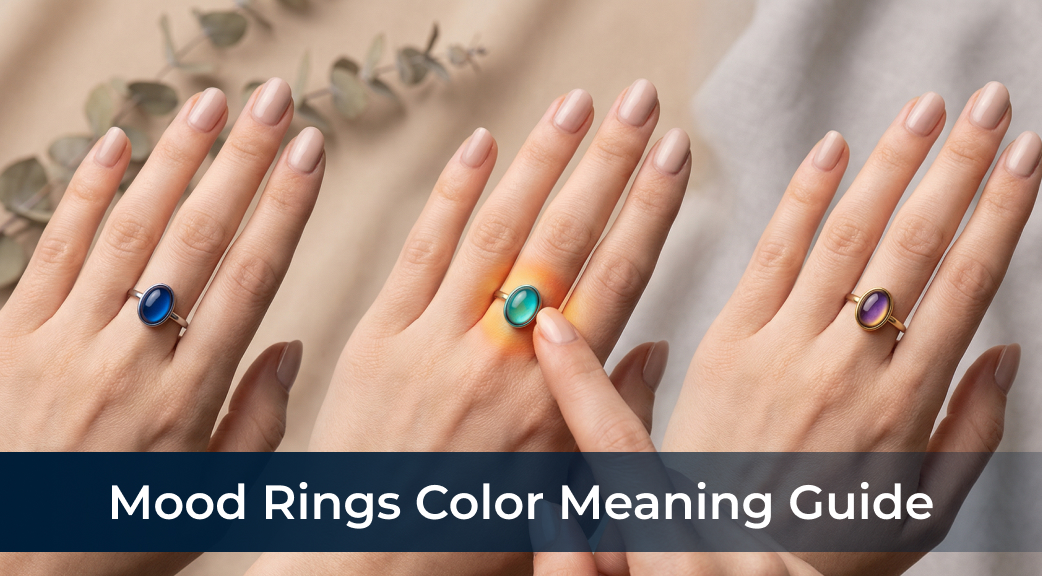
Mood rings are one of the most interesting pieces of novelty jewellery ever created. They became extremely popular in the 1970s and quickly caught people’s attention because the stone in the ring could change color throughout the day.
Many people believed the ring could reveal emotions such as happiness, stress, or excitement. Even today, mood rings remain popular because they combine science with fashion in a playful way.
While they may seem mysterious, the reason behind their color changes is actually based on temperature-sensitive technology rather than true emotional detection.
What Is a Mood Ring?

A mood ring is a ring that contains a special stone filled with thermochromic liquid crystals. These crystals react to changes in temperature and shift between different colours.
The ring usually has a metal band with a glass or quartz-like top that protects the liquid crystal layer inside.
When the ring is worn, it comes into contact with the skin on the finger. Since the human body constantly produces heat, the temperature of the ring changes slightly depending on blood flow and body temperature.
The liquid crystals inside the ring respond to these small temperature changes and create different colours. This is what makes mood rings look like they are reacting to emotions.
How Do Mood Rings Work?

Mood rings work through a scientific process involving liquid crystals that are sensitive to temperature. These crystals have molecules that rearrange themselves when exposed to different levels of heat.
When their structure changes, the way they reflect light also changes, which produces different colours.
As the temperature of your finger rises or falls, the crystals inside the ring shift their arrangement. This causes the ring to move between shades like blue, green, purple, yellow, or brown.
The color changes can happen quickly because the crystals react almost instantly to temperature changes. The ring therefore acts as a small temperature sensor rather than a mood detector.
Why Do Mood Rings Change Color?

Mood rings change color because of temperature fluctuations in the body. The skin on the fingers is sensitive to changes in blood circulation, and even small shifts in temperature can affect the ring.
When blood flow increases, the finger becomes slightly warmer. When circulation decreases, the finger becomes cooler.
These temperature changes can occur due to several reasons such as stress, relaxation, physical activity, weather conditions, or even drinking something hot or cold.
Since the liquid crystals react to temperature, the ring responds by displaying a different color. This is why the ring may change color multiple times throughout the day.
Is Mood Rings Detect Mood ?

Mood rings do not actually detect emotions in a direct way. Instead, they respond to the physical effects that emotions can have on the body.
For example, when someone feels relaxed, blood flow to the fingers may increase slightly, making the skin warmer. When a person feels nervous or stressed, blood flow may reduce, causing the fingers to cool down.
Because of this connection between temperature and emotional reactions, the colors displayed by mood rings are often interpreted as indicators of mood.
However, it is important to remember that many other factors can also affect body temperature, so the ring is not a precise tool for measuring emotions.
How Accurate Are Mood Rings Really?

Mood rings are not scientifically accurate devices for reading emotions. They simply measure temperature changes around the finger and convert those changes into colours.
Environmental conditions can also affect the ring. For example, cold weather may make the ring show darker colours even if the person feels calm or happy.
Similarly, warm surroundings or physical activity can cause the ring to display brighter colours.
Because so many external factors influence temperature, mood rings should be seen more as fun interactive jewellery rather than reliable emotional indicators.
Mood Ring Color Chart and Meanings
Mood rings typically display a range of colours, and each colour is often associated with a certain mood or emotional state.
These meanings became popular when the rings were first introduced and continue to be used today.
Blue is usually considered the ideal colour and is often linked to calmness, relaxation, or happiness.
Green is commonly associated with balance, normal emotions, or a neutral mood.
Purple shades may represent creativity, excitement, or passion.
Yellow or amber tones are often interpreted as nervousness, curiosity, or mixed emotions.
Darker colours such as brown or black usually appear when the ring is cold or not being worn.
This often happens when the ring is not receiving enough warmth from the skin.
Although these colour meanings are widely shared, they are not scientifically proven and are mostly used for entertainment.
FAQs
1. What is the main purpose of a mood ring?
The main purpose of a mood ring is to act as novelty jewellery that changes colour based on temperature changes in the wearer’s finger.
2. Why does my mood ring change colour so often?
Mood rings change colour frequently because body temperature constantly shifts due to emotions, environment, and physical activity.
3. What does the blue colour mean on a mood ring?
Blue is usually associated with calmness, relaxation, and a comfortable body temperature.
4. Can mood rings stop working over time?
Yes, if the liquid crystals inside the ring become damaged or exposed to moisture, the ring may stop changing colours properly.
5. Can water damage a mood ring?
Yes, water can damage the liquid crystals inside the ring, so it is best to remove the ring before washing hands or swimming.
Leave a Reply