
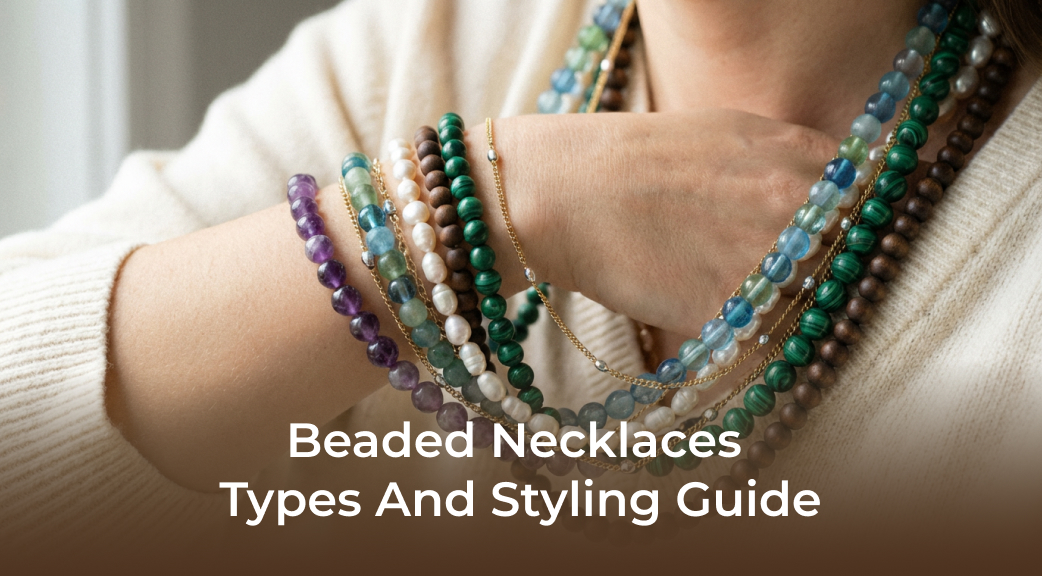
Beaded necklaces have been a part of jewellery traditions for centuries and continue to remain popular because of their versatility and artistic appeal. Unlike plain metal chains, these necklaces use beads made from different materials such as gemstones, glass, pearls, wood, or metal. The combination of colours, shapes, and textures makes each beaded necklace unique.
Some designs are simple and elegant for everyday wear, while others are bold statement pieces worn for festivals, weddings, or special occasions. Because they can be handmade or customised easily, beaded necklaces are also loved by people who enjoy personalised jewellery.
Types of Beaded Necklaces
There are many different types of beaded necklaces, and each style creates a different look.

A single-strand beaded necklace is one of the most common designs, where beads are arranged in a simple line along a cord or thread. This style looks clean and minimal, making it suitable for daily wear or casual outfits.
Multi-strand beaded necklaces include two or more layers of beads that sit together to create a fuller and more dramatic appearance. These necklaces are often worn with festive clothing or traditional outfits because they add richness to the overall look.
Another popular style includes gemstone bead necklaces made from natural stones such as turquoise, quartz, jade, or agate. These stones not only add colour but also make the necklace look more luxurious.
Pearl bead necklaces are also widely known for their elegant and timeless appearance, often worn for formal occasions. Wooden or glass bead necklaces create a more relaxed and artistic style and are often seen in handcrafted jewellery collections.
How to Make Beaded Necklaces

Making a beaded necklace is a creative process that allows complete freedom in design. The process usually begins with selecting beads based on colour, material, and size. Some people prefer using beads of the same size for a clean and uniform look, while others mix different sizes to create patterns and visual interest.
Once the beads are selected, they are arranged in the order you want them to appear. Many jewellery makers lay the beads on a flat surface first to check the design before threading them.
After deciding the arrangement, the beads are threaded onto a jewellery wire, nylon cord, or thread. A clasp is then attached to both ends so the necklace can be worn easily and securely.
Handmade beaded necklaces often look more special because they reflect the creativity of the person who designed them.
How to Make a Necklace with Beads and Thread
A simple necklace can be created using beads and strong thread or nylon cord. This method is common in handmade jewellery because it is easy and flexible. The process begins by tying one end of the thread securely or attaching it to a clasp.
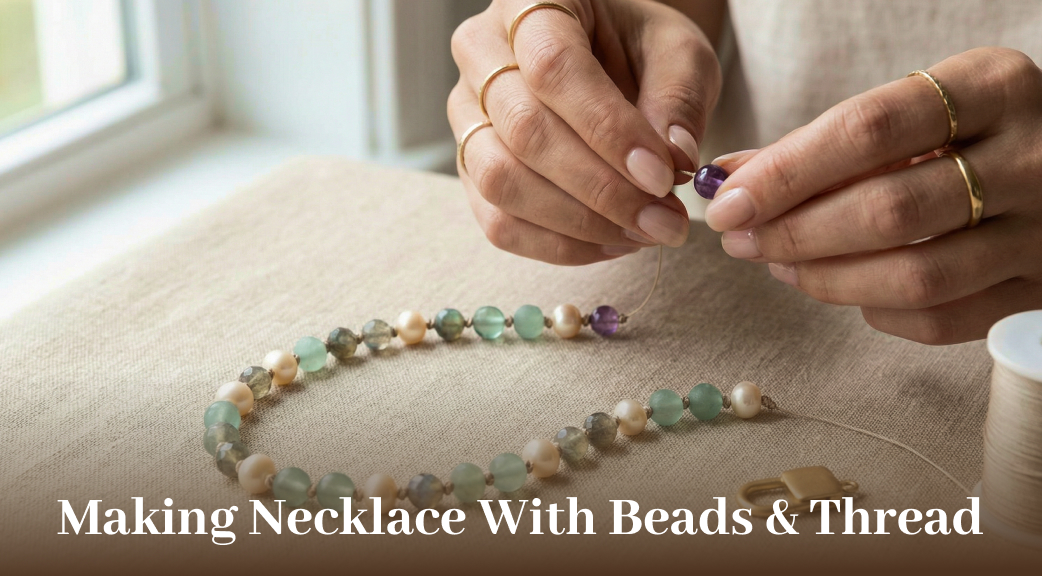
The beads are then threaded through the cord one by one according to the chosen pattern. Some jewellery makers add small knots between beads to keep them evenly spaced and prevent them from rubbing against each other.
Once all the beads are placed, the other end of the thread is tied to the clasp or secured with a strong knot. This creates a lightweight necklace that can be worn comfortably.
How to Wear Long Beaded Necklaces
Long beaded necklaces are extremely versatile and can be styled in many ways. Wearing them as a single long strand is one of the easiest styling options, especially with dresses, tunics, or high-neck tops. The long length adds elegance and draws attention to the neckline.

Another popular styling method is layering. Long beaded necklaces can be paired with shorter chains or other bead necklaces to create a layered jewellery look. This adds depth and makes the outfit look more fashionable.
A long necklace can also be wrapped twice around the neck to create a double-layer style. This technique gives the appearance of wearing two necklaces at once and works well with both casual and formal outfits.
How Many Beads Are in One Necklace
The number of beads used in a necklace depends mainly on the necklace length and the size of the beads. If the beads are larger, fewer beads are needed to complete the necklace. Smaller beads require more pieces to achieve the same length.
For example, a short necklace made with large beads may contain around thirty to forty beads. On the other hand, a long necklace made with small beads may include eighty to one hundred beads or even more.
Jewellery makers usually calculate the number of beads based on the design pattern and the final necklace length they want.
How to Care for Beaded Necklaces
Taking proper care of beaded necklaces helps them remain beautiful and last longer. They should be stored in a jewellery box or soft pouch so that the beads do not scratch against other jewellery pieces.

Keeping them separate also prevents tangling.
Beaded necklaces should be kept away from perfumes, lotions, and harsh chemicals because these substances can damage the beads or weaken the thread.
After wearing the necklace, gently wiping it with a soft cloth can remove dust or oils from the skin.
If the necklace is made with thread or cord, it is important to check it occasionally for signs of wear. Re-stringing the necklace when the thread becomes weak can prevent it from breaking and losing the beads.
FAQs
1. What materials are commonly used in beaded necklaces?
Beaded necklaces can be made from materials such as glass beads, gemstones, pearls, wood, metal, and ceramic beads.
2. Are beaded necklaces handmade or machine made?
Both options exist. Many beaded necklaces are handmade, while some are produced using machines in larger quantities.
3. Can long beaded necklaces be worn with casual outfits?
Yes, long beaded necklaces look great with casual clothing like dresses, tunics, and simple tops.
4. Do beaded necklaces break easily?
They can break if the thread weakens over time, but using strong cord and proper care can make them last for many years.
5. Can you customise a beaded necklace design?
Yes, beaded necklaces are very easy to customise by choosing different bead colours, sizes, and patterns.
Leave a Reply