
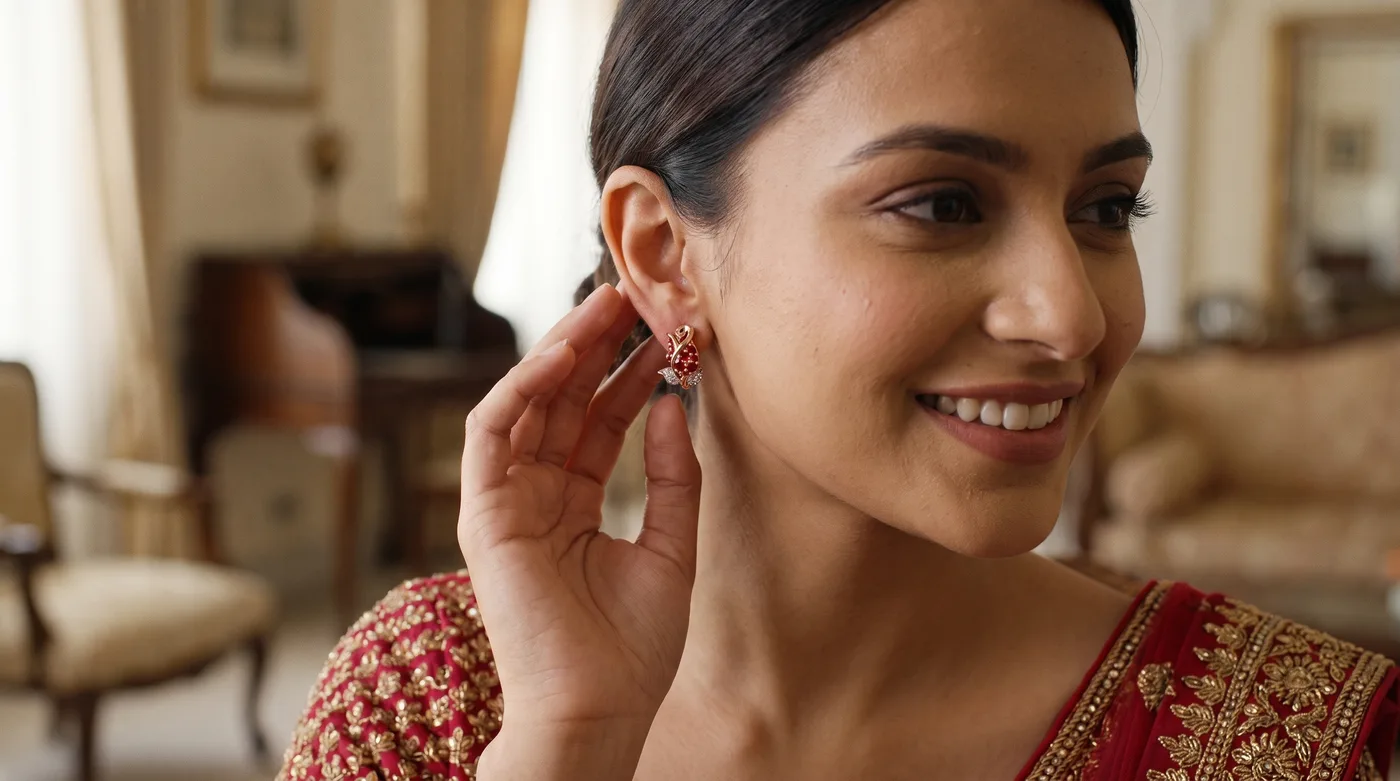
By Satyam, BlueStone Editorial
Selecting your dream gold wedding earrings design is one of the most personal and transformative decisions in your bridal jewellery journey. Your earrings frame your smile in every photograph, catch the radiance of the sacred mandap flames, and balance the grandeur of your wedding lehenga or heirloom Kanjeevaram silk saree. Yet, behind the romantic allure of cascading drops and royal filigree lies practical craftsmanship: weight distribution, post ergonomics, clasp security, and metal purity that determine whether you enjoy effortless bridal splendour or endure uncomfortable earlobe fatigue during long ceremonies.
In this comprehensive 2026 bridal buying guide, we demystify everything you need to know about choosing authentic, comfortable, and heirloom-worthy wedding earrings. From classic 22K temple bell jhumkas and sweeping crescent chandbalis to contemporary 18K diamond-accented drops, discover how to evaluate gold purity, calculate making charges and GST, coordinate earring silhouettes with your bridal neckline, and inspect official Bureau of Indian Standards hallmarking with complete peace of mind.
TL;DR: Quick Bridal Decision Framework for 2026
- Purity Choice: Opt for 22K gold (916 hallmark) for rich, traditional yellow gold temple jewellery, nakshi work, and heritage jhumkas. Choose 18K gold (750 hallmark) for diamond-encrusted drops, modern chandeliers, and architectural silhouettes requiring superior tensile strength.
- Weight & Ergonomics: Indian weddings often require 8 to 14 hours of continuous wear. For statement earrings weighing over 15 grams per pair, insist on supportive ear chains (mattal or kan-chain) and wide silicone disc backings to transfer weight safely away from the earlobe.
- Neckline Harmony: Pair heavy high chokers and embroidered collars with medium drops or elegant huggies. Pair deep sweetheart, scoop, or plunging necklines with dramatic shoulder-dusting jhumkas or multi-tiered chandbalis.
- Clasp Security: Choose threaded Bombay screw-backs or traditional South Indian Madras screws for heavy bridal pieces. Ensure push-backs feature a notched post groove and a secure friction clutch.
- Certification Guarantee: Never buy without verifying the 3-part BIS hallmark, including the triangular logo, purity mark (22K916 or 18K750), and the mandatory 6-digit alphanumeric HUID code verifiable on the BIS CARE app.
Gold Wedding Earrings Design: Key Essentials Every Bride Should Evaluate
A bridal earring is vastly different from an everyday stud or festive party drop. Bridal earrings must withstand intense photography lighting, dynamic movement during the baraat and varmala rituals, and the physical weight of heavy dupattas pinned near the head. When exploring a gold wedding earrings design, evaluating the underlying engineering ensures your chosen pair delivers both regal aesthetic impact and day-long wearability.
Begin by examining the center of gravity. In poorly balanced earrings, the top stud tilts forward away from the earlobe, pulling down the piercing and exposing the post. A masterfully crafted bridal earring positions its post precisely at the upper third of the stud motif, ensuring the decorative face sits flush against the cartilage. Furthermore, inspect the articulation points between tiers: smooth, hand-soldered jump rings allow the drops to sway naturally with head movements without twisting or catching on fine bridal embroidery and veil lace.
Finally, consider the versatility of the piece beyond the wedding day. While centuries past favoured monolithic gold ornaments locked away in bank lockers, contemporary brides prioritize thoughtful adaptability. Modern jewellers craft convertible wedding earrings featuring detachable jhumka bells, modular gemstone drops, and interchangeable studs that easily transition into sophisticated cocktail wear for anniversaries, family weddings, and festive celebrations.
Classic & Contemporary Wedding Earrings Gold Silhouettes for 2026 Brides
Bridal jewellery in 2026 celebrates a dynamic convergence of heritage craftsmanship and sleek modern luxury. Whether your bridal mood is timelessly royal, bohemian festive, or crisply contemporary, exploring the diverse silhouettes of wedding earrings gold helps pinpoint the exact aesthetic that elevates your bridal persona.
1. Traditional Gold Jhumkas & Temple Bell Silhouettes
The jhumka remains the undisputed queen of Indian bridal earwear. Characterized by a domed or conical bell suspended from a floral, sunburst, or deity-engraved stud, the jhumka produces an enchanting rhythmic sway. In South Indian temple jewellery traditions, 22K gold jhumkas feature intricate nakshi hand-chasing depicting peacocks, lotuses, and goddess Lakshmi motifs, crowned by a fringe of delicate gold seed pearls or gold micro-beads (ghungroos). For North Indian and Rajasthani brides, stepped multi-tier jhumkas (three or four graduated domes) offer majestic vertical length that elongates the neck gracefully.
2. Regal Chandbalis & Crescent Drops
Originating from the royal courts of the Nizams and Mughals, the chandbali captures the celestial poetry of the crescent moon. Unlike the vertical axis of the jhumka, the chandbali expands horizontally, featuring concentric crescents embellished with open-jaali filigree, kundan foil settings, and enamel meenakari work along the reverse. Chandbalis are particularly magnificent for Sangeet, Mehendi, and reception ensembles because their wider silhouette creates a striking visual frame for soft open curls, textured waves, and side-swept hairstyles.
3. Modern Chandelier & Geometric Drops
For brides wearing contemporary pastel lehengas, fusion bridal gowns, or western reception silhouettes, modern chandelier earrings offer an exquisite alternative. Crafted primarily in 18K yellow, rose, or white gold, these designs employ geometric lattice motifs, cascading diamond linear drops, and light-reflecting knife-edge metal links. They deliver dazzling movement and brilliant sparkle while remaining noticeably lighter on the earlobe than traditional solid-cast gold pieces.
4. Statement Sui Dhaga & Linear Danglers
Contemporary brides seeking minimalist elegance for daytime pre-wedding rituals like the Haldi or intimate beach weddings frequently embrace modern linear danglers and elevated Sui Dhaga designs. Featuring fine gold box or Venetian chains that thread through the ear and terminate in diamond-set bars, dewdrop clusters, or polished teardrops, these earrings offer feather-light comfort while casting an elongated, sophisticated line along the collarbone.
5. Regal Studs with Detachable Kan-Phool & Ear Cuffs
For brides who prefer maximum coverage without vertical pull, the Kan-Phool (ear-flower) and sculpted gold ear cuffs present an opulent solution. These designs feature a generous circular or lotus stud covering the entire earlobe, with curved extensions or ear-wrapping cuffs that contour along the outer cartilage rim. Many designs incorporate detachable multi-strand gold chains that hook into the bridal hair, creating an unforgettable antique maharani aura.
Understanding Gold Purity for Wedding Earrings: 22K vs 18K Gold
Understanding gold purity is fundamental when purchasing bridal jewellery, as the karatage dictates not only the piece’s gold content and monetary value, but also its structural durability and stone-holding capability. Pure 24-karat gold (99.9 percent purity) is inherently malleable and soft, making it unsuitable for earrings that must maintain crisp prongs, secure clasps, and delicate filigree under constant bridal wear.

Here is how the two primary bridal gold purities compare across critical factors:
- 22K Gold (916 Purity): Contains 91.6 percent pure gold alloyed with 8.4 percent silver, copper, and zinc. Prized for its unmistakable warm golden glow, traditional cultural sentiment, and high intrinsic resale value. Ideal for plain gold temple jhumkas, antique nakshi carving, and kundan-set heirlooms where metal richness takes center stage.
- 18K Gold (750 Purity): Contains 75.0 percent pure gold alloyed with 25.0 percent strengthening metals like copper, nickel, or palladium. The higher alloy ratio provides superior structural rigidity and scratch resistance. Ideal for diamond-studded bridal drops, intricate open jaali work, and secure prong settings that firmly lock precious gemstones in place.
- Colour Variations: While 22K gold is exclusively available in traditional yellow gold due to its high gold concentration, 18K gold allows versatile metallurgy, offering warm yellow gold, romantic rose gold, and modern white gold finishes to match your wedding lehenga palette.
- Wear Resilience: Hinges, screw posts, and delicate friction clasps crafted in 18K gold experience less mechanical wear and thread stripping over time compared to softer 22K components, ensuring lasting clasp reliability.
Weight, Balance & Earlobe Comfort: Engineering Heavy Bridal Earrings for Long Hours
Indian weddings are joyous marathons. Between early morning bridal preparations, photography sessions, emotional pheras, and late-night reception greetings, a bride easily wears her wedding jewellery for twelve to sixteen continuous hours. If your gold earrings weigh between 15 and 40 grams per pair, unmitigated gravity will lead to sore piercings, redness, and distraction from your special day. Fortunately, master jewellers have developed brilliant ergonomic solutions to guarantee day-long bridal comfort.
The most time-tested bridal innovation is the gold mattal, kan-chain, or sahare. These ornamental gold chains attach to the earring stud and hook securely into the bridal hairstyle above and behind the ear. By creating a suspended anchor, the hair chain absorbs approximately sixty to seventy percent of the earring downward weight, transferring the load safely to the crown of the head. Beyond pure ergonomics, handcrafted pearl and gold mattal chains add breathtaking vintage splendour when your hair is styled in a traditional braid or low bridal bun.
For brides wearing earrings without hair chains, backings make all the difference. Standard tiny butterfly pushbacks concentrate all weight on a minuscule surface area behind the lobe. Replace them with wide medical-grade silicone support discs (often 10mm to 12mm wide) or oversized gold bullet clutches with built-in clear plastic collars. These discs distribute downward pressure evenly across the back of the ear, preventing the earring from drooping forward. Additionally, many brides apply hypoallergenic adhesive earlobe support patches behind the piercing hole prior to inserting the post, creating an invisible structural barrier that prevents lobe stretching.
Curated Gold Wedding Earrings from BlueStone
Explore a curated selection of fine gold and diamond-accented earrings from BlueStone, meticulously crafted to combine regal design aesthetics, ergonomic bridal comfort, and certified purity.


Handcrafted Gold Wedding Earrings: 6 Standout BlueStone Recommendations
To assist you in discovering the ideal pair for your wedding rituals, our editorial team has handpicked six exceptional designs from BlueStone. Each design embodies certified craftsmanship, certified materials, and distinctive bridal appeal tailored to specific wedding events.
- 1. The Rohal Huggie Earrings: Crafted in lustrous yellow gold with sparkling diamond accents along a graceful contoured hoop, this piece is ideal for Sangeet nights and reception dinners. Its compact 16 mm silhouette hugs the earlobe comfortably, offering radiant sparkle that will not snag on heavy embroidered dupattas during high-energy dance performances.
- 2. The Nettile Huggie Earrings: Designed with clean geometric pavé diamond clusters set in warm gold, this 14.39 mm huggie is perfect for morning Haldi or Mehendi rituals. The flush setting and smooth rounded edges eliminate hair snagging, allowing brides to move freely while maintaining sophisticated luxury.
- 3. The Faliha Purse Hoop Earrings: Featuring an architectural purse-inspired drop motif that balances structured symmetry with delicate diamond brilliance, this statement piece is ideal for cocktail parties and bridal trousseau collections. Its unique shape catches ambient venue lighting from every angle, creating a distinctive conversational statement.
- 4. The Skein Hoop Earrings: Embodying fluid ribbon-like sweeps of gold intertwined with dazzling diamonds, this 17.95 mm design is tailored for modern brides wearing contemporary pastel lehengas or western reception gowns. The open-air silhouette creates maximum visual presence with minimal physical weight.
- 5. The Vicky Hoop Earrings: A refined 14.75 mm hoop engineered with classic channel-set brilliance, this versatile piece is the ultimate companion for brides wearing heavy antique chokers or multi-tier bridal haars. It provides complementary golden illumination without competing visually with your primary bridal necklace.
- 6. The Aleena Huggie Earrings: Showcasing an elegant teardrop cluster motif crafted in glowing gold and certified diamonds, this design is the quintessential keepsake for bridal morning rituals, pheras, and versatile post-wedding trousseau wear. It transitions seamlessly from the bridal mandap to formal family dinners and festive gatherings.
Harmonizing Gold Wedding Earrings with Bridal Necklines & Hairstyles
A flawless bridal look depends on visual harmony between your earrings, your necklace, your neckline, and your hairstyle. Rather than treating each piece of jewellery as an isolated purchase, approach your bridal styling as a cohesive artistic composition where proportions balance and complement each other.

Follow these professional styling guidelines to achieve effortless bridal symmetry:
- High Necklines & Heavy Chokers: If your lehenga features a mandarin collar, high boat neck, or you are wearing an ornate, full-coverage choker, avoid massive shoulder-length chandeliers that crowd the jawline. Instead, select refined medium drops, elegant cluster studs, or architectural huggies that leave breathing room between the earlobe and the collar.
- Plunging V-Necks & Sweetheart Cuts: Deep, open necklines create an expansive vertical canvas. They pair magnificently with dramatic, shoulder-dusting jhumkas, multi-tiered chandbalis, or cascading linear earrings that draw the eye gracefully down toward your collarbones.
- Bridal Chignons & Sleek Buns: An elegant updo exposes the entire neck and jawline, making it the perfect showcase for wide crescent chandbalis, detailed ear cuffs, or jhumkas accented with decorative pearl hair chains.
- Open Waves & Half-Up Hair: If you plan to wear soft voluminous waves, choose earrings with three-dimensional depth and diamond sparkle like wide hoops or stepped jhumkas that remain distinctly visible through cascading hair locks without tangling.
- Face Shape Pairing: Round and heart-shaped faces achieve flattering elongation from linear drops and tapered jhumkas. Square and angular jawlines are beautifully softened by circular chandbalis, curved hoops, and organic floral cluster motifs.
BIS Hallmarking, HUID Verification & GST Invoice Calculation
Investing in gold bridal jewellery represents both significant emotional significance and substantial financial expenditure. Ensuring absolute authenticity through government-regulated hallmarking protects your investment and guarantees the purity of the metal you cherish for a lifetime.
Under Bureau of Indian Standards mandates, every piece of hallmarked gold jewellery sold in India must display three distinct laser-engraved hallmarks:
- 1. The BIS Logo: A triangular hallmark certifying that the manufacturing jeweller and assaying center comply with Bureau of Indian Standards quality benchmarks.
- 2. Purity and Fineness Mark: Indicates the precise karatage and gold percentage. For wedding jewellery, this will read 22K916 (22 karat, 91.6 percent pure) or 18K750 (18 karat, 75.0 percent pure).
- 3. Six-Digit Alphanumeric HUID: The Hallmark Unique Identification code. Each piece receives a unique six-character code laser-etched onto the earring post or inner frame. You can input this code directly into the government BIS CARE mobile app to view the assaying center, jeweller registration, article type, and certified testing date.
When reviewing your jewellery tax invoice, Indian tax law dictates a transparent structure. The total invoice value consists of the net gold value (current gold rate multiplied by the certified gold weight) plus making charges (craftsmanship and labour fees). A uniform Goods and Services Tax (GST) of 3 percent applies to the total value of the finished jewellery piece. Ensure your invoice clearly itemizes the gold weight, purity karatage, diamond carat weight and color-clarity grade (if applicable), making charges, HUID number, and 3 percent GST for complete legal and insurance protection.
Common Pitfalls to Avoid When Buying Gold Wedding Earrings
Shopping for bridal jewellery is an exhilarating experience, but excitement can sometimes overshadow practical considerations. Keep these crucial pitfalls in mind to ensure a seamless purchasing experience:
- Purchasing Earrings Before Finalizing the Lehenga: Buying earrings in isolation often leads to color mismatches (such as antique yellow gold clashing with cool silver zari) or proportion conflicts with your blouse neckline. Always finalize your bridal outfit fabric, embroidery tone, and neckline before selecting earwear.
- Ignoring Post Thickness & Length: Some traditional hand-cast bridal earrings feature thick posts that can stretch or irritate sensitive piercings. Check that the earring post diameter conforms to standard earlobe thickness (approximately 0.8 mm to 1.0 mm) and includes smooth, rounded tips.
- Overlooking Clasp Mechanics: Friction pushbacks can loosen over time with heavy wear. For expensive bridal earrings, opt for secure threaded screw-backs (Bombay screws) that remain firmly anchored throughout energetic celebrations.
- Falling for Vague Gross Weight Billing: Always ensure the jeweller bills you on the net gold weight, excluding any lacquer, wax, or non-precious core fillings often used in hollow antique pieces. Transparent certification guarantees you pay only for genuine precious metal.
- Neglecting Post-Wedding Wearability: Choosing an overly rigid, monolithic design that can never be worn after the wedding limits your jewellery joy. Prioritize modular designs or versatile silhouettes that celebrate your love story for decades to come.
Caring for Your Bridal Gold Earrings After the Wedding
Your wedding earrings are treasured family heirlooms that preserve the memories of your most sacred vows. Proper maintenance ensures that their golden luster and diamond brilliance remain as radiant on your fiftieth anniversary as on your wedding morning.
After the wedding celebrations conclude, gently wipe your earrings with a clean, lint-free microfiber cloth to remove cosmetic residue, hairspray mist, and natural skin oils. Avoid exposing gold and diamonds to harsh household detergents, perfumes, or chlorine. For routine cleaning, soak the earrings for ten minutes in a bowl of lukewarm water mixed with a few drops of mild chemical-free soap, gently buffing hard-to-reach crevices behind the diamond settings with a soft-bristled baby toothbrush. Rinse thoroughly with clean warm water and pat completely dry with a soft cloth before storage.
Always store your bridal earrings in individual fabric-lined jewellery compartments or soft velvet pouches. Never toss them loosely together in a box where diamonds can scratch softer gold surfaces. Inspect the screw posts, jump rings, and prong tips annually with your jeweller to maintain structural integrity, ensuring your heirloom remains pristine for generations to follow.
Final Thoughts on Selecting Your Gold Wedding Earrings Design
Your wedding day marks a magnificent milestone, and your gold wedding earrings serve as shining witnesses to every promise spoken and tear of joy shed. By harmonizing traditional aesthetics with ergonomic comfort, demanding certified 22K or 18K purity, and choosing timeless silhouettes that celebrate your unique individuality, you invest in jewellery that transcends ephemeral fashion trends.
Whether you choose the regal heritage of handcrafted jhumkas, the romantic crescent allure of chandbalis, or the modern sparkle of diamond-studded huggies, let your bridal jewellery reflect your inner joy, cultural pride, and enduring romance.
More Jewellery & Gold Buying Guides
Continue your bridal jewellery discovery with our authoritative educational guides: learn how to inspect certifications with our how to check gold purity guide, understand tax invoices with our detailed breakdown of GST on gold jewellery in India, ensure certified digital transactions with our guide on buying gold jewellery online safely in India, evaluate jeweller pricing with our making charges on gold guide, explore bridal neckwear coordination in our wedding gold necklace design buying guide, and discover collar styling in our gold choker necklace buying guide.
Frequently Asked Questions About Gold Wedding Earrings Design
What factors are most critical when choosing a gold wedding earrings design?
When selecting your gold wedding earrings design, the three primary factors to evaluate are ergonomic weight balance, lehenga neckline harmony, and metal purity. Indian wedding ceremonies frequently extend over eight to fourteen hours, meaning earrings must feature balanced post placements, supportive backings like wide silicone clutches, or hair-supporting mattal chains to prevent earlobe fatigue. Additionally, the silhouette should complement your face structure and coordinate gracefully with your wedding choker or haar without visual overcrowding.
Should bridal wedding earrings gold be crafted in 22K or 18K gold?
Both 22-karat and 18-karat gold serve distinct, valuable purposes in bridal jewellery. Traditional temple designs, nakshi hand-chasing, and antique yellow gold jhumkas are conventionally crafted in 22K gold (91.6% pure gold) because of its rich cultural prestige and vibrant golden warmth. However, for contemporary wedding earrings featuring intricate pavé diamond settings, prong-set solitaires, or architectural chandelier silhouettes, 18K gold (75% pure gold alloyed with 25% strengthening metals) is strongly recommended for its superior hardness and structural stone security.
How can brides prevent heavy gold wedding earrings from hurting their earlobes during long rituals?
Brides can prevent earlobe pain by implementing three proven jeweller techniques: first, attaching decorative gold mattal, kan-chain, or sahare chains that clip into the hair above the ear, transferring over sixty percent of the earring downward weight to the scalp. Second, replacing standard small pushbacks with wide circular silicone discs or oversized bullet clutches that distribute pressure across the entire earlobe surface. Third, applying discreet medical-grade earlobe support patches behind the piercing before inserting the earring post.
What is the difference between traditional jhumkas and modern chandbalis for wedding wear?
Traditional gold jhumkas feature a bell-shaped dome or conical drop suspended from an ornamental stud, frequently accented with dangling gold bead droplets (ghungroos) that sway fluidly with movement, making them ideal for traditional South Indian Kanjeevaram sarees and royal Banarasi lehengas. In contrast, chandbalis showcase an ornate crescent-moon architectural silhouette that frames the jawline laterally, making them exceptionally flattering for round, oval, and heart-shaped faces during Sangeet, Mehendi, and reception ceremonies.
How do I verify BIS hallmarking and HUID when purchasing wedding earrings in India?
Under Bureau of Indian Standards regulations, authentic gold wedding earrings in India must display three permanent laser hallmarks: the triangular BIS official logo, the purity grade mark (such as 22K916 for 22 karat gold or 18K750 for 18 karat gold), and a unique six-digit alphanumeric Hallmark Unique Identification (HUID) code. You can instantly verify this six-digit HUID code using the free government BIS CARE mobile application to view the jeweller registration, assaying center details, and exact certified purity.
How should I coordinate my gold wedding earrings with my bridal necklace?
The golden rule of bridal jewellery balance is proportional contrast. If your primary bridal neckwear is an elaborate, wide-collar choker or high-coverage royal collar, pair it with medium-sized drop earrings, architectural huggies, or refined floral studs to keep the neck and jawline uncluttered. If you are wearing a delicate pendant necklace, a plunging V-neckline, or an off-shoulder bridal gown, opulent shoulder-grazing jhumkas or multi-tiered chandelier earrings create an exquisite focal point.
Can I re-wear my gold wedding earrings after the wedding ceremonies are over?
Yes, modern brides increasingly choose versatile gold wedding earrings engineered for post-wedding repeat wear. Detachable multi-tier jhumkas, convertible stud-to-drop designs, and diamond-studded gold hoops or huggies can effortlessly transition from the wedding mandap to anniversary dinners, festive poojas, and close friends wedding receptions when styled with silk kurtas, linen sarees, or western cocktail dresses.
Leave a Reply