
By Satyam, BlueStone Editorial
Selecting the quintessential wedding gold necklace design is the defining styling decision of every Indian bridal trousseau. Far more than an ornate accessory, a bridal gold neckpiece anchors your wedding ensemble, harmonizes your lehenga or silk saree neckline, and represents an enduring store of emotional and financial value. In 2026, brides are moving beyond heavy, unwieldy heirlooms that spend decades locked in bank vaults, choosing instead versatile, masterfully engineered designs that combine regal heritage aesthetics with modular modern wearability.
TL;DR: The 2026 Bridal Gold Necklace Checklist
- Match Purity to Gemstone Settings: Choose 22 Karat (916 hallmarked) gold for classic unstudded gold sets, intricate filigree, and antique nakshi motifs. Opt for 18 Karat (750 hallmarked) gold for diamond-accented and gemstone-studded bridal chokers that require superior structural tensile strength.
- Layer with Systematic Length Spacing: Build a cohesive bridal silhouette by combining a high collar or choker (12 to 14 inches) with a mid-length princess piece (16 to 18 inches) and an elongated Rani Haar (22 to 28 inches) to avoid visual clutter and tangling.
- Coordinate Blouse Necklines: Pair deep sweetheart, V-neck, and scoop necklines with tapered or drop-pendant styles; pair broad boat necks and off-shoulder cuts with structured collar chokers.
- Mandatory BIS Hallmarking Verification: Verify the three essential marks on every piece: the triangular BIS logo, the karatage stamp (22K916 or 18K750), and the 6-digit alphanumeric HUID code using the official BIS CARE app.
- Transparent Invoicing & GST: Ensure the jeweller provides an itemized bill clearly listing gross weight, net gold weight, stone deductions, making charges, and the standard 3% GST required under Indian tax law. Explore verified fine gold jewellery with full certification.
Why Wedding Gold Necklace Design Demands Strategic Planning
A bridal neckpiece is the visual focal point of all wedding ceremony photography and videography. Because it rests at eye level during the garland exchange (jaimala), pheras, and wedding rituals, the scale, balance, and craftsmanship of your wedding gold necklace design directly influence how comfortably and radiantly you carry your bridal attire throughout long ceremonial hours.
Historically, bridal jewellery was purchased primarily by total gross weight, often resulting in rigid, heavy neckpieces that pinched the skin and restricted head movement. Modern brides prioritize ergonomic weight distribution, articulated link flexibility, and versatile aesthetic value. Whether you are assembling a full heirloom bridal suite from our gold necklaces collection or curating individual standalone accents, understanding the architectural construction of each necklace style ensures you invest in timeless jewellery that can be celebrated for generations.
6 Trending Wedding Gold Necklace Design Categories for Modern Brides
Indian bridal jewellery offers a magnificent spectrum of regional craftsmanship, architectural textures, and artistic traditions. Here are the six most prominent bridal gold necklace styles shaping modern wedding celebrations in 2026:
- 1. The Architectural Bridal Choker (Gulbandh): Sitting snugly against the throat and upper collarbone (12 to 14 inches), the choker provides an opulent framing effect. Handcrafted with interlocking gold plaques, delicate filigree lattices, and scalloped gold bead fringes (jhumki drops), chokers instantly elevate deep-cut wedding blouses and regal lehenga silhouettes.
- 2. The Regal Rani Haar and Haram (Grand Long Necklaces): Measuring between 22 and 30 inches, the Rani Haar drapes majestically over the torso. Often featuring multiple beaded strands, cascading gold chains, and an elaborate central medallion engraved with peacocks, lotus blossoms, or temple deities, it delivers commanding royal grandeur.
- 3. Intricate Temple Jewellery Necklaces (Nakshi & Kasu Mala): Originating from South Indian sacred traditions, temple gold necklaces showcase embossed divine motifs, coins depicting Goddess Lakshmi, and unpolished antique matte finishes in solid 22 Karat gold. They are the quintessential companion for rich Kanjeevaram and Paithani silk sarees.
- 4. Kundan and Polki Gold Collar Necklaces: Featuring uncut natural diamonds set into pure 24K gold foils with lac backing, Kundan-Polki collar necklaces combine vintage Mughal royalty with radiant light refraction. The reverse side often features detailed Meenakari (enamel work) that feels smooth against the bride’s skin.
- 5. Contemporary Diamond and Gold Princess Necklaces: Measuring 16 to 18 inches, modern princess necklaces feature graceful fluid gold vines studded with brilliant-cut diamonds. These versatile neckpieces transition effortlessly from traditional wedding ceremonies to cocktail receptions and post-wedding festivities.
- 6. Modular Convertible Wedding Necklaces: Designed for modern practicality, modular necklaces feature hidden clasps that allow brides to detach the heavy lower tier, transforming an elaborate grand wedding piece into a sleek choker or standalone pendant for festive dinner parties.
The Art of the Simple Wedding Necklace: Minimalist Elegance and Versatility
While multi-tiered bridal sets dominate traditional grand wedding rituals, a growing cohort of modern brides is gravitating toward the subtle charm of a simple wedding necklace. Minimalist wedding necklaces are particularly celebrated for intimate courthouse weddings, haldi and mehendi mornings, beach destination ceremonies, and sleek cocktail receptions where understated sophistication takes centre stage.
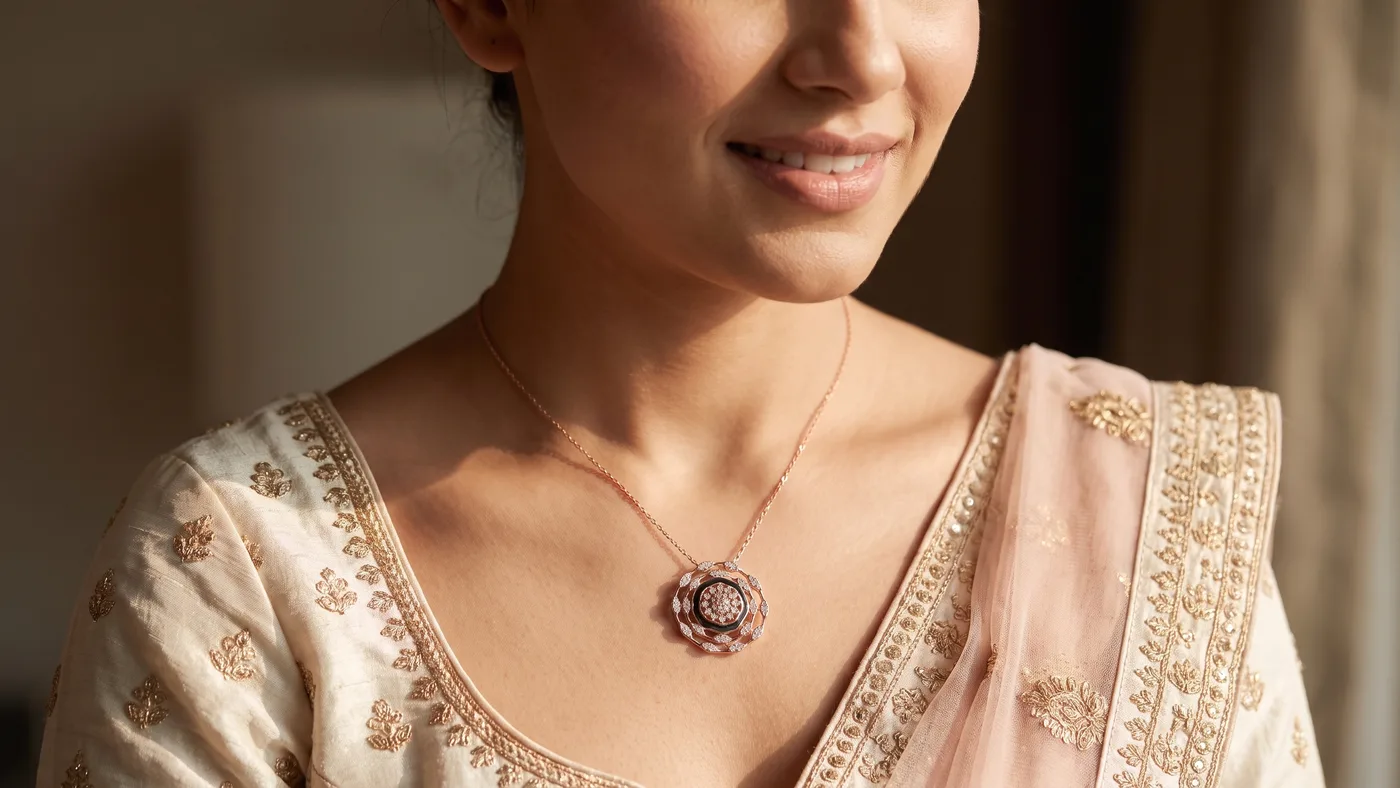
A refined simple wedding neckpiece focuses on clean geometric symmetry, lightweight open-work filigree, or a captivating central solitaire or cluster pendant suspended on an exquisite chain. Pieces such as our gold and diamond pendants pair effortlessly with pastel organza lehengas, minimalist silk sarees, and contemporary Western gowns. Beyond the wedding day, a simple wedding necklace delivers exceptional real-world versatility, seamlessly integrating into your everyday festive and anniversary wardrobe without remaining confined to a safe deposit box.

How to Choose the Right Wedding Gold Necklace by Bridal Neckline
The visual harmony of your wedding ensemble relies on how seamlessly your wedding gold necklace interacts with the neckline of your bridal blouse or gown. When necklace contours clash with garment cuts, even the most exquisite jewellery can appear crowded or disproportionate.
- Deep Sweetheart & Plunging V-Necks: These necklines provide an open canvas that beautifully complements drop-pendant necklaces, chevron-shaped collar pieces, and layered multi-tier sets that follow the inward tapering lines of the blouse.
- Broad Boat Necks & Wide Scoop Cuts: Broad necklines require horizontal emphasis. Broad band chokers, structured Hasli collars, or round collar necklaces fill the upper chest space gracefully without touching the fabric border.
- High Collar & Mandarin Necklines: Avoid tight chokers that crowd the neck. Instead, layer long Rani Haars (24 to 28 inches) or opera-length gold chains over the solid fabric to create a clean, regal vertical line.
- Square & Broad U-Neck Blouses: Complement square frames with geometric collar necklaces or layered princess sets that balance sharp angles with fluid gold contours.
- Off-Shoulder & Strapless Cuts: Accentuate bare collarbones with a statement collar choker paired with coordinating matching bridal gold earrings, leaving the lower chest open and uncluttered.
Curated BlueStone Wedding Gold Necklaces for Every Bridal Silhouette
Discover our handpicked collection of masterfully crafted bridal gold neckpieces, focal pendants, and layered sets, designed to deliver exceptional brilliance, ergonomic comfort, and certified purity for your special day:


The Bridal Layering Blueprint: Harmonizing Chokers, Princess Lengths, and Rani Haars
Layering multiple neckpieces is the signature hallmark of traditional Indian bridal grandeur. However, layering an elaborate wedding necklace requires strict adherence to proportion and spacing to prevent individual pieces from overlapping awkwardly, flipping over, or catching on delicate bridal zardozi embroidery.
Follow this three-tier layering framework to ensure balanced bridal elegance:
- Tier 1: The Base Choker (12 to 14 inches): Rests high on the neck, establishing the foundational width and gemstone tone of the look. Keep this piece rigid or closely articulated so it stays securely positioned above the collarbone.
- Tier 2: The Mid-Length Princess Necklace (16 to 18 inches): Sits two to three inches below the choker along the collarbone dip. Choose a design with subtle downward drape or delicate dangling accents to bridge the visual space smoothly.
- Tier 3: The Royal Rani Haar (22 to 28 inches): The grand anchor piece that cascades down toward the mid-torso. Ensure the central medallion rests flat against the garment. Coordinate metal color and gemstone accents across all three tiers, complementing your ensemble with matching bridal gold bangles and gold mangalsutra necklaces.

Gold Purity and Certification: 22K vs 18K, Hallmarking, and the 6-Digit HUID
Purchasing bridal gold jewellery requires absolute certainty regarding metal purity and government certification. In India, gold purity is standardized by the Bureau of Indian Standards (BIS), ensuring that buyers receive authentic precious metals backed by legal guarantees.
- 22 Karat Gold (91.6% Pure Gold, 22K916): The traditional choice for Indian wedding jewellery. Renowned for its rich yellow tone, 22K gold is ideal for solid gold chokers, temple designs, and heavy heirloom pieces. For deeper details on purity testing, consult our how to check gold purity guide.
- 18 Karat Gold (75.0% Pure Gold, 18K750): Composed of 75% pure gold alloyed with 25% metals like copper, silver, or zinc. 18K gold offers increased tensile strength and hardness, making it the worldwide standard for diamond-studded bridal necklaces and intricate prong settings.
- 14 Karat Gold (58.5% Pure Gold, 14K585): Exceptionally durable and budget-accessible, 14K gold is ideal for lightweight contemporary necklaces, delicate daily wear pieces, and modern geometric silhouettes.
- Mandatory 6-Digit HUID Verification: Every genuine hallmarked piece must bear the triangular BIS standard mark, the fineness stamp, and a unique 6-digit alphanumeric HUID laser-engraved on the clasp. You can verify this code using the BIS CARE mobile application.
Evaluating Craftsmanship, Making Charges, and Weight Distribution
The final price of a wedding gold necklace reflects both its net gold weight and the making charges (wastage and artisan fabrication fees). Understanding how making charges are calculated helps brides and families make informed, cost-effective decisions without compromising on artistic quality.
Machine-made chains and laser-cut collars feature lower making charges (typically 8% to 14%), whereas handcrafted antique nakshi, Kundan setting, and handcrafted filigree work require higher artisan effort (ranging from 16% to 28%). Always insist on an itemized breakdown on your invoice. Under Indian tax laws, a uniform 3% GST applies to the combined value of gold and making charges, as explained in our GST on gold jewellery guide. When purchasing online, ensure you follow best practices from our guide on buying gold jewellery online safely.
Bridal Comfort and Practical Wearability Checklist
A wedding necklace may look breathtaking in a display showcase, but bridal comfort during 8 to 12 hours of ceremony is essential. Review these practical wearability criteria before finalizing your purchase:
- Back Closure Comfort: Check whether the necklace uses an adjustable silk dori (traditional cord) or a solid gold link chain extender. Silk cords offer customized sizing and gentle comfort against the skin, while gold link extenders provide superior durability and security.
- Smooth Underside Finishing: Run your fingers along the back of the neckpiece. High-quality craftsmanship ensures there are no sharp solder points, raw prong edges, or abrasive metal spurs that could scratch the neck or snag on bridal lehenga dupattas.
- Articulated Flexibility: A well-crafted necklace must conform smoothly to the natural curve of your collarbones. Test the piece by laying it flat and gently lifting it to verify that individual link segments move freely without pinching or locking.
- Weight Balance: Ensure that heavy central medallions or multi-tiered drops are counterbalanced properly so the necklace stays centred without sliding forward or tilting as you walk and sit.
Post-Wedding Care and Preservation for Bridal Gold Necklaces
Preserving the lustrous shine and structural integrity of your bridal gold necklace ensures it remains an heirloom ready for future anniversary celebrations and family milestones. Follow these essential preservation guidelines:
- Last On, First Off Routine: Always apply bridal perfumes, hairsprays, body lotions, and cosmetics before putting on your gold necklace. Chemical sprays and alcohol vapours can leave a dull residue on polished gold and cloud gemstone facets.
- Gentle Home Cleaning: Soak the necklace in lukewarm water mixed with mild, pH-neutral liquid soap for 10 minutes. Use an ultra-soft baby toothbrush to dislodge trapped bridal makeup and perspiration from link joints, rinse under lukewarm running water, and pat completely dry with a microfiber polishing cloth.
- Individual Pouch Storage: Never store multiple gold necklaces loose in a single box where clasps and gemstones can abrade adjacent metal surfaces. Store each piece flat in its original velvet-lined presentation case or individual anti-tarnish fabric pouches in a cool, dry environment.
- Annual Professional Inspection: Visit an authorized jeweller once a year to inspect clasp tensions, solder integrity, and diamond prong tightness, ensuring your precious bridal investment stays secure.
Final Thoughts on Investing in Your Wedding Gold Necklace
Investing in a wedding gold necklace is one of the most memorable milestones of your bridal journey. By balancing timeless aesthetic elegance with certified 22K or 18K purity, BIS HUID hallmarking, ergonomic neck comfort, and neckline harmony, you create an unforgettable wedding look that radiates grace and royal confidence. Explore certified bridal collections and find the perfect match for your bridal trousseau with BlueStone.
More Gold & Jewellery Buying Guides
Continue your bridal and fine jewellery research with our comprehensive buying guides: discover key sizing and design factors in our gold necklace set buying guide, explore gemstone elegance in our pearl necklace buying guide, master gold purity testing with our how to check gold purity guide, understand taxation details in our GST on gold jewellery guide, pair traditional earrings using our jhumka earrings buying guide, and learn essential safety practices for buying gold jewellery online safely.
Frequently Asked Questions About Wedding Gold Necklace Designs
What is the most popular wedding gold necklace design for Indian brides?
The most versatile and enduring wedding gold necklace design is a multi-tier bridal combination featuring an ornate choker or collar necklace paired with an elongated Rani Haar or Haram. Chokers frame the collarbones and neckline, while longer 22K or 18K gold haars create a regal vertical silhouette. Contemporary brides frequently choose modular gold necklaces that can be detached and worn as simpler, lightweight pendants after the wedding celebrations.
Should a wedding gold necklace be purchased in 22K or 18K gold?
For traditional unstudded bridal necklaces, temple jewellery, and intricate filigree or antique nakshi work, 22 Karat (916 hallmarked) gold is the preferred standard due to its rich, warm yellow luster and heirloom purity. For modern bridal necklaces studded with diamonds, polki, or precious colored gemstones like emeralds and rubies, 18 Karat (750 hallmarked) gold provides the essential structural hardness and secure prong settings needed to protect precious stones.
What are the key necklace lengths to consider when layering a wedding gold necklace?
A classic Indian bridal layering blueprint combines three primary length tiers: a choker or collar sitting snugly at 12 to 14 inches (30 to 35 cm) around the base of the neck, a princess length necklace draping gracefully at 16 to 18 inches (40 to 45 cm) along the collarbone, and an opera or matinee length Rani Haar measuring 22 to 28 inches (55 to 70 cm) extending toward the bustline. This graduated spacing prevents pieces from tangling or overlapping awkwardly.
How can I verify the authenticity and hallmarking of a wedding gold necklace in India?
Under Bureau of Indian Standards (BIS) regulations, every genuine wedding gold necklace must carry three mandatory laser-engraved hallmark stamps: the triangular BIS logo, the purity grade (such as 22K916 or 18K750), and a unique 6-digit alphanumeric Hallmark Unique Identification (HUID) code. Brides and families can verify this 6-digit code instantly using the official BIS CARE mobile application to confirm the hallmarking centre, registered jeweller, and exact metal purity.
What GST rate applies to wedding gold necklace purchases in India?
In India, a standard 3% Goods and Services Tax (GST) applies to the total invoice value of gold jewellery, encompassing both the net gold metal weight and the making charges. Reputable fine jewellers provide a transparent, itemized invoice detailing the gross product weight, net gold weight, gemstone carat weight, making charge breakdown, and the final 3% GST calculation.
How do I choose a simple wedding necklace for intimate or pre-wedding ceremonies?
For intimate weddings, court ceremonies, sangeet functions, or reception parties, a simple wedding necklace focusing on clean geometric lines, delicate floral motifs, or a singular statement pendant on an elegant gold chain offers understated luxury. Opt for flexible mesh links, bezel-set diamonds, or lightweight 18K gold designs that provide comfort, easy movement, and high re-wearability with Western and festive attire.
How should an heirloom wedding gold necklace be cleaned and safely stored after the wedding?
After wedding festivities, clean your gold necklace by soaking it for 10 to 15 minutes in lukewarm water with a few drops of mild chemical-free liquid soap. Gently clean behind stone settings and intricate crevices using an ultra-soft baby toothbrush, rinse under clean water, and dry completely with a lint-free microfiber cloth. Store each necklace flat in individual velvet-lined compartments or anti-tarnish fabric pouches to prevent scratching, bending, or entanglement.
Leave a Reply