
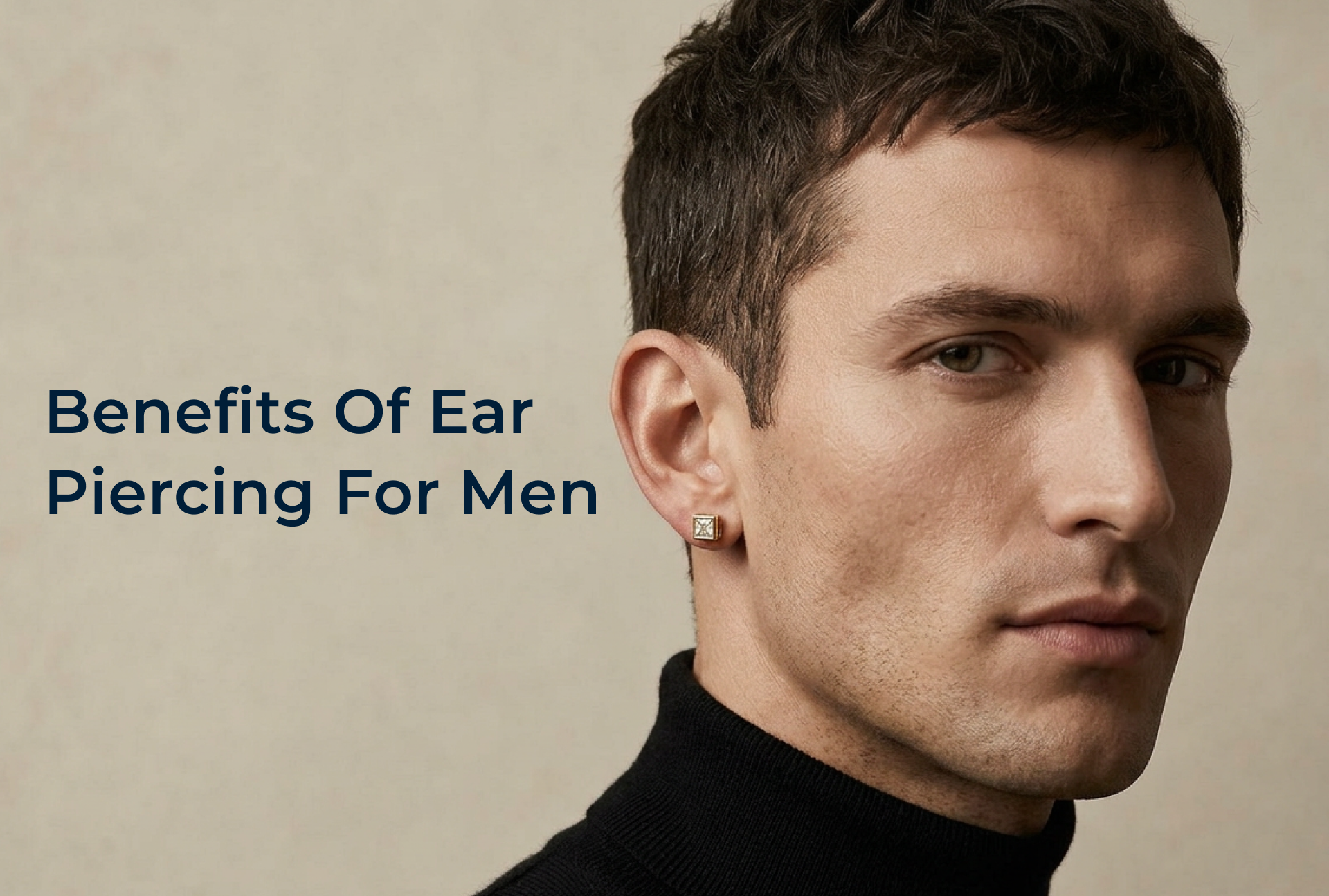
Ear piercing in men has quietly moved from being seen as rebellious to being widely accepted. In many parts of the world, however, it was never unusual to begin with. Warriors wore earrings as symbols of bravery. Sailors sometimes wore them to mark long voyages. Spiritual figures in certain traditions also adopted them as part of their identity. The modern idea that it is purely a fashion trend is, in many ways, a recent interpretation.
Today, men choose ear piercing for different reasons. Some appreciate the way it sharpens their appearance. Others value the cultural meaning behind it. A few are influenced by traditional health beliefs passed down through generations. For many, the decision is not impulsive but considered, a small change that carries personal significance.
1. It Strengthens Personal Identity

A small earring can subtly shift how someone feels about their overall look. Details matter. Something as simple as a well-chosen stud or hoop can make a person feel more aligned with their style.
Unlike more dramatic alterations, such as a new haircut or wardrobe overhaul, an men’s earring is understated. It does not overwhelm; it complements. Many men describe the change not as dramatic, but as quietly affirming. That sense of ownership over one’s appearance can be powerful.
2. It Connects You to Tradition

Ear piercing has deep cultural roots across regions and communities. In several Indian families, it forms part of a childhood ritual. In other societies, it once symbolized adulthood, endurance, or readiness to take on responsibility.
For men who come from such backgrounds, wearing an earring can feel like carrying a small piece of history forward. It becomes less about trend and more about continuity. Even in modern urban settings, that connection to ancestry can hold emotional weight.
3. It Is Linked to Pressure Points in Traditional Practices

The human ear contains numerous nerve endings. Traditional healing systems, including forms of acupressure, suggest that certain areas of the ear correspond to other parts of the body.
Because of this, some believe that piercing specific regions of the earlobe may stimulate these points. Claims often include reduced tension or improved balance. While contemporary medical research does not strongly validate these ideas, they remain part of long-standing cultural practices.
It is wise to approach such claims with openness but also realism. They are rooted in tradition rather than clinical certainty.
4. Ayurveda Sees It as Preventive

In Ayurvedic teachings, ear piercing is sometimes described as a preventive measure rather than a cosmetic one. It is thought to activate subtle energy points that contribute to bodily balance.
Historical accounts mention digestion, vitality, and general well-being in connection with the practice. In earlier generations, families often viewed it as an investment in long-term health rather than simply an aesthetic choice.
Even for those who do not follow Ayurveda strictly, understanding this background provides useful context for why the practice continues.
5. It Holds Spiritual Symbolism

In some communities, ear piercing carries spiritual meaning. It may be regarded as protective or as a symbol of awareness and discipline.
Astrological interpretations occasionally add further layers of symbolism. While these meanings are not universal and vary widely, they illustrate how something small can be woven into larger belief systems.
For individuals who value symbolism, this depth adds intention to the decision.
6. It Can Influence Confidence and Mindset

There is also a psychological element worth considering. Making a deliberate change to one’s appearance often brings a renewed sense of confidence.
Even if the shift is subtle, it reflects agency. Some traditional teachings suggest that stimulating certain ear points may support calmness or concentration, though scientific backing remains limited. Still, confidence alone can influence posture, speech, and presence.
Sometimes the benefit lies less in the physical act and more in how it reshapes self-perception.
7. Traditional Beliefs About Vision and the Senses

One belief that continues to surface is the idea that piercing the earlobe may support eyesight or sensory clarity. This comes from older healing systems that map ear points to different organs.
Modern medical research does not clearly confirm this connection. However, these ideas help explain why ear piercing was once encouraged even outside aesthetic contexts. They form part of a broader historical understanding of the body as interconnected.
Conclusion
Ear piercing in men is more layered than it first appears. For some, it enhances personal style. For others, it preserves family customs or reflects spiritual thought. In certain cases, it is simply an expression of individuality without deeper meaning.
When carried out by a trained professional using sterile techniques, ear piercing is generally safe. Care during the healing period remains essential. Cleanliness, patience, and proper handling reduce the risk of irritation or infection.
Ultimately, the significance of ear piercing depends on the person. Its value does not come from trends or opinions, but from what it represents to the individual who chooses it.
FAQs
Is ear piercing safe for men?
Yes, when performed by a qualified professional using sterile equipment. Following aftercare instructions is important for proper healing.
Are there proven health benefits?
Most health-related claims come from traditional practices. Strong scientific evidence is limited.
Does ear piercing improve eyesight?
This belief originates from older healing traditions. Modern research does not clearly support it.
Why do men choose ear piercing today?
Common reasons include personal style, cultural tradition, and self-expression.
Does it matter which ear is pierced?
In some traditions, symbolic meanings are attached to each side. In contemporary practice, it is largely a matter of preference.
Related Blogs
- Ear Cuff Earrings: The No-Piercing Trend That’s Redefining Fashion
- Helix Piercings 101: What Are Helix Earrings, Pain, Healing, and What to Expect
- Everything You Need to Know Before Getting Your First Nose Piercing
- Ear Piercing 101 – A Guide 7 types of piercings to consider
- Can You Wear Earrings Without Piercing? Options Explained
Leave a Reply