
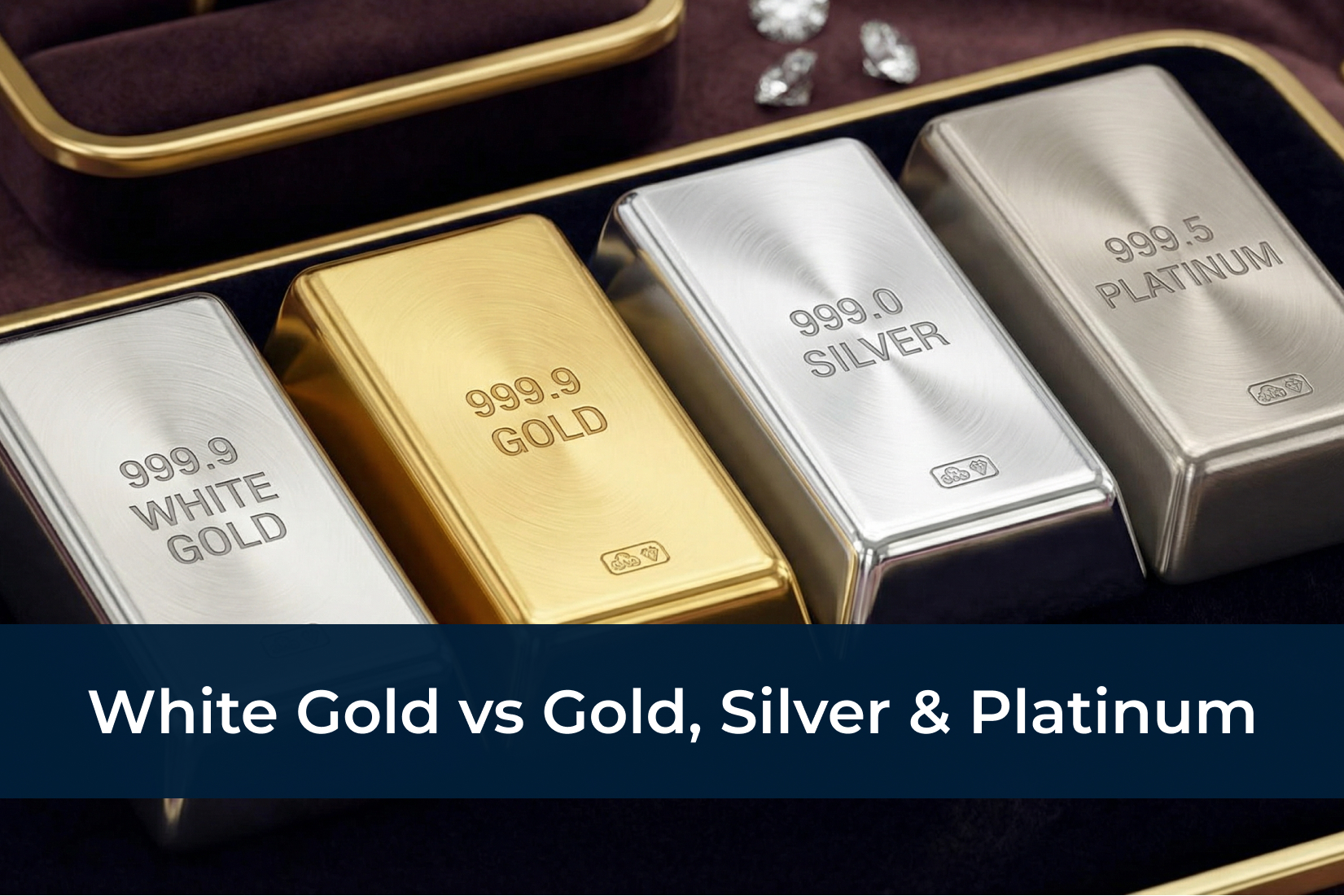
Jewellery options tend to trigger controversies surrounding looks, longevity, and price, with white gold being a top contender. Its shiny, silvery finish is greatly admired for engagement rings, necklaces, and bracelets, but what is the comparison with yellow gold, rose gold, silver, platinum, or even titanium?
In this blog, we will discuss white gold vs gold, white gold vs silver, white gold vs platinum, and so on, into price, hardness, and appropriateness to assist you in choosing the best metal for engagement rings or everyday wear.
White Gold or Yellow Gold: Which is Better?

The difference between white gold and gold is one of composition and appearance. White gold is a mixture of pure gold combined with metals such as palladium or nickel, producing a silvery colour, sometimes strengthened by rhodium plating. Yellow gold, mixed with copper or zinc, keeps its warm, traditional colour. White gold’s sleek, contemporary appearance complements diamonds, making it a popular choice for engagement rings. Yellow gold gives off old‑school warmth, appealing to classic tastes.
Durability‑wise, 18k white gold (75% gold) and 18k yellow gold are similarly hardy, although white gold’s rhodium coating can wear off, creating a yellowish tint — this is why white gold sometimes appears to “turn yellow”. Re‑plating every 1–2 years keeps it shining, which is part of white gold care and maintenance. Yellow gold needs less specialised upkeep but can scratch similarly. Cost‑wise, white gold is not inherently more expensive than yellow gold; prices depend on gold content (karat) and market rates, though rhodium re‑plating adds a minor ongoing cost.
Select according to taste: white gold for clean modernity, yellow gold for traditional elegance.
Is White Gold Better Than Silver?

White gold vs silver is a common comparison. Silver is an affordable, attractive metal but it is softer, tarnishes and scratches more easily, and requires more frequent polishing. White gold (especially 14k or 18k) is harder and more resistant to daily wear, making it a better choice for long‑term pieces such as engagement rings.
Silver’s low price makes it ideal for fashion jewellery, but its maintenance burden (regular polishing and anti‑tarnish care) is greater than the occasional re‑plating and cleaning white gold requires. In resale value and longevity, white gold typically outperforms silver.
Is White Gold Superior to Platinum?

White gold vs platinum is an important debate — especially for engagement rings. Platinum is naturally white, dense, hypoallergenic, and very durable; it resists tarnish and develops a unique patina over time. Platinum is also notably heavier and generally 30–50% more expensive than white gold due to scarcity and density.
White gold offers a similar white appearance (especially when rhodium‑plated) at a lower upfront cost, but it may require periodic re‑plating to maintain its bright white finish. Platinum’s finish is permanent and it’s nickel‑free, which appeals to people with sensitive skin. If permanence and low maintenance are priorities, platinum is often the preferred choice; if budget and similar aesthetics matter, white gold is an excellent alternative.
Is White Gold More Expensive Than Gold?
Generally, white gold and yellow (or rose) gold are priced similarly when comparing the same karat (e.g., 18k white gold vs 18k yellow gold) because the intrinsic gold content is the main price driver. Variations come from alloy composition, designer premiums, and any rhodium plating or finishing. Higher‑karat gold (like 22k) will be more expensive than lower karat white gold because it contains more pure gold.
Rose gold often costs slightly less because copper (the alloy used) is inexpensive, but the difference is usually marginal. Always compare the karat, weight and current market gold price when evaluating cost.
Which Karat White Gold is Best?

Choice of karat depends on intended use. 18k white gold (75% gold) offers a good balance of purity, lustre and durability — ideal for engagement rings and fine jewellery. 14k white gold (58.3% gold) is more durable and better for active lifestyles or pieces that will face more wear. Very high karats (22k or 24k) are uncommon for white gold because the higher gold content makes the metal too soft to alloy into a white‑looking, durable piece.
In short: choose 18k for luxury and shine; choose 14k for maximum durability in everyday wear.
Additional Considerations
White gold vs rose gold: Rose gold’s warm pink hue (from copper alloys) flatters warm skin tones and suits vintage or romantic styles. Rose gold doesn’t need rhodium plating and is low‑maintenance compared with white gold.
White gold vs titanium: Titanium is lightweight, corrosion‑resistant and budget‑friendly, ideal for sporty or minimalist styles, but it lacks the prestige, resale value and traditional working properties of gold. Titanium is hard to resize and less suited to intricate settings.
Maintenance: Care for white gold with gentle soap and warm water, avoid harsh chemicals, and store pieces separately to prevent scratches. Re‑plating restores the bright white finish when the rhodium layer wears thin.
Best metal for engagement rings: There’s no one‑size‑fits‑all answer. Platinum for permanence and hypoallergenicity; white gold for elegance on a budget; yellow or rose gold for classic warmth. Consider lifestyle, budget, and sensitivity to metals.
FAQs
Why does white gold become yellow?
The rhodium plating on white gold wears off over time, exposing the underlying gold alloy’s warmer tone. Re‑plating restores the bright white finish.
Is white gold stronger than silver?
Yes — 14k or 18k white gold alloys are harder and more resistant to daily wear and tarnish than silver, making white gold better suited for frequently worn jewellery.
How frequently should I have to care for white gold jewellery?
Expect to re‑plate white gold every 1–2 years depending on wear and to clean regularly with mild soap and water to maintain shine.
Is platinum worth the additional cost compared to white gold?
Platinum is more durable, hypoallergenic and low‑maintenance but more expensive. For those prioritising longevity and natural whiteness, platinum is often worth the premium.
Is it better for engagement rings, 18k or 14k white gold?
18k white gold offers greater purity and lustre; 14k white gold offers greater hardness and scratch resistance. Choose 18k for refined shine and 14k for robust daily wear.
Related Blogs:
- Latest GST Rates on Gold Jewellery: Impact on Prices & Buying in India
- Why Gold Costs More in Some Indian Cities Than Others
- How to Calculate the Price of Your Gold Jewellery
- What is HSN Code for Jewellery? Gold, Diamond, Silver
- What is White Gold? How Much Is White Gold Worth?
Leave a Reply