
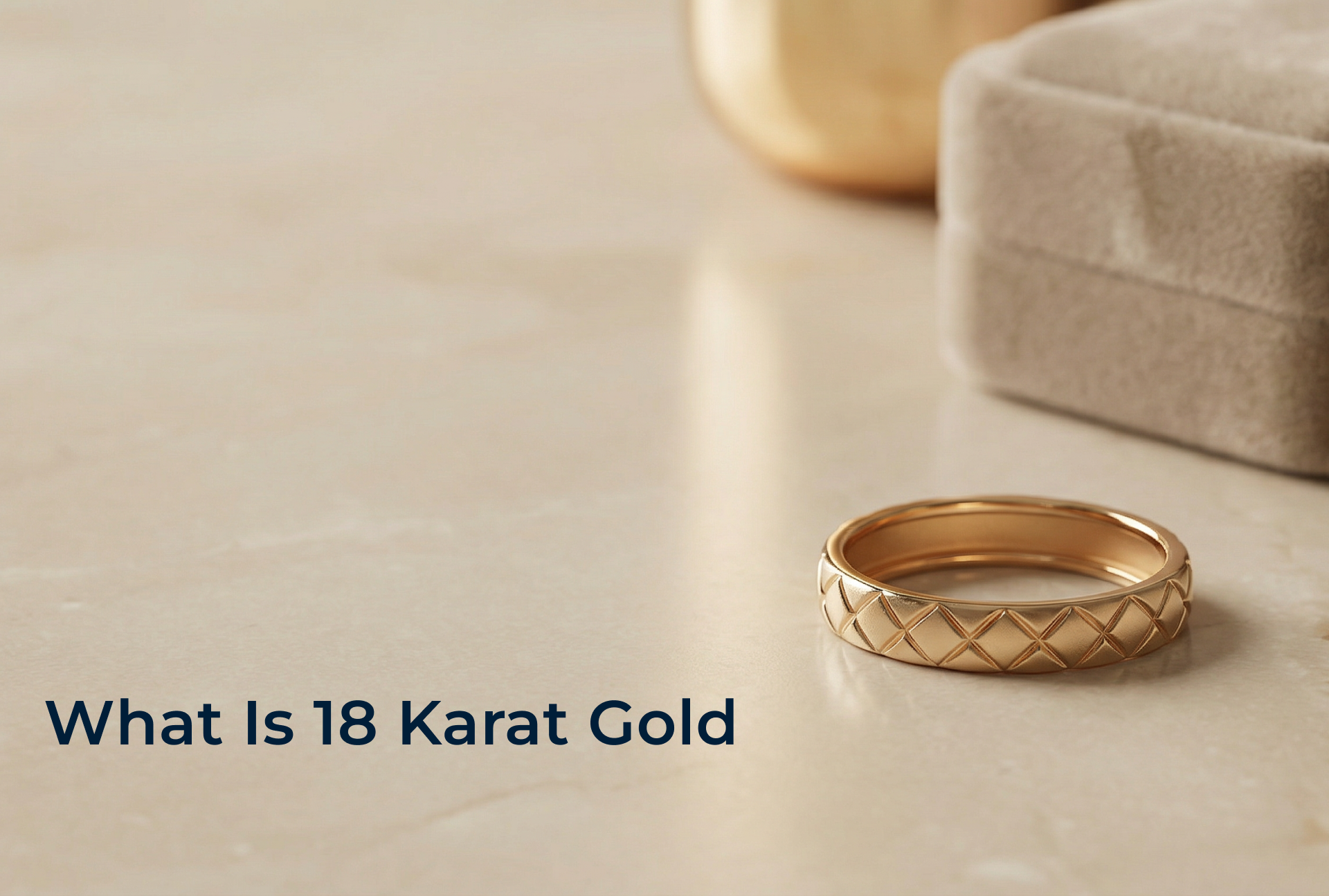
When buying gold jewellery, you often see labels like 18K, 22K, and 24K. Among these, 18 Karat gold (18K gold) is one of the most preferred choices for premium and luxury jewellery.
It is loved for its rich colour, high gold content, and elegant finish. Many people choose 18K gold for special occasions, wedding jewellery, and fine designer pieces.
But what does 18K gold really mean? How pure is it? And is it suitable for daily wear?
Let’s understand everything in detail.
What Is 18 Karat Gold?

Understanding the karat system helps you know exactly how much pure gold is present in your jewellery. The higher the karat, the higher the gold content.
18 Karat gold means that out of 24 parts, 18 parts are pure gold, and the remaining 6 parts are other metals.
In simple terms:
- Total parts: 24
- Pure gold: 18 parts
- Other metals: 6 parts
- Gold purity: 75%
So, 18K gold contains 75% pure gold and 25% alloy metals. This makes it purer than 14K gold, while still being strong enough for jewellery making.
Purity of 18K Gold Explained

Gold purity directly affects the value, appearance, and durability of jewellery. Higher purity means more gold content and a richer colour. Knowing these differences helps buyers choose jewellery according to their needs and budget.
Here’s how 18K gold compares with other common gold types:
| Karat | Gold Content | Purity (%) | Common Use |
|---|---|---|---|
| 24K | 24/24 | 99.9% | Investment, coins |
| 22K | 22/24 | 91.6% | Traditional jewellery |
| 18K | 18/24 | 75% | Premium jewellery |
| 14K | 14/24 | 58.3% | Daily-wear jewellery |
| 10K | 10/24 | 41.7% | Budget jewellery |
18K offers a balance of luxury and practicality, making it popular for fine jewellery.
Composition of 18K Gold

Pure gold is soft and bends easily, which makes it unsuitable for making strong jewellery. To improve durability, other metals are mixed with it. The composition of 18K gold affects its strength, colour, and shine.
Typical Composition:
- 75% Pure Gold
- 25% Alloy Metals, such as:
- Copper
- Silver
- Zinc
- Palladium
- Nickel (less common today)
Purpose of Alloying:
- Improves durability
- Reduces bending
- Enhances finish
- Controls colour tone
- Supports intricate designs
This combination makes 18K gold suitable for luxury and designer jewellery.
Types of 18K Gold (By Colour)

The colour of gold jewellery depends on the type and proportion of metals used in the alloy. Different blends create different shades. These colour variations allow buyers to choose jewellery according to their style and personality.
Yellow Gold (18K)
- Mixed with silver & copper
- Rich golden colour
- Closest to traditional gold look
White Gold (18K)
- Mixed with palladium/nickel
- Often rhodium-plated
- Looks similar to platinum
Rose Gold (18K)
- Higher copper content
- Soft pink or rosy shade
- Popular in modern jewellery
All three contain 75% gold; only the alloy composition differs.
Why Is 18K Gold So Popular?

18K gold is widely used in high-end jewellery because it offers both beauty and value. It is considered a symbol of luxury and elegance. Many premium brands prefer 18K gold for their collections.
1. High Purity
Contains 75% pure gold, giving it rich colour and high value.
2. Premium Look
Has better shine and depth than lower karats.
3. Good Durability
Stronger than 22K and 24K gold.
4. Ideal for Gemstones
Perfect for diamond and gemstone settings.
5. Long-Term Value
Maintains good resale and market demand.
18K Gold vs Other Karats
18K vs 14K Gold
| Feature | 18K | 14K |
|---|---|---|
| Purity | 75% | 58.3% |
| Strength | Moderate | Higher |
| Price | Higher | Lower |
| Colour | Rich yellow | Lighter shade |
18K vs 22K Gold
| Feature | 18K | 22K |
|---|---|---|
| Purity | 75% | 91.6% |
| Durability | High | Low |
| Daily Use | Suitable | Not ideal |
| Design | Flexible | Limited |
For luxury jewellery with durability, 18K is a great choice.
How to Identify 18K Gold Jewellery
Common Hallmarks:
- 18K
- 18KT
- 750
- 750/1000
Other Ways:
- Check BIS hallmark (in India)
- Buy from certified jewellers
- Ask for purity certificate
- Get professional testing
Is 18K Gold Good for Investment?
Many people buy gold for wealth protection and long-term savings. However, jewellery is different from bullion. Investment gold focuses more on purity and resale value. 18K gold is moderately good for investment, but not the best option.
Why?
- Lower purity than 22K/24K
- Making charges reduce returns
- Resale value depends on design
It is better for luxury wearing and gifting than pure investment.
Best Jewellery Types in 18K Gold
- Engagement rings
- Diamond jewellery
- Wedding sets
- Designer bracelets
- Pendants
- Earrings
- Luxury chains
How to Care for 18K Gold Jewellery
Do:
- Clean with mild soap and water
- Use a soft cloth
- Store in fabric-lined boxes
- Remove before heavy work
Avoid:
- Strong chemicals
- Swimming with jewellery
- Perfume directly on gold
- Rough cleaning tools
Frequently Asked Questions (FAQs)
Is 18K gold real gold?
Yes. It contains 75% pure gold, making it genuine gold jewellery.
Does 18K gold fade?
No. It does not fade, but may lose polish over time. Re-polishing restores shine.
Is 18K gold good for daily wear?
Yes, but it needs more care than 14K gold.
Which is better: 18K or 22K?
For jewellery: 18K. For investment: 22K.
Can 18K gold rust?
No. Gold does not rust, but alloys may tarnish slightly over time.
Final Thoughts: Is 18K Gold Right for You?
Choosing the right gold depends on your lifestyle, budget, and usage. 18K gold is ideal for those who want luxury with reliability. It offers high purity, elegant appearance, and good durability.
18 Karat gold is the perfect blend of:
- Purity
- Beauty
- Prestige
- Long-term value
If you want jewellery that looks rich, feels premium, and lasts for years, 18K gold is an excellent choice. It is especially suitable for wedding, diamond, and designer jewellery.
Related Blogs
Leave a Reply