
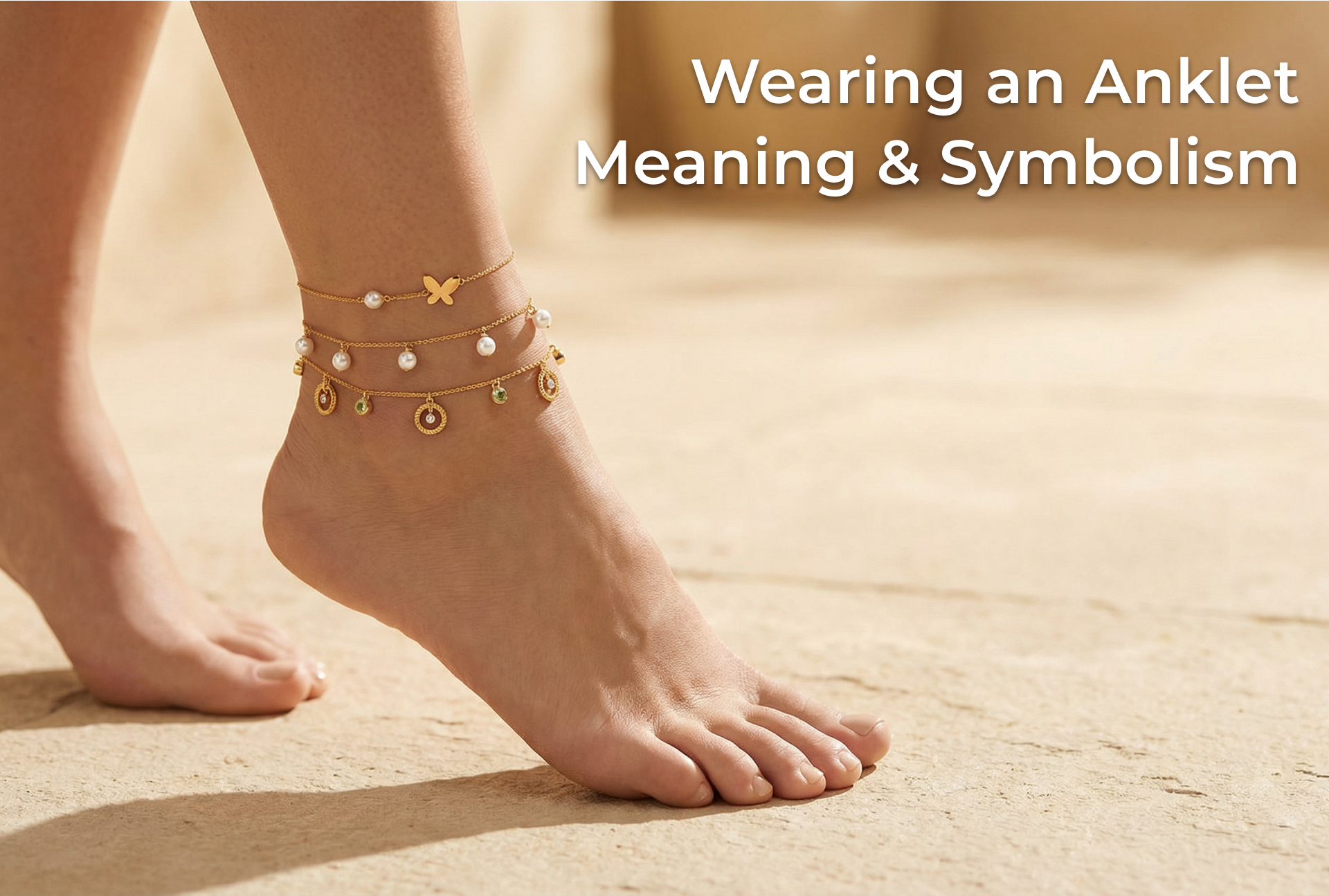
Anklets, those dainty chains that dance around your ankle with every step have been the object of human fascination for thousands of years. In 2025, they are having a major moment: minimalist gold chains, layered pearl strands, chunky charms, and even permanent welded anklets are everywhere from beach boardwalks to city streets. But beyond being the perfect summer accessory, many still wonder: What does wearing an anklet actually mean? Is there some sort of secret code? A hidden message about relationship status? Or is it purely aesthetic?
The answer is layered, as most jewellery traditions are. Anklets can carry deep anklet cultural significance in some parts of the world, while for others, it is just pure fashion.
Ancient Roots: Status, Protection, and Seduction

Anklets are one of the oldest forms of jewellery that existed in humanity. Archaeological evidence reveals that women in ancient Egypt around 3000–5000 BCE and Mesopotamia wore them made from gold, silver, and beads. In ancient Egypt, anklets were powerful status symbols the richer you were, the more elaborate your ankle jewellery was. Many female dancers and performers in ancient times also wore anklets with bells to accentuate movement and sound.
Some anklets were used even as means of payment or as dowry in summer. In many ancient cultures, they symbolized wealth, womanhood, fertility, and protection against evil spirits.
India & South Asia: The Sacred Sound of Payal

In India, the anklet, also known as payal, pajeb, or jhanjhar, is one of the most meaningful pieces of jewellery that can be worn by a woman. Conventionally, married women wear them, especially heavy silver ones with bells, and the soft tinkling sound is regarded as an auspicious omen. The word payal has several meanings:
- Declares the presence of a woman within the homestead, particularly in historical joint-family settings
- Believed to activate nerve endings in the feet that improve reproductive health
- Keep away negative energy the sound of the bell is said to scare away evil
- Defines marital status and represents Goddess Lakshmi (wealth and prosperity with every step entering the house)
Even today, in 2025, many Indian brides still receive gold or silver payals as wedding gifts, and Bollywood and fashion influencers keep ornate, ghungroo-adorned versions alive. In many Indian families, unmarried girls are gently discouraged from wearing anklets with bells the sound is considered the privilege of married women.
Middle East & Belly Dance Tradition

In many Middle Eastern societies, anklets have traditionally symbolized dance, in particular belly dancing. Dancers wear heavy coin or bell anklets to accent hip and foot movements. They also historically indicated social status or tribal affiliation. Today, they are still worn both for performance and everyday beauty.
The Left Ankle vs. Right Ankle Myth or Reality?

This is the question that blows up every summer: wearing an anklet on the left ankle vs wearing an anklet on the right ankle, does it mean anything?
Here’s the honest truth in 2025:
- Most of it is an urban legend that gained traction in the 1970s–1990s Western subcultures.
- The most persistent myth:
Left ankle: unmarried
Right ankle: married/taken
Some versions are reversed. Some say the left side the feminine/receptive side in energy healing circles means you are open to receiving love/attention.
99% of women wear it on whichever ankle looks or fits better, or where their tan line allows. Most men don’t even notice which side it’s on.
Anklet Fashion in 2025 Modern Pure Vibes

Anklets, in 2025, are bigger than they have been in 20 years. The dominant trends:
- Ultra-thin gold or silver cable/box chains: minimalist perfection
- Pearl anklets: freshwater or faux pearls that are usually stacked
- Permanent/welded anklets: huge trend; symbolic of commitment
- Beaded & charm anklets: evil eye, initials, birthstones, tiny shells
- Mixed metal & anklet stacks
- Chunky Figaro or Cuban link anklets
Anklet fashion is carefree. It is the accessory that says “I’m on vacation,” even when you’re not.
How to Style Anklets in 2025
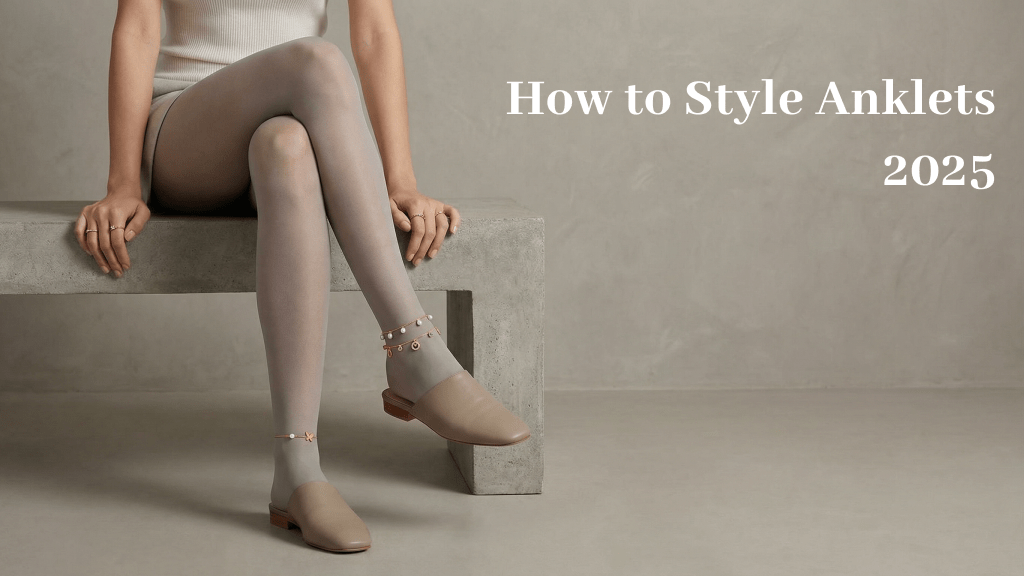
- Bare feet or sandals = gold chain + red pedicure
- With sneakers for a “model off-duty” look
- Layer different lengths and textures
- Wearing anklets on both ankles = high-fashion 2025
- Yes, you can wear them over pantyhose or boots
Conclusion
So what does an anklet mean today? It means whatever you want it to mean. In some cultures, this is a sacred sound of marriage and prosperity. In others, it is protection and status.
In most of the Western world in 2025, it is joy, summer, femininity, and a little bit of rebellion.
Wear it because it makes your feet look pretty while walking. That’s the best meaning of all.
Anklet FAQs
Does the left or right ankle mean you’re single/married?
No, in 99.9% of cases. It’s an outdated myth. Wear whichever side you prefer.
Can I wear an anklet if I am married?
Yes, of course! In India, it is actually a tradition for married women. Everywhere else, no rules.
Are anklets still in style in 2025?
Bigger than ever. They’re one of the top 2025 jewellery trends.
Which one to go for Gold or silver anklet?
Gold, yellow or white is dominating 2025, but silver is great for stacking and beach looks.
Q5. Can men wear anklets?
A5. Absolutely! Male anklets, especially in leather or thin chains, are rising fast in 2025.
Now go put one on and enjoy the jingle.
Related Blogs
Leave a Reply