
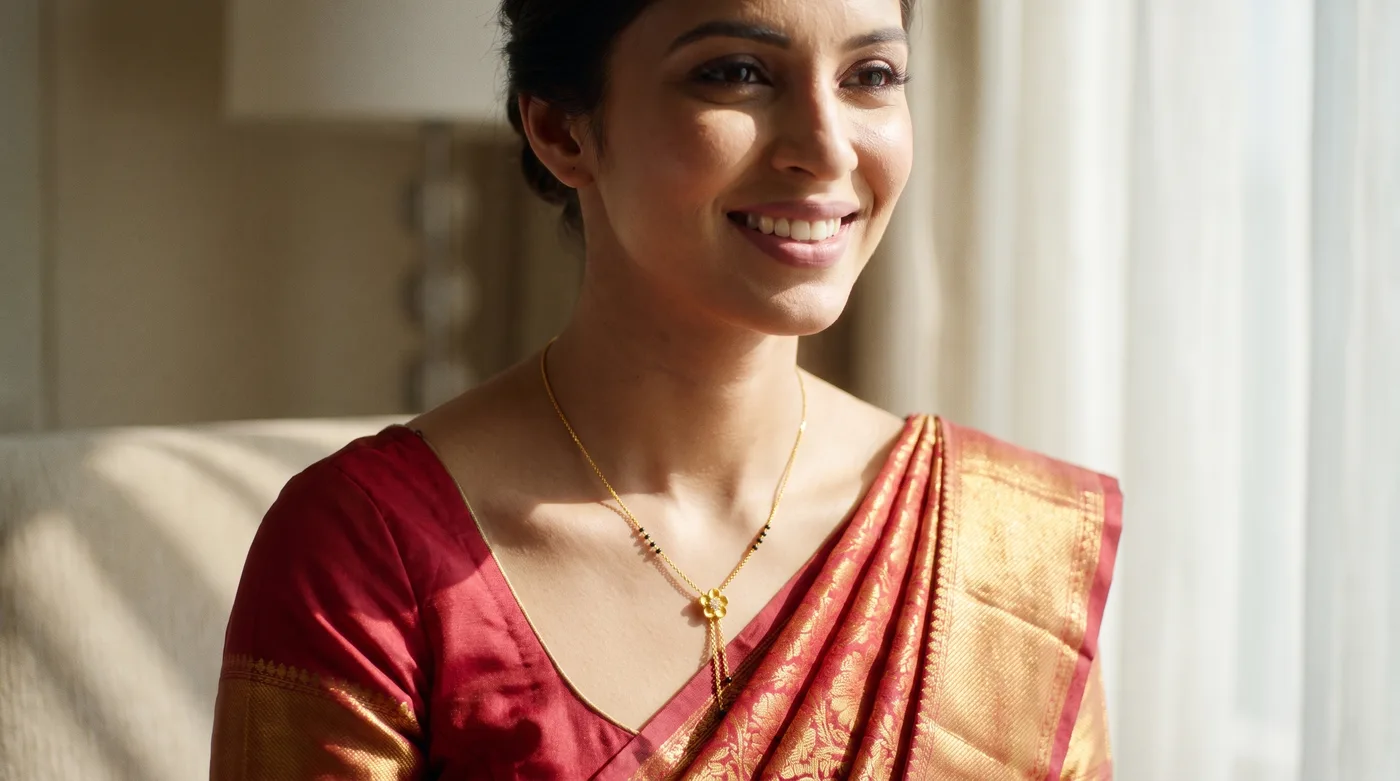
By Satyam, BlueStone Editorial
Choosing an authentic traditional mangalsutra design is one of the most sacred, culturally resonant decisions in Indian bridal jewellery. Derived from the Sanskrit words mangala (auspicious) and sutra (sacred cord), the traditional mangalsutra serves as an eternal physical emblem of love, spousal longevity, and divine marital commitment. While contemporary jewellery movements continue to experiment with dainty bracelets and minimalist pendant motifs, the timeless allure of an authentic traditional mangalsutra design remains irreplaceable for millions of brides, wedding ceremonies, and milestone anniversaries across India.
Today’s modern bride in 2026 approaches traditional gold jewellery with a sophisticated dual perspective. She deeply honours ancestral heritage, Vedic rituals, and regional symbolism, while simultaneously seeking ergonomic comfort, resilient clasp mechanisms, and versatile styling potential for modern everyday life. Whether your family traditions call for the sacred double-cup Maharashtrian Vati, the auspicious South Indian Thirumangalyam, or the radiant North Indian Tanmaniya arch, selecting the perfect traditional gold mangalsutra requires a thorough understanding of gold purity, black bead stringing architecture, BIS hallmarking, and drape length ergonomics.
Quick Buying Direction for 2026: When investing in a traditional mangalsutra design, select 22K yellow gold (916 fineness) for authentic golden warmth and traditional filigree craftsmanship, or 18K yellow gold (750 fineness) if your chosen design features natural diamonds, delicate prongs, and intricate gemstone pavé. For effortless everyday wearability, consider lengths between 18 and 22 inches that rest gracefully beneath formal workwear and festive necklines, or opt for the ceremonial 26 to 34 inch drape if you favour an auspicious, regal silhouette. Always ensure the piece carries the mandatory 6-digit alphanumeric BIS HUID hallmark verified through the BIS CARE app before completing your purchase.

The Cultural Significance of a Traditional Mangalsutra: Sacred Beads and Divine Protection
Across Indian cultural traditions, the traditional mangalsutra represents far more than an ornate gold necklace. Rooted in ancient Vedic wedding rites, the sacred thread was historically tied by the groom around the bride’s neck during the pivotal Mangalya Dharanam ritual, secured with three sacred knots symbolizing commitment to mind, speech, and physical deed. Over centuries, this sacred thread evolved into an exquisite gold and black-beaded necklace, marrying fine artisanal craftsmanship with profound metaphysical symbolism.
Every structural component of an authentic traditional mangalsutra carries specific spiritual and protective meaning:
- The Sacred Black Beads (Kali Pot or Karu Mani): Traditional black beads are believed to absorb negative atmospheric vibrations and deflect the evil eye (buri nazar or drishti) away from the newlyweds. Energetically, black stone beads represent stability, endurance, and grounding protection, shielding the marital bond from discord.
- The Radiant Yellow Gold: Pure gold embodies the life-giving energy of the sun (Surya), prosperity, auspiciousness (shubh), and spiritual radiance. The contrast between bright yellow gold and deep black beads symbolizes the divine union of Shiva (consciousness) and Shakti (dynamic energy), representing balance between masculine strength and feminine grace.
- The Continuous Bead Sequence: The alternating pattern of gold cups, gold beads, and black stone beads strung along resilient wires represents an unbroken life cycle, reminding couples of mutual harmony through the changing seasons of marriage.
Even as lifestyles evolve in 2026, brides continue to cherish the traditional mangalsutra because it carries the emotional blessings of generations, creating an immediate tangible bridge between familial legacy and personal matrimonial joy.
Anatomy of an Authentic Traditional Mangalsutra Design: Centerpiece, Stations, and Stringing
To understand the craftsmanship of a traditional mangalsutra design, one must examine its distinct architectural elements. Unlike standard gold chains or western fashion necklaces, an authentic mangalsutra must support the physical weight of its central motif while maintaining flexibility, skin comfort, and thread tension over decades of continuous wear.
The three foundational structural elements of every traditional gold mangalsutra include:
- 1. The Centerpiece or Pendant Motif: The focal element of the necklace, traditionally crafted in solid gold, filigree wirework, repoussé stamping, or diamond-studded arches. Depending on regional heritage, the centerpiece can range from dual semicircular cups to elaborate floral arches, solar medallions, or protective coin charms. High-quality traditional centerpieces feature smooth, polished backplates to prevent chafing against sensitive chest skin.
- 2. The Black Bead Stations (Karu Mani Chains): The necklace body consists of either single-strand, double-strand, or four-strand black bead configurations. In premium designs, black glass or spinel beads are hand-strung between delicate gold wire links, hollow gold globes, or textured bead spacers to ensure fluid drape without stiff bunching.
- 3. The Clasp and Counterweight Construction: Because traditional mangalsutras feature substantial central weight, the clasp must provide exceptional mechanical security. Traditional designs rely on reinforced lobster claw clasps, screw barrels, or classic S-hooks with secondary safety loops. In longer ceremonial styles, the chain forms a continuous loop without a clasp, designed to slip smoothly over the bride’s head.
Iconic Regional Styles in Traditional Gold Mangalsutra Design
India’s rich regional diversity is gloriously mirrored in its traditional mangalsutra designs. Each cultural region has developed distinct silhouettes, motifs, and symbolic elements that celebrate local heritage while upholding universal Vedic ideals. Exploring these iconic regional lineages helps brides select a piece that honours their specific cultural ancestry.
Here are the primary regional styles that define traditional gold mangalsutra design across India:
- The Maharashtrian Vati Mangalsutra: Quintessential to Western India, this iconic design features two hollow, semicircular gold cups (known as Vatis) suspended side-by-side along a dual-strand black bead chain. The two Vatis represent the divine union of Shiva and Shakti. Traditionally crafted in rich 22K yellow gold with fine filigree edging or granulation beads, modern brides often select Vatis accented with delicate floral engravings or subtle diamond crowns for contemporary brilliance.
- The South Indian Thaali or Thirumangalyam: In Tamil Nadu, Karnataka, Andhra Pradesh, and Kerala, the sacred pendant is known as the Thaali. Often engraved with sacred iconography such as Goddess Lakshmi, Lord Shiva’s lingam, holy tulsi leaves, or geometric sun-and-moon motifs, the Thaali is traditionally strung on a yellow turmeric-dyed thread during wedding rituals before being transferred onto an auspicious gold chain adorned with black beads and coral stones.
- The North Indian Tanmaniya: Celebrated across Northern and Central India, the Tanmaniya features a broad, gracefully curved arched pendant strung between two parallel black bead chains. The curved arch, often reminiscent of a crescent moon or blooming lotus garland, showcases intricate gold filigree, delicate jali openwork, and bezel-set gemstones or brilliant-cut diamonds. Its wide drape distributes weight evenly across the collarbones, making it a favourite for ceremonial grandeur.
- The Bihari and Bengali Taagpaak and Shaka Pola Traditions: While Bengali brides wear the sacred red and white Shakha Pola bangles and iron Loha band, many modern Eastern Indian brides now pair them with a traditional gold mangalsutra featuring small gold filigree beads alternating with micro-black stones and delicate floral lockets. In Bihar and Uttar Pradesh, traditional double-chain mangalsutras feature prominent gold cylinder beads (dholna) representing strength and domestic harmony.
- The Gujarati and Marwari Chandrakor and Dokiya: In Gujarat and Rajasthan, traditional mangalsutra designs frequently incorporate the Chandrakor (crescent moon) or a circular pendant medallion called a Dokiya. These pieces often feature meenakari (enamel work) on the reverse and rich Kundan or diamond setting on the front face, exuding royal Rajputana opulence.
22K vs 18K Purity in a Traditional Gold Mangalsutra: Warmth, Strength & Diamond Security
One of the most crucial technical decisions when purchasing a traditional gold mangalsutra is selecting the correct gold purity. Gold purity directly influences not only the visual warmth and colour tone of the piece, but also its structural longevity, scratch resistance, and suitability for diamond or gemstone settings.
Understanding the key distinctions between 22K and 18K gold will help you choose the best metal composition for your bridal lifestyle:
- 22K Yellow Gold (916 Fineness): Comprising 91.6% pure gold alloyed with copper and silver, 22K gold has been the historic standard for traditional Indian jewellery. It exhibits an intense, saturated, deep golden glow that feels inherently auspicious and pairs seamlessly with heirloom wedding silks. It is exceptionally well-suited for traditional hollow Vati designs, die-struck gold coins, hand-forged filigree, and solid bead chains. However, because 22K gold is relatively soft, it requires slightly thicker prongs and is less ideal for micro-pavé diamond settings that demand rigid stone security under daily friction.
- 18K Yellow Gold (750 Fineness): Composed of 75.0% pure gold and 25.0% strengthening alloy metals, 18K gold offers superior tensile strength, hardness, and durability. It provides a warm, elegant golden luster while offering the structural rigidity required to securely hold natural diamonds, delicate channel walls, and precision claw settings. For brides who desire a traditional mangalsutra design featuring sparkling diamonds or intricate geometric centerpieces, 18K gold represents the professional jeweler’s gold standard, ensuring stones remain locked in place for decades of active wear.
- 14K Gold Considerations: While 14K gold (58.5% purity) is increasingly popular for ultra-lightweight western fashion jewellery, traditional mangalsutras are rarely crafted in 14K gold in India due to traditional cultural preferences for higher gold content and sacred emotional value.
If your traditional mangalsutra design is purely gold-centric with sculptural filigree or classic Vati cups, 22K gold offers unmatched heritage warmth. If your design incorporates diamonds, delicate prongs, or modern slender chains, 18K gold delivers the ideal combination of fine gold prestige and structural resilience.

Chain Architecture: Black Bead Ratios, Stringing Formats and Daily Durability
The beauty and lifespan of a traditional gold mangalsutra depend critically on how its chain is engineered. Because the chain rests directly against the skin of the neck and chest, it experiences continuous contact with body oils, perspiration, clothing friction, and hair strands. A poorly strung chain can stretch, kink, or snap unexpectedly, whereas an expertly engineered chain provides supple drape and reliable security.
Here are the essential chain construction factors every buyer should evaluate:
- Single-Strand vs Double-Strand Architecture: A single-strand chain offers a delicate, featherweight profile that feels airy and modern, ideal for brides who wear western shirts or tailored tops daily. In contrast, a double-strand (or dual-line) chain is the classic hallmark of authentic traditional mangalsutra design. Double strands distribute the pendant’s weight across two parallel tracks, preventing the centerpiece from tilting or flipping forward during movement, while doubling structural safety if one strand catches on a garment.
- Wire-Strung vs Interlinked Gold Chains: Traditional mangalsutras generally feature two stringing methods. In wire-strung styles, genuine black beads are threaded along ultra-fine, multi-strand coated steel or nylon-core jewellery wire, separated by gold spacer beads. This method yields a seamless, liquid-like drape. In interlinked styles, each black bead is framed within its own hand-turned gold wire loop, creating an unbroken chain of interconnected metal links. Interlinked chains provide superior structural integrity and can be easily repaired by a master jeweller if a single link undergoes wear.
- Bead Density and Spacing: Traditional designs feature dense black bead clusters, particularly near the pendant and shoulder collarbones, to emphasize protective symbolism. Contemporary adaptations often introduce gold link intervals between bead stations, allowing the chain to catch ambient light and match other gold necklaces when layered.
- Smooth Ergonomic Profiling: Ensure the underside of every gold station and connecting jump ring is hand-buffed to a mirror finish. Sharp wire ends or rough solder joints can snag silk threads on expensive bridal dupattas or irritate sensitive skin.
Traditional Mangalsutra Length and Drape Guide: Choosing the Right Inches
Determining the ideal length for a traditional mangalsutra design is both an aesthetic preference and a practical consideration. Traditionally, mangalsutras were worn long, resting over the bride’s heart chakra (Anahata) to channel spiritual harmony. In 2026, brides balance this ceremonial custom with daily wardrobe requirements.
Refer to this quick drape breakdown when deciding your custom chain length:
- 16 to 18 Inches (Collar to Princess Length): Sits just above or directly across the collarbones. While slightly shorter than historic lengths, an 18-inch traditional mangalsutra offers supreme versatility for working professionals. It remains completely visible with V-neck blouses, jewel-neck kurtas, and open-collar shirts, while avoiding tangles with winter scarves or handbag straps.
- 20 to 22 Inches (Matinee Length): The modern sweet spot for traditional bridal jewellery. Resting comfortably at the centre of the chest, a 22-inch chain allows the traditional pendant to sit flat against silk sarees and lehenga cholis without disappearing beneath high-neck dupattas. It provides a graceful, feminine drape that honours tradition while feeling completely effortless.
- 24 to 28 Inches (Classic Ceremonial Length): The historic standard for traditional South Indian Thaali chains and Maharashtrian Vati necklaces. This regal length rests over the upper sternum, framing bridal sarees with commanding cultural grace. It creates an authentic silhouette during temple rituals, family puja celebrations, and wedding receptions.
- 30 to 36 Inches (Heritage Opera Drape): A dramatic, heirloom-length chain often passed down through generations. Typically double-stranded and substantial in gold weight, this length is reserved for grand ceremonial occasions, traditional festivals, and celebratory bridal portraits.
Curated Traditional Mangalsutra Designs for the Modern Bride
To help you discover the finest craftsmanship in traditional gold jewellery, BlueStone has curated an exclusive selection of authentic mangalsutra designs. Each piece marries timeless cultural symbolism with master goldsmith precision, featuring certified gold purity, secure mechanical closures, and exquisite hand-finished details.


Curated Design Highlights:
- The Aarabhi Mangalsutra: An iconic traditional masterpiece featuring a classic dual-strand black bead chain and an ornate scalloped gold centerpiece accented with brilliant natural diamonds. Best for traditional bridal pheras and grand festive saree styling.
- The Casma Mangalsutra: A graceful traditional floral cluster motif rendered in solid yellow gold and hand-set diamonds, suspended from delicate black bead stations. Perfect for brides who desire timeless floral elegance with everyday wearability.
- The Eirini Mangalsutra: Showcasing a continuous curved silhouette that symbolizes unbroken marital harmony, embellished with luminous pavé diamonds on a fluid yellow gold chain.
- The Yosni Mangalsutra: Inspired by sacred temple architecture, this design features an auspicious curved arch centerpiece supported by balanced black bead links, delivering rich heritage charm.
- The Yeijah Mangaslsutra Necklace: A circular solar medallion design celebrating light and prosperity, featuring intricate micro-filigree detailing in solid 18K yellow gold.
- The Shubhlatika Mangalsutra Necklace: An exquisite botanical creeper motif in 18K gold and diamonds, evoking nature’s eternal vitality, prosperity, and continuous familial growth.
BIS Hallmarking, Weight Estimation and HUID Verification: Protecting Your Heirloom
Purchasing a traditional mangalsutra represents both an emotional milestone and a substantial financial investment. In India, statutory consumer protection regulations established by the Bureau of Indian Standards (BIS) mandate strict hallmarking standards to guarantee metal purity and prevent counterfeit alloys.
When purchasing your traditional gold mangalsutra, always verify these three essential hallmark signs laser-inscribed on the pendant or chain clasp:
- 1. The BIS Standard Mark: The official triangular logo representing certification by an authorized Assaying and Hallmarking Centre.
- 2. Purity in Karat and Fineness: Clear indication of gold purity, stamped as
22K916(for 22 karat gold) or18K750(for 18 karat gold). - 3. The 6-Digit Alphanumeric HUID Code: A mandatory unique Hallmark Unique Identification code laser-engraved onto every individual piece of gold jewellery sold in India. This 6-digit code acts as an unalterable digital passport for your mangalsutra.
How to Verify in Seconds via BIS CARE: Download the official government BIS CARE mobile application on Android or iOS. Navigate to the Verify HUID section and enter the 6-digit code inscribed on your mangalsutra. The app instantly retrieves and displays the registered jeweller name, assaying centre location, date of hallmarking, and exact certified purity, confirming that your purchase is completely authentic.
Understanding Net Gold Weight vs Gross Weight: A traditional mangalsutra contains black beads, enamel, or diamonds in addition to solid gold. Reputable jewellers will always provide an itemized invoice clearly distinguishing between Gross Weight (total weight of gold, stones, and beads combined) and Net Gold Weight (the precise weight of the gold alone). In India, making charges and gold billing must be calculated strictly on the Net Gold Weight, never on the gross weight including black glass beads. Standard jewellery billing also applies 3% GST on the net gold and gemstone value, alongside 5% GST on the making charges.
Styling Traditional Mangalsutra Designs: Festive Silk Saree Drapes to Everyday Fusion
A beautifully designed traditional mangalsutra is remarkably versatile when styled with intention. Modern Indian women seamlessly integrate their sacred necklace into diverse sartorial settings, from majestic wedding festivities to polished boardroom meetings.
Here are expert styling guidelines for making the most of your traditional gold mangalsutra:
- Classic Festive and Wedding Styling: When wearing rich silk sarees such as Kanjeevarams, Paithanis, or Banarasis, allow your traditional mangalsutra to take centre stage. Pair it with matching 22K gold jhumkas or classic Chandbali earrings. If you wish to layer your jewellery for wedding receptions, wear the traditional mangalsutra as your intermediate or longer piece, pairing it with a shorter diamond or gold choker along the collarbones.
- Contemporary Ethnic and Fusion Wear: Pair a medium-length traditional mangalsutra (20 to 22 inches) with raw silk anarkalis, embroidered kurta sets, or contemporary cape outfits. The contrast of black beads against pastel fabrics adds depth and sophisticated texture without looking excessive.
- Modern Western and Office Ensembles: If you wear a sleek single-strand or 18-inch traditional mangalsutra daily, tuck the chain neatly beneath crisp collared shirts so only the subtle gold centerpiece peeks out at the neckline. For scoop-neck dresses and tailored blazers, the delicate pendant rests elegantly against the skin, delivering quiet luxury and personal identity in professional environments.
Care, Cleaning and Periodic Restringing Guide for Black Bead Chains
Because a traditional mangalsutra is frequently worn daily, it is exposed to lotions, perfumes, environmental dust, and physical movement. Following a disciplined maintenance routine ensures the gold maintains its radiant luster and the black bead stringing remains resilient against breakage.
Follow these essential care practices to preserve your traditional mangalsutra design:
- Gentle Home Cleaning: Soak your mangalsutra once a month in a bowl of lukewarm water mixed with a few drops of mild, pH-neutral baby shampoo. Use a super-soft baby toothbrush to gently clean around the black beads, wire links, and pendant crevices. Rinse thoroughly in clean water and pat dry with a lint-free microfibre cloth. Never use boiling water, harsh chemical detergents, or ultrasonic cleaners on beaded chains, as vibration can weaken wire crimps.
- Avoid Perfumes and Chemicals: Always apply your perfumes, hairsprays, body lotions, and makeup completely before putting on your mangalsutra. Cosmetic alcohols and chemicals can dull the high-polish finish of gold and erode the protective coating on black stone beads over time.
- Annual Restringing Inspection: If your traditional mangalsutra is strung on jewellery cord or nylon-coated wire, have it professionally inspected by a trusted jeweller once every 12 to 18 months. Daily friction causes stringing cords to stretch gradually. If you notice visible gaps between black beads or looseness near the clasp crimp, professional restringing prevents unexpected breakage.
- Safe Storage: When not in use, store your traditional mangalsutra flat inside a dedicated velvet or silk-lined jewellery pouch. Avoid coiling the black-beaded chain tightly, which can introduce stubborn kinks into the internal wire core.
Final Thoughts: Choosing an Heirloom Traditional Gold Mangalsutra
A traditional mangalsutra design is much more than an everyday jewellery accessory; it is a sacred cultural anchor, an enduring pledge of spousal companionship, and a timeless heirloom destined to be cherished across lifetimes. By carefully balancing your regional traditions with contemporary ergonomic requirements, choosing certified 22K or 18K gold purity, verifying the 6-digit BIS HUID code, and selecting an authentic design from a reputable jeweller like BlueStone, you ensure that your sacred symbol remains as radiant, resilient, and meaningful in the decades ahead as it is on your wedding day.
More Gold Jewellery & Buying Guides
Explore our comprehensive collection of expert jewellery buying guides to help you navigate your bridal trousseau, purity verification, and styling decisions with total confidence:
- Gold Hindu Mangalsutra Design Buying Guide 2026: Sacred motifs, chain types, and cultural symbolism for modern brides.
- Yellow Gold Mangalsutra Design Buying Guide 2026: Exploring modern silhouettes, 22K vs 18K finishes, and ergonomics.
- Maharashtrian Mangalsutra Buying Guide 2026: Traditional Vati designs, Kolhapuri artistry, and purity standards.
- Mini Mangalsutra Design Gold Buying Guide 2026: Dainty motifs, lightweight daily wear, and chain length styling.
- How to Check Gold Purity at Home and in Showrooms: The definitive consumer guide to BIS hallmarking, karat fineness, and testing methods.
Frequently Asked Questions about Traditional Mangalsutra Design
What is the cultural significance of black beads in a traditional mangalsutra?
In Indian Vedic tradition, the sacred black beads (known as Kali Pot in the North and Karu Mani in the South) are believed to absorb negative vibrations and deflect the evil eye (drishti) away from the couple. Energetically, black beads symbolize grounding, protection, and endurance, while alternating gold beads channel the solar warmth, vitality, and spiritual radiance of Goddess Lakshmi, creating harmony within marital life.
Which gold purity is best for a traditional mangalsutra design?
The ideal gold purity depends on your specific design architecture. For pure gold designs featuring sculptural filigree, traditional hollow Vati cups, or temple motifs, 22K gold (916 fineness) offers the richest, most auspicious golden hue. If your traditional mangalsutra features natural diamonds, intricate gemstone settings, or delicate prongs, 18K gold (750 fineness) is strongly recommended for its superior hardness and long-term stone retention.
What is the traditional length for an Indian mangalsutra?
Historically, traditional mangalsutras were worn long, ranging from 24 to 34 inches, designed to rest over the bride’s heart chakra (Anahata) to channel auspicious energy. In 2026, many modern brides select lengths between 18 and 22 inches, which comfortably accommodate contemporary office attire and high-neck blouses while retaining authentic traditional elegance.
How do I verify the authenticity of a traditional gold mangalsutra in India?
Every authentic gold mangalsutra sold in India must carry three mandatory BIS hallmark stamps: the triangular BIS logo, the gold purity grade (such as 916 for 22K or 750 for 18K), and the unique 6-digit alphanumeric HUID code. You can verify the piece instantly by entering the HUID code into the government’s official BIS CARE mobile application to view the registered jeweller, hallmarking centre, and verified purity.
What is the difference between a single-strand and double-strand mangalsutra?
A single-strand mangalsutra features one delicate line of black and gold beads, providing a lightweight, modern look suitable for everyday casual or western wear. A double-strand mangalsutra features two parallel beaded chains, which is the classic format for traditional bridal mangalsutras. Double strands provide superior weight distribution, keep the pendant stable against the chest, and offer greater durability.
How often should a traditional mangalsutra be restrung?
If your traditional mangalsutra is strung on traditional cord or nylon-coated jewellery wire and worn daily, it should be professionally inspected and restrung once every 12 to 18 months. Continuous friction and body oils gradually weaken stringing cords. Having a professional jeweller restring the black beads prevents sudden breakage and ensures clasp security.
Leave a Reply