
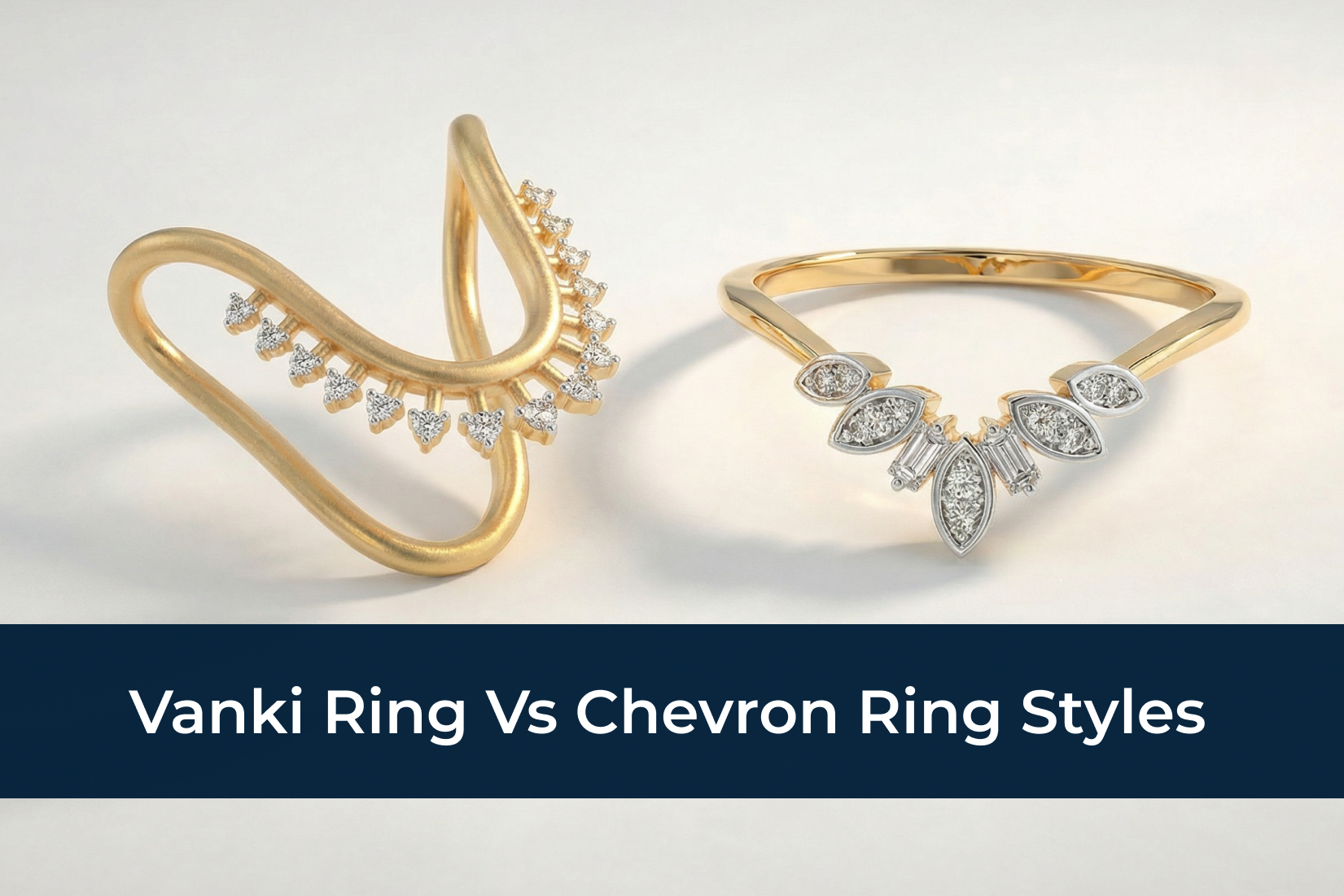
A Vanki Ring is not the kind you just pick up from a department store. These are the ones that get passed down like heirlooms. These are jewellery with meaning, intention, and yes, just the right amount of drama. The Vanki ring has a design with history in its veins and elegance on its fingertips.
Now, modern pieces are most of the hype today, but there’s something about a Vanki that whispers tradition while shining like a statement. If you’ve been debating between the cultural brilliance of a Vanki ring and the sleek simplicity of a Chevron ring, this blog is to help you decide. Although the best option is to collect both, because why not?
What Is a Vanki Ring?

A Vanki ring is not just a ring. It’s heritage, artistry, and symbolism, all wrapped up in a V-shaped silhouette that originated from the South Indian armlet worn by brides. Traditionally, the Vanki (also known as Baajuband in the North) was worn on the upper arm. But it has cleverly evolved as an exquisite finger ring.
The Vanki ring is shaped in an inverted V that elegantly embraces the finger. And this design isn’t arbitrary; it carries deep meaning. In South Asian culture, the V shape is believed to offer divine protection. It is associated with strength, blessings, and the feminine divine of Goddess Lakshmi.
A Brief History of The Vanki Ring

The traditional Vanki dates back to temple jewellery traditions and royal courts. Goldsmiths would craft intricate designs with peacocks, serpents, or mango motifs, each detail blessed with layers of symbolism. The Vanki was worn not just as an ornament but as a spiritual guard.
Fast forward to today, the brides in Kanjeevaram silks wear Vanki rings and you know what? It works. This design has made the leap from the temples of Madurai to the runways of Mumbai.
Types of Vanki Rings You’ll Want to Wear

A Vanki ring is versatile. You can wear it with a Mysore silk saree or with your modern co-ord set. Here’s a breakdown of the types worth adding to your collection:
- Traditional Vanki Ring: These are the classics. Gold, ornate, and unapologetically Indian. The motifs often echo temple architecture like florals, peacocks, mango leaves. They pair beautifully with silk and nostalgia.
- Vanki Diamond Ring: Now we’re talking sparkle. Vanki diamond rings bring in that refined glitter without shouting. Think old-world artistry paired with new-world radiance. Ideal for engagement parties where you want to stand out without trying too hard.
- Simple & Plain Vanki Ring: Sometimes, less is more. A simple plain Vanki ring in polished gold is elegance distilled. Wear it for brunches or temple visits. It’s subtle, but the shape does all the talking.
- Modern Vanki Finger Ring: These are made for comfort and style. They fit snugly on your middle or ring finger and look fabulous whether you’re at a mehendi function or a gallery opening in Delhi.
Latest Vanki Ring Designs That Deserve Your Attention
Designers are finally treating the Vanki with the creative reverence it deserves. Some of the latest Vanki ring designs are utterly divine.
- Open top styles for a light with full effect
- Dual tone rings for that mix of modernity and tradition (rose gold with yellow gold, darling—it’s everything)
- Gemstone Vankis with rubies or emeralds for just a hint of drama
- Adjustable Vanki Ring designs because comfort should never be optional
What Is a Chevron Ring?

This comes from the west. A Chevron ring is modern, minimal, and structured. Its V-shaped form is sleek, clean, and often worn as a stacker or solo ring. It doesn’t carry religious or cultural weight, but it does carry style.
It’s perfect for everyday wear. They stack well with solitaires or even a slim eternity band. Think of the Chevron ring as the little black dress of your jewellery box understated but never unnoticed.
Vanki Ring vs Chevron Ring: What Sets Them Apart?

Let’s not confuse similar shapes with similar souls. The Vanki ring is cultural couture. The Chevron ring is your versatile Parisian capsule piece. Both fabulous. But very, very different.
Here we talked about the difference between Vanki & Chevron rings.
| Feature | Vanki Ring | Chevron Ring |
|---|---|---|
| Origin | South Indian traditional jewellery | Contemporary Western design |
| Design | Ornate, temple art-inspired | Geometric, minimalist |
| Material | Gold, diamonds, gemstones | Gold, silver, platinum |
| Occasion | Weddings, cultural events | Daily wear, work fashion |
| Styling | Silks, lehengas, ethnic | Chic, Western, formal |
How to Wear a Vanki Ring

Traditionally, the Vanki ring is worn on the middle finger of the right hand, with the V-shape pointing downward. This is believed to help channel protective energy. And trust me, when you’re balancing tradition and tax brackets, a little spiritual backup never hurts. You can also:
- Style it on the index finger for a statement look
- Use it as a standalone piece as it hardly needs company
- Pair it with coordinated temple jewellery if you’re attending a wedding in Madurai or a Diwali bash in Chennai
Styling Tips: Pairing Vanki and Chevron Rings
Yes, you absolutely can wear both. Contrast is couture.
- Try a Vanki ring on one hand and a Chevron ring on the other. It’s East meets West, and it’s flawless.
- For stacking, slip a Chevron ring below a solitaire, and let a simple Vanki ring top it off.
- Match your gold Vanki with a silk saree and kundan earrings for a festive look.
- For a day at the club or an art fair, pair a minimal V ring with a diamond Chevron for casual luxury.
Vanki Ring in Pop Culture: Aishwarya Rai’s Iconic Bridal Look
Let’s not pretend we didn’t all gasp when we saw Aishwarya Rai’s wedding photos. Her bridal jewelery was everything South Indian weddings aspire to be: rich, traditional, and regal. And yes, she wore a Vanki ring paired with temple jewellery, a classic kanjeevaram, and enough grace to silence the room.
That look didn’t just trend—it set the tone for a new generation of brides rediscovering the cultural pride wrapped up in these pieces.
So if you’re looking for jewellery with cultural depth, divine energy, and a design that’s lasted centuries without losing relevance, the Vanki ring is your signature piece. If you’re building a modern, fashion-forward jewellery capsule, the Chevron ring is a perfect place to start.
Or, you could do the best thing, collect both the v ring. Wear the Vanki when you feel regal and rooted. Choose the Chevron when you want crisp, quiet elegance. And truly, what’s more luxurious than wearing your heritage with intention?
Frequently Asked Questions About Vanki Ring
1. What is the meaning of a Vanki ring?
A Vanki ring represents divine protection and is inspired by traditional South Indian armlets.
2. Can I wear a Vanki ring daily?
Yes! Opt for a simple Vanki ring or a plain gold Vanki ring for everyday use.
3. Which finger is ideal for wearing a Vanki ring?
Traditionally, it is worn on the middle finger of the right hand, but styling is flexible based on personal preference.
4. What’s the difference between a Chevron ring and a Vanki ring?
Vanki rings are rooted in Indian tradition with ornate detailing, while Chevron rings offer a minimalist, modern look and come from the West.
5. Where can I buy the latest Vanki ring designs?
We have a wide range of Vanki Ring collections at BlueStone that you can explore!
Related Blogs
- The Power of Evil Eye: Meaning, Benefits & Modern Jewellery Style
- Everything You Need to Know About the Toi Et Moi Rings
- How to Measure Your Ring Size at Home: 5 Easy & Accurate DIY Methods
- What Should We Keep in Mind While Wearing a Navaratna Ring?
- All About Solitaire Rings: Meaning, Styles & Buying Tips
- Decoding the Meaning of Wearing Rings on Each Finger
Leave a Reply