
By Satyam, BlueStone Editorial
A red coral ring represents one of the most distinctive, deeply symbolic jewellery investments in the Indian tradition. Known classically as Moonga or Praval, red coral is an organic gemstone created over decades by marine polyps in deep oceanic reefs. Unlike crystalline mineral gems like rubies or garnets that form under geological pressure beneath the earth, authentic red coral offers an earthy, velvety warmth and a tactile smooth luster that has fascinated fine jewellery artisans and Vedic astrologers for centuries.
Whether you are drawn to a red coral ring for its powerful astrological alignment with the planet Mars, or you are seeking a striking statement gemstone to enrich your fine jewellery collection, making an informed purchase requires careful consideration. In 2026, discerning jewellery connoisseurs look beyond folklore to evaluate origin authenticity, gold alloy durability, setting architecture, and daily care protocols. This comprehensive buying guide unpacks the essential factors you need to know before choosing a certified red coral ring set in hallmarked gold.
What Makes an Authentic Red Coral Ring Unique? Origin, Formation, and Gemstone Science
To appreciate a red coral ring, one must first understand its unique biological origin. Red coral belongs to the family Coralliidae, composed almost entirely of calcium carbonate (calcite) bound together by specialized carotenoid organic pigments. These microscopic marine polyps secrete rigid branching skeletons across Mediterranean and Pacific reefs, growing at a glacial pace of mere millimeters each year. Because harvesting is strictly regulated under global environmental conservation agreements, fine natural red coral remains a precious, finite gift from the sea.
Italian Mediterranean Coral vs Japanese Red Coral
In the international and Indian gemstone markets, two primary natural varieties dominate fine jewellery:
- Italian Mediterranean Coral (Corallium rubrum): Harvested along the coasts of Italy, Sardinia, and Tunisia, Mediterranean coral is celebrated for its remarkably uniform, saturated oxblood to warm crimson-red hue. It possesses a consistent internal grain without a white central core, making it the premier choice for traditional Indian astrological rings and elegant cabochon solitaires.
- Japanese and Taiwanese Coral (Corallium japonicum / Moro Coral): Sourced from deeper waters in the Pacific, Japanese red coral often displays an exceptionally dark, intense oxblood tone, prized internationally as Moro coral. However, Pacific corals typically feature a natural white core (known as the central pith or streak), requiring skilled master gem cutters to orient the cabochon so that the white interior remains concealed underneath the gold setting.
On the Mohs scale of mineral hardness, red coral registers at approximately 3.5. This relative softness places it in a delicate category alongside pearls and turquoise. Unlike hard corundum gems like sapphires that resist abrasion, a coral gemstone requires thoughtful mounting in protective precious metals to withstand the rigors of modern daily life.
Astrological Significance and Benefits of Wearing a Red Coral Ring
In Vedic astrology (Jyotish Shastra), red coral is revered as the primary gemstone (Ratna) of Mangal, the fiery planet Mars. Mars symbolizes masculine vitality, courage, ambition, willpower, physical endurance, and leadership. Astrological tradition holds that when Mars is positioned auspiciously in a native’s birth chart, wearing a natural red coral ring amplifies focus, self-assurance, and executive drive.
Key Astrological Attributes of Moonga
- Courage and Decisiveness: Red coral is historically worn by leaders, entrepreneurs, defence personnel, and competitive professionals to overcome self-doubt, lethargy, and hesitation.
- Remedy for Manglik Dosha: In Indian marital astrology, afflicted placements of Mars can create relationship tension or delay auspicious events. Wearing a natural Moonga ring is a widely recognized remedial measure prescribed by experienced astrologers to balance volatile planetary vibrations.
- Vitality and Physical Stamina: Vedic texts associate Mars with the circulatory system, muscular vitality, and blood regeneration, attributing revitalizing energetic qualities to genuine red coral.
- Protection Against Envy: Traditional folklore across Mediterranean and Indian cultures values red coral as a protective amulet against the evil eye (Nazar) and negative atmospheric vibrations.
Astrological caution remains paramount: because Mars is an intense, fiery celestial body, wearing a red coral ring should always be guided by a reputable Vedic astrologer who has analyzed your specific Janam Kundali (birth chart). While natives of Aries (Mesha) and Scorpio (Vrischika) ascendants generally derive exceptional benefits, individuals with conflicting planetary alignments may find its fiery energy overwhelming.
Choosing the Right Metal and Setting for Your Coral Gemstone Ring
Selecting the right metal mounting is critical for both aesthetic harmony and physical preservation when crafting a coral gemstone ring. Because red coral is sensitive to pressure, impact, and chemical exposure, the choice of gold purity and setting architecture dictates how comfortably and safely you can enjoy your ring for decades.
Gold Purity Considerations: 18K vs 22K Hallmarked Gold
In India, gold jewellery is hallmarked under strict Bureau of Indian Standards (BIS) regulations featuring a mandatory 6-digit alphanumeric Hallmark Unique Identification (HUID). When selecting gold for a coral ring, consider the structural characteristics of different karatages:
- 18K Yellow Gold (750 Purity): Widely regarded by fine jewellers as the gold standard for gemstone rings. By combining 75% pure gold with 25% strengthening alloys such as copper and silver, 18K gold delivers high tensile strength and scratch resistance. This structural durability holds bezel rims firmly in place, providing unmatched protection for delicate organic coral.
- 22K Yellow Gold (916 Purity): Coveted for its deep, rich traditional yellow radiance. While 22K gold offers exquisite ceremonial luxury, pure gold is naturally softer. For high-purity 22K coral rings, craftsmen must build heavier, thicker bezels to prevent the setting from deforming over time.
- 18K Rose Gold: A captivating modern alternative. The warm copper undertones of rose gold create a seamless, tonal dialogue with the deep crimson and terracotta hues of natural red coral, offering a contemporary fine jewellery silhouette.
Protective Setting Architectures
Because red coral rates at 3.5 on the Mohs scale, prong settings with exposed stone edges leave the cabochon vulnerable to accidental chipping when hands strike countertops or doorframes. Expert jewellery designers strongly recommend:
- Full Bezel Setting: A continuous collar of solid gold encircles the entire perimeter of the coral cabochon, shielding the vulnerable gem edges from side impacts and preventing snagging on clothing.
- Halo Mountings: Encircling the central red coral cabochon with a protective halo of natural diamonds mounted in sturdy gold adds brilliant visual contrast while acting as a structural buffer against external blows.
- Flushed or Channel Mounts: Embedding the coral smoothly within wide gold bands provides maximum security for men and women who prefer streamlined daily wear rings.


Curated Design Highlights: Explore signature gold jewellery designs from BlueStone to complement your gemstone collection: the architectural band of The Rafia Ring, the refined elegance of The Anya Ring, the sculptural brilliance of The Quinn Ring, the regal statement silhouette of The Ebony Ring, the layered gold grandeur of The Yuthika Highway Ring, and the dynamic curvature of The Viperine Twist Ring.
Rules and Vedic Procedure: How to Wear a Red Coral Ring for Maximum Results
For those wearing a red coral ring for astrological reasons, traditional Jyotish guidelines prescribe specific rituals to awaken and align the gemstone’s subtle planetary vibrations before regular use.
- Auspicious Day and Time: The ring is traditionally consecrated and worn on a Tuesday morning (Mangalwar), ideally during Shukla Paksha (the waxing moon phase) between sunrise and 8:00 AM.
- Ideal Finger Placement: Astrologers recommend wearing the ring on the Anamika (ring finger) of the working or dominant hand (the right hand for right-handed wearers). The ring finger corresponds to the solar-Martian meridian in palmistry.
- Purification Ritual (Shuddhikaran): Before wearing, the ring is gently rinsed in unboiled cow’s milk, Ganga Jal (holy water), honey, and fresh Tulsi leaves to clear residual energies, followed by a gentle rinse in fresh water and drying with a soft microfiber cloth.
- Mantra Chanting: Wearers traditionally recite the Mars Beej Mantra (Om Kram Kreem Kroum Sah Bhaumaya Namah or Om Mangalaya Namah) 108 times facing East to invoke the blessings of Lord Mangal.
- Skin Contact Architecture: Astrological rings are crafted with an open-back gold basket beneath the gemstone, allowing the base of the natural coral cabochon to rest lightly against the wearer’s skin.

How to Identify a Genuine Red Coral Ring and Avoid Imitations
Due to the scarcity and high value of natural Mediterranean and Pacific coral, the market contains numerous synthetic imitations, dyed porous bones, reconstituted coral powders, red plastics, and colored glass cabochons. Identifying genuine coral requires a blend of gemological knowledge and reliable laboratory verification.
Physical Hallmarks of Natural Red Coral
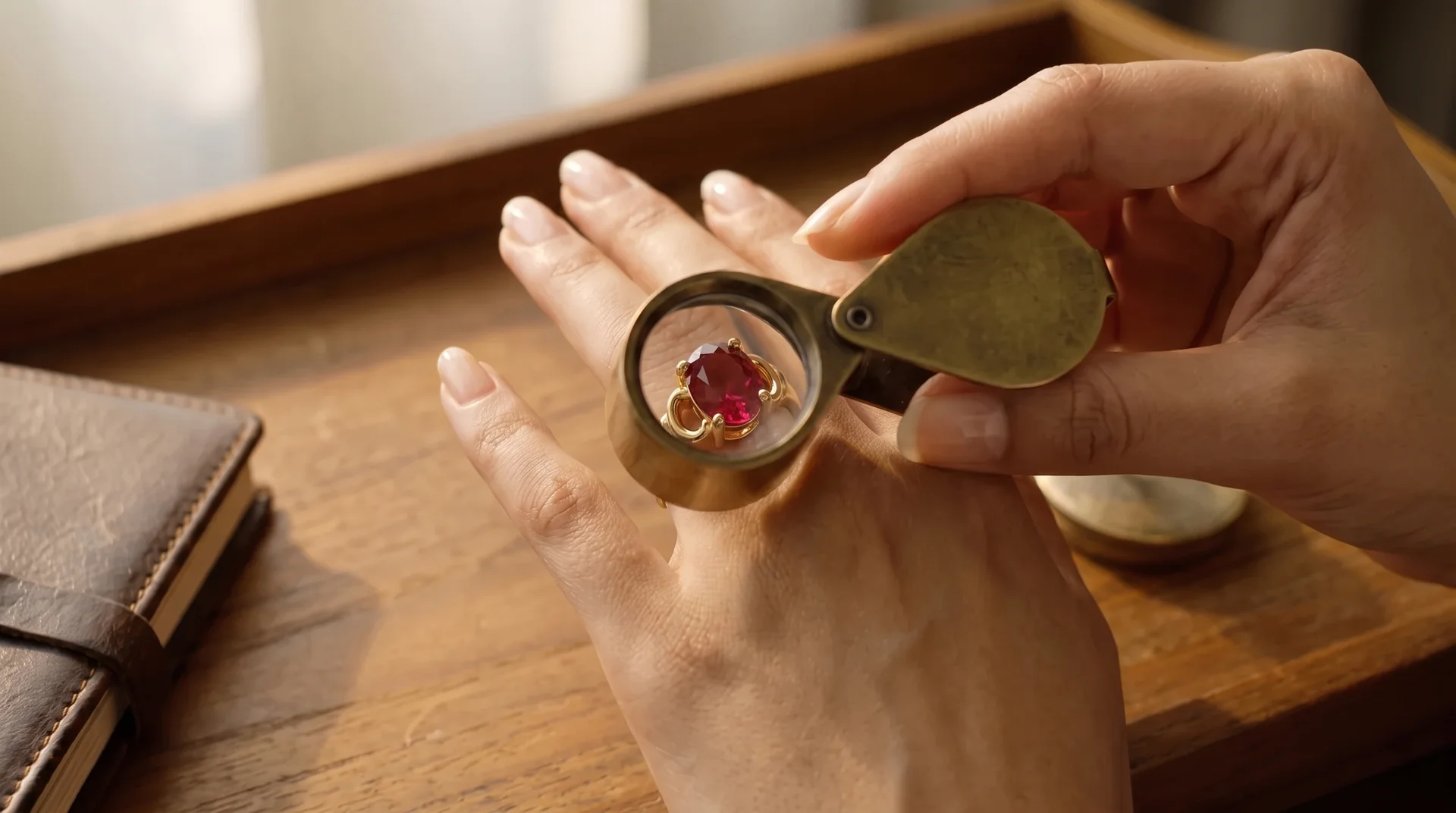
- Wood-Grain Micro-Striations: When examined under a 10x gemological loupe, natural untreated red coral reveals subtle parallel longitudinal striations or concentric ring growth patterns reminiscent of fine timber grain. Imitation plastics and glass possess uniform, featureless, or bubbled textures.
- Natural Surface Pores and Indentations: Authentic organic coral rarely exhibits clinical perfection. Microscopic surface pits, faint natural blemishes, and subtle color gradations confirm genuine biological growth.
- Thermal Conductivity and Touch: Real coral feels cool to the touch upon initial contact, gradually warming against the skin, whereas synthetic resins and acrylics feel warm and unnaturally lightweight from the start.
Traditional Non-Destructive Authenticity Tests
While professional gemological laboratory testing remains the only definitive proof, two harmless traditional tests can offer preliminary guidance:
- The Milk Test: Place the red coral in a small cup of raw cow’s milk. Natural coral reflects a warm reddish aura that imparts a subtle pinkish cast to the milk directly surrounding the stone, whereas cheap surface-dyed fakes often bleed harsh red dye into the liquid.
- The Turmeric Rub: Rub a fresh piece of raw turmeric root against the surface of the coral. If the stone is genuine, the yellow color remains unchanged. If the stone has been artificially dyed with alkaline synthetic agents, the turmeric paste often reacts by turning dark red or brown.
Never perform harsh acid tests (such as applying vinegar or lemon juice) at home. Because red coral is composed of calcium carbonate, any acidic liquid will immediately react with effervescence, permanently dissolving and ruining the polished surface of your precious stone. Always insist on an independent gemological lab certificate confirming natural origin and absence of dye treatments.

Contemporary Styling Ideas: How to Wear a Red Coral Ring Beyond Astrology
While the astrological heritage of red coral is undeniable, modern jewellery designers are rediscovering red coral as a vibrant, sophisticated fashion gemstone. Its rich crimson hue injects warmth and regal flair into contemporary wardrobes, bridging heritage elegance with effortless modern luxury.
- The Minimalist Solitaire Statement: Pair a clean, oval red coral cabochon bezel-set in warm 18K yellow gold with neutral tailored workwear: think ivory silk blouses, charcoal blazers, or camel trench coats. The concentrated pop of warm red creates an authoritative, polished focal point.
- Contemporary Gold Band Stacking: Style your coral ring alongside slender, geometric 18K gold bands or micro-prong diamond eternity bands. The tactile juxtaposition of smooth, opaque red cabochon with shimmering diamond facets creates rich visual texture on the hand.
- Regal Festive and Bridal Ensembles: Red coral naturally harmonizes with traditional Indian bridal and festive attire. Pair your red coral gold ring with crimson Banarasi silk sarees, deep emerald lehengas, or gold Zardozi anarkalis to echo traditional royal aesthetics.
- Men’s Refined Signet Styling: For men seeking a distinguished talisman or signet piece, a substantial emerald-cut or cushion cabochon red coral mounted within a brushed 18K yellow gold signet ring exudes quiet strength, effortlessly complementing both crisp formal suits and tailored kurtas.
Daily Care and Maintenance: Protecting Your Delicate Red Coral Ring
Because red coral possesses an organic calcium carbonate structure with a modest Mohs hardness of 3.5, maintaining its mirror-smooth polish and vivid luster requires mindful everyday care. Following a few simple preservation habits will safeguard your ring for generations.
Essential Care Protocols for Red Coral Jewellery
- Apply Cosmetics and Perfumes First: Always adhere to the classic rule: jewellery is the last thing you put on in the morning and the first thing you take off at night. Hairsprays, perfumes, moisturizers, and alcohol-based hand sanitizers contain chemicals that strip the natural polish of coral, causing it to turn dull and chalky.
- Remove During Domestic Chores and Workouts: Take your coral ring off before washing dishes, cleaning with household detergents, gardening, or lifting weights at the gym. Chlorine in swimming pools and acidic cleaning chemicals will cause rapid surface erosion.
- Gentle Cleaning Rituals: Clean your red coral ring using only lukewarm water, a drop of mild baby soap, and an ultra-soft damp microfiber cloth. Never use ultrasonic jewellery cleaners, steam cleaners, or abrasive polishing brushes, as high-frequency sound waves can shatter delicate coral branches.
- Separate Velvet Storage: Store your red coral ring in an individual soft velvet-lined jewellery box or a cotton pouch. Never store it loose alongside harder diamonds, sapphires, or rubies, which can easily scratch its delicate cabochon surface.
- Annual Professional Inspection: Visit an expert fine jeweller once a year to verify that the gold bezel or prongs remain tightly seated around the gemstone, ensuring your heirloom remains secure.
Conclusion: Investing in Quality, Symbolism, and Timeless Gold Craftsmanship
A genuine red coral ring is far more than a decorative accessory: it is a living bridge connecting oceanic wonders, ancient Vedic astrology, and heirloom-quality goldsmithing. Whether you wear Moonga to channel courage and determination or to showcase an eye-catching splash of crimson in your signature jewellery stack, prioritizing authentic natural coral, certified hallmarked 18K gold, and protective setting architecture ensures that your investment retains its beauty and energetic potency.
By pairing natural certified gemstones with BIS-hallmarked fine gold craftsmanship, BlueStone celebrates the sacred traditions of Indian jewellery while championing modern durability, transparent certification, and contemporary design excellence.
More Jewellery & Buying Guides
Explore more expert guides from BlueStone to master precious gemstones, gold purities, and fine jewellery craftsmanship: browse our definitive Gemstone Jewellery Buying Guide 2026, discover sacred nine-gem symbolism in our Navaratna Ring Buying Guide 2026, explore masculine style in the Mens Gemstone Rings Buying Guide 2026, verify your hallmarks with our Gold Purity Verification Guide, and understand your invoice breakdown in GST on Gold Jewellery in India.
Frequently Asked Questions About Red Coral Rings
Which finger is best for wearing a red coral ring?
In Vedic astrology, a red coral ring should be worn on the ring finger (Anamika) of the dominant or working hand (usually the right hand). The ring finger is governed by the Sun and Mars energetic meridians, channelizing vitality, focus, and leadership qualities.
Which metal is ideal for setting a coral gemstone ring?
18K or 22K yellow gold and copper are traditionally the most auspicious metals for red coral, harmonizing with the warm, fiery nature of Mars. From a fine jewellery craftsmanship perspective, 18K hallmarked yellow gold or rose gold provides superior tensile strength to securely hold protective bezel settings around delicate coral.
What is the difference between Italian and Japanese red coral?
Italian Mediterranean red coral (Corallium rubrum) features a uniform, saturated crimson to oxblood hue throughout the stone with no central white pith, making it ideal for classic rings and Vedic astrology. Japanese red coral (Corallium japonicum) often exhibits a darker, dramatic oxblood shade but naturally contains a white core streak that requires skilled lapidary orientation.
How can you tell if a red coral ring is original?
Authentic red coral reveals microscopic wood-grain striations and subtle biological pores when viewed under a 10x gemological loupe. It feels cool to the touch initially, does not contain air bubbles, and does not bleed dye. The most foolproof assurance is an independent gemological lab certificate confirming natural origin and untreated status.
Can a red coral ring be worn every day?
Yes, provided the ring is crafted in a protective setting such as a full gold bezel or a sturdy halo mounting that cushions its edges. Because red coral has a Mohs hardness of 3.5, you should remove the ring during heavy physical tasks, gym workouts, swimming, dishwashing, and when applying hand sanitizers, perfumes, or lotions.
Who should avoid wearing a red coral ring?
Astrologers advise that individuals with strong conflicting planetary alignments, or those with Taurus, Gemini, Virgo, and Libra ascendants where Mars is an unfavorable lord, should avoid wearing red coral unless specifically recommended by a knowledgeable astrologer after examining their birth chart.
Leave a Reply