
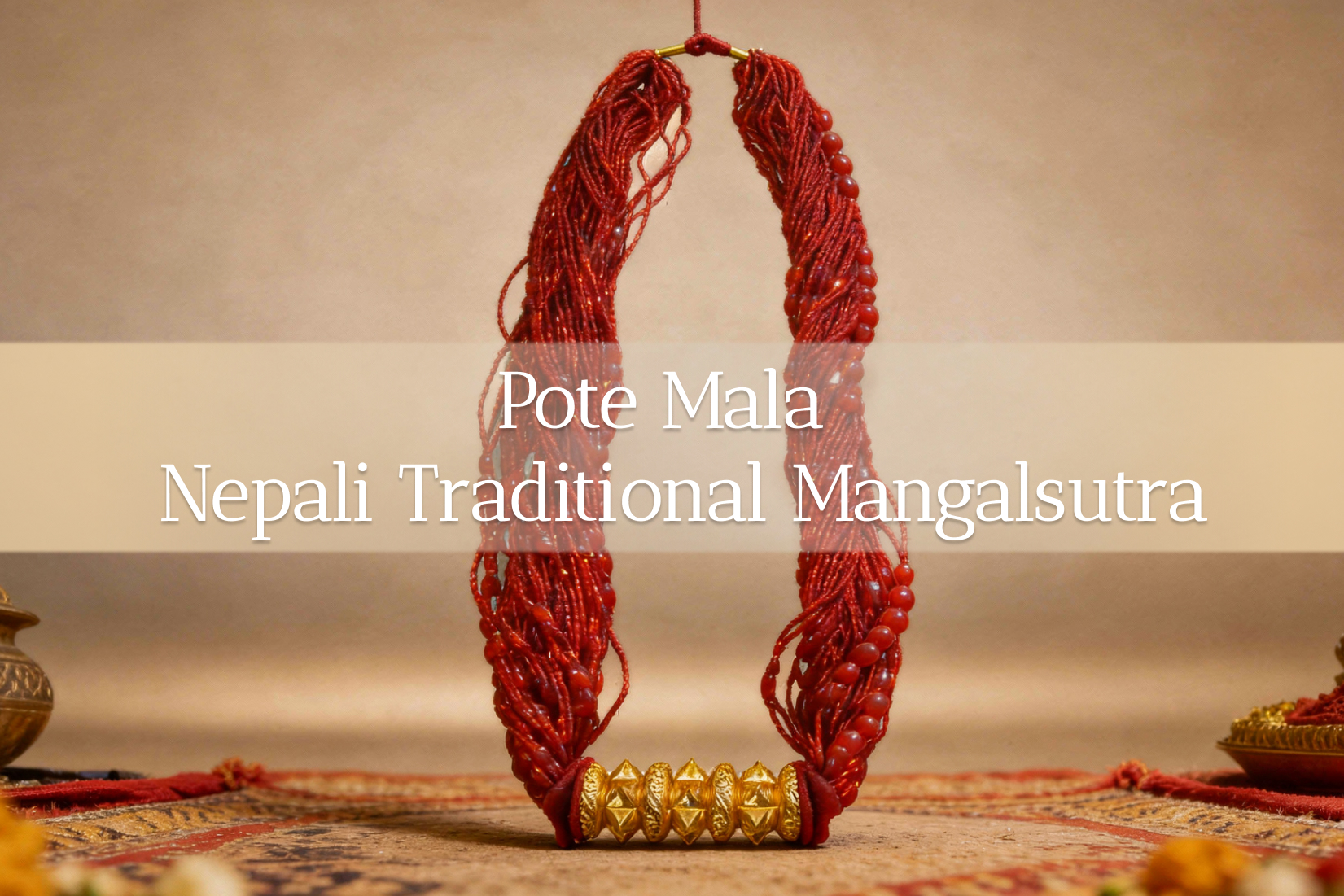
Pote Mala symbolizes love, commitment, and marital bliss in the vibrant cultural landscape of Nepal with a plethora of meanings. Also well-known as the Nepali mangalsutra, this traditionally Nepali jewellery forms part of an ornament that voices depth in emotion and culture. It is usually worn by married women and is one of those cornerstones of bridal culture in Nepal which merges aesthetics with symbolism.
This blog goes deep to explore what Pote Mala is, the meaning of Pote Mala, its historic roots, design variations, and the difference between Pote Mala and an Indian mangalsutra. Be it a bride to be or just someone being curious about Nepali Bridal Jewellery, here is all you would like to know about the history and symbolism of Pote Mala and the different types of Pote Mala designs.
What is Pote Mala?
Pote Mala is a necklace that married women traditionally wear in Nepal, which shows one’s marital status and the sacred bond between husband and wife. “Pote” means glass beads, usually green, red, or yellow in colour, while “Mala” in Nepali means a garland or necklace. During the wedding ceremony, the groom ties this Nepali mangalsutra around the bride’s neck, much like the Indian mangalsutra. Yet, it has a different design and cultural background, reflecting the uniqueness of Nepal.
Pote Mala symbolizes love, fidelity, and protection. It is believed to ward off evil spirits and bring good fortune. In many Nepali communities, married women wear it daily, reminding them of their commitment and the blessings of their union.
History and Significance of Pote Mala
It is from the Hindu and Buddhist traditions of Nepal and dates back several centuries. Green glass beads show fertility, prosperity, and growth, while pieces made with gold depict wealth and divine blessings. Many believe that the Pote Mala connects its wearer with the goddess Parvati, known as an embodiment of marital devotion.
Every bead and pendant is spiritually significant and acts as a talisman to bless the bride with good health and a long marriage. Pote Mala is a sacred emblem wherein a groom ties vows for protection and partnership. Significance of Pote Mala: During festivals like Teej, when women proudly wear this and pray for the husband’s long life.
Types of Pote Mala Designs

The variation in traditional Nepali jewellery finds manifestation in the designs of Pote Mala. While glass beads and accents of gold or silver form an important aspect of it, designs vary from person to person-from simple to complex-depending on individual likes. A few popular designs are given below:
Green Bead Pote Mala: This is a Mala containing vibrant green-coloured beads with a cylindrical-shaped gold tilhari. It is simple and classy, hence apt for everyday wear.
Multicoloured Bead Pote Mala: The red, yellow, or white beads add to the more modern and vivid look that most young brides prefer.
Gold-Heavy Pote Mala: Heavy gold chain and pendant designs used exclusively along with other Nepali bridal jewellery in grand weddings.
Contemporary Fusion Pote Mala: These are minimalist designs, featuring sleek gold or silver and fewer beads, appealing to today’s tastes.
Customized Pote Mala: Made of different types of stones, initials, and heirloom pieces to make each one special and unique.
Every design is a traditional representative of the history and symbolism of Pote Mala, creating a fashion statement while continuing the traditional legacy.
Pote Mala and its Significance in Nepali Culture
The Pote Mala means more than marriage itself. To married women, it is an identity marker signifying commitment and unity in a family, which married women wear every day to enforce these values. It often gets blessed at religious occasions, and this enhances its spiritual importance even further.
Along with the chura or bangles, maang tikka, or nose rings, Pote Mala forms the center of Nepali bridal jewellery. Its versatility appeals to both traditional sarees and modern-day lehengas. Though a marital symbol, the meaning of Pote Mala keeps on changing with time as modern women look upon it as a celebration of strength and heritage.
Difference between Pote Mala and Indian Mangalsutra

Although Pote Mala and the Indian mangalsutra denote marriage, they differ in design and materials; the context under which they are worn is also different. The major differences between Pote Mala and Indian mangalsutra include the following:
Design: While Pote Malas have coloured glass beads-usually green-with a tilhari, Indian mangalsutras feature black and gold beads with a pendant.
Materials: Pote Malas use glass beads, reflecting the rich artisan tradition of Nepal, while Indian mangalsutras may include diamonds or other intricate gold work.
Cultural Context: Pote Malas relate to Nepali Hindu and Buddhist functions, different for each community, such as Newar. Indian mangalsutras vary with regions too, such as golden designs in Maharashtra or thali in South India.
Wearing Style: While in Nepal, Pote Malas are done daily and developed, in India the mangalsutra is usually hidden or worn on occasions.
Symbolism: Both may involve commitment, but the green beads of Pote Mala signify fertility and protection, adding an extra layer of meaning.
These distinctions render the Pote Mala distinctive as a Nepali expression within South Asian marital jewellery traditions.
Pote Mala Styling Tips

Traditional Wear: Team the green bead Pote Mala with a red or gold saree for an ethnic look. Such a chain or choker will make for a very modern bride when worn layered with gold chains.
Balance: Allow the other pieces of jewellery to be minimal so that the Pote Mala stands out.
Complementary Colours: Match the colour of beads with your outfit, or choose multicoloured Malas that go with everything.
Care: Soft pouch; keep water off; clean the beads gently; polish the gold elements. There is a large body of literature describing the etiology and importance of such changes.
Conclusion
Pote Mala is more than traditional Nepali jewellery; it’s timeless in the way it is a sign of love, culture, and identification. Be it the evolution from ancient times to modern designs, this Nepali mangalsutra allures by its beauty and the significance it carries. The significance of Pote Mala remains whether you go for a classic green bead or a modern style. By learning about the history and meaning of Pote Mala, the types of Pote Mala designs, and how Pote Mala differs from an Indian Mangalsutra, you can wear this tradition with pride.
FAQs
Q1. What does it signify when there are green beads in a Pote Mala?
A1. Green beads denote fertility, prosperity, and growth and supposedly offer good fortune and protection to the married couple.
Q2. Can an unmarried woman also wear a Pote Mala?
A2. Though traditionally given to married women, fashion today allows every woman to wear elaborate decorative Pote Malas.
Q3. How is a Pote Mala different from an Indian Mangalsutra?
A3. In contrast to the colourful beading with a tilhari in Pote Malas, Indian mangalsutras contain black beads and slight modifications depending on the region.
Q4. What are some popular Pote Mala designs?
A4. Classic green bead, multicoloured, gold-heavy, contemporary fusion, and customized designs are still relevant today.
Q5. How do I care for my Pote Mala?
A5. Store it in a soft pouch, avoid getting it wet, clean the beads very gently, and polish the gold or silver regularly.
Related Blogs:
- How to Choose the Perfect Mangalsutra for Your Wedding
- 5 Trendsetting Mangalsutra Designs for 2025
- Traditional Indian Mangalsutra Designs and Their Cultural Importance
- Why Do Brides Wear Mangalsutra? Trendy Bridal Mangalsutra Designs for Modern Brides
- Is Platinum a Good Choice for Mangalsutra? Top Designs & Benefits Explained
Leave a Reply