
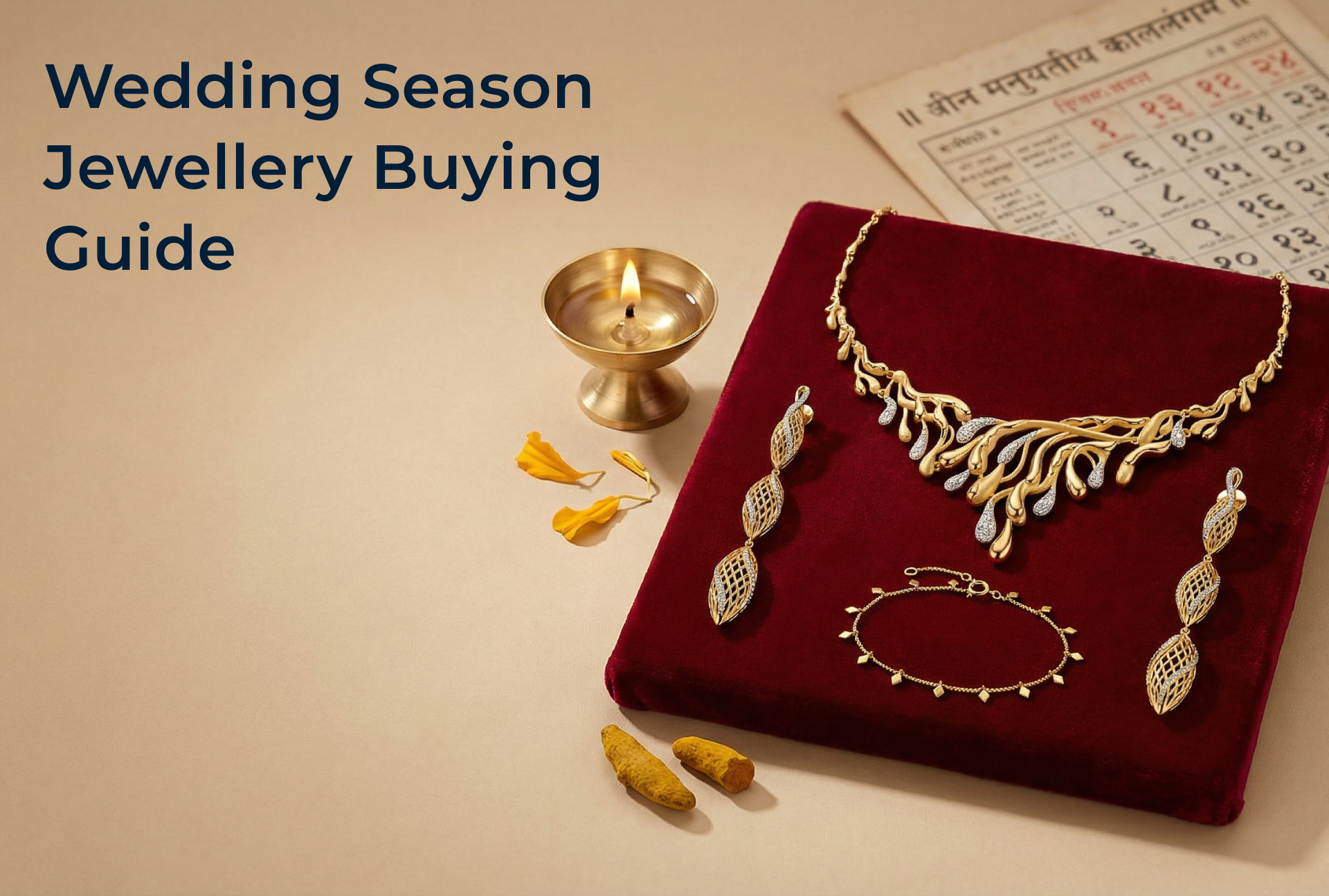
The peak wedding season in India is one of the most auspicious and busiest times for jewellery buying. From gold and diamond to polki and heirloom pieces, wedding jewellery is not just a purchase—it is a sacred investment tied to prosperity, tradition, and lifelong security. During this season, buying jewellery based on an auspicious muhurat becomes especially important.
This guide explains how to plan jewellery purchases during the peak wedding season, which muhurats are considered favourable, and how to balance tradition with smart decision-making.
What Is the Peak Wedding Season in India?

The peak wedding season usually falls during periods when the Hindu calendar offers multiple shubh muhurats. These months are considered astrologically favourable for weddings and related purchases such as jewellery.
- January to February
- April to May
- October to December
During these months, jewellery demand is at its highest, making early planning essential.
Why Muhurat Matters More During Wedding Season

Wedding season involves several ceremonies such as roka, engagement, wedding, and reception, all aligned with auspicious timings. Jewellery bought during a shubh muhurat is believed to:
- Attract prosperity and positive energy
- Strengthen marital harmony
- Ensure long-term financial and emotional value
- Align purchases with family traditions
Best Muhurat-Based Occasions for Jewellery Buying

Dhanteras
Dhanteras is one of the most auspicious days for buying gold and jewellery, symbolising wealth, abundance, and new beginnings.
Akshaya Tritiya
Akshaya Tritiya represents eternal growth and prosperity. Jewellery purchased on this day is believed to multiply in value and blessings.
Vasant Panchami
Associated with new beginnings and purity, Vasant Panchami is considered an ideal muhurat for wedding jewellery purchases.
Navratri and Diwali Period
The festive season is highly favourable for gold and jewellery buying, especially when aligned with specific muhurat timings.
Wedding-Specific Muhurats
Many families consult astrologers to calculate personalised muhurats based on the bride and groom’s horoscopes for high-value jewellery purchases.
Step-by-Step Jewellery Buying Guide for Peak Wedding Season

1. Plan Purchases in Advance
Shortlist jewellery designs at least two to three months in advance to avoid limited stock and delayed deliveries.
2. Align Major Purchases with Auspicious Muhurats
High-value jewellery such as bridal sets and gold necklaces are ideally purchased during shubh muhurats or festivals.
3. Prioritise Wedding Jewellery First
- Mangalsutra
- Wedding necklace sets
- Bangles and kadas
- Earrings and rings
4. Balance Tradition with Practicality
Along with muhurat, consider certification, purity, buyback value, and return policies.
5. Consider Staggered Buying
Many families divide jewellery purchases across multiple auspicious days instead of buying everything at once.
Jewellery Types to Buy During Peak Wedding Season

- Gold jewellery for auspicious value
- Diamond jewellery for reception and long-term wear
- Polki and kundan for traditional bridal looks
- Heirloom jewellery for emotional and family value
Common Mistakes to Avoid
- Last-minute jewellery shopping
- Ignoring delivery timelines
- Skipping authenticity and certification
- Overlooking comfort and wearability
- Choosing trends over timeless designs
Modern Approach to Muhurat-Based Jewellery Buying
Modern families often blend belief with flexibility. Some finalise designs earlier and complete billing or advance payment during an auspicious muhurat to maintain tradition while managing convenience.
Related Blogs
- Jewellery Certification Explained: What Buyers Must Know
- 5 Must Have Engagement Jewellery for Bride & Groom
- 5 Must Have Roka Ceremony Jewellery Ideas for a Punjabi Bride
- 10 Must Have Gold Jewellery Pieces Every Indian Bride Should Have in Her Trousseau
- 9 Types of South Indian Wedding Jewellery Pieces for Bride & Groom
Leave a Reply