
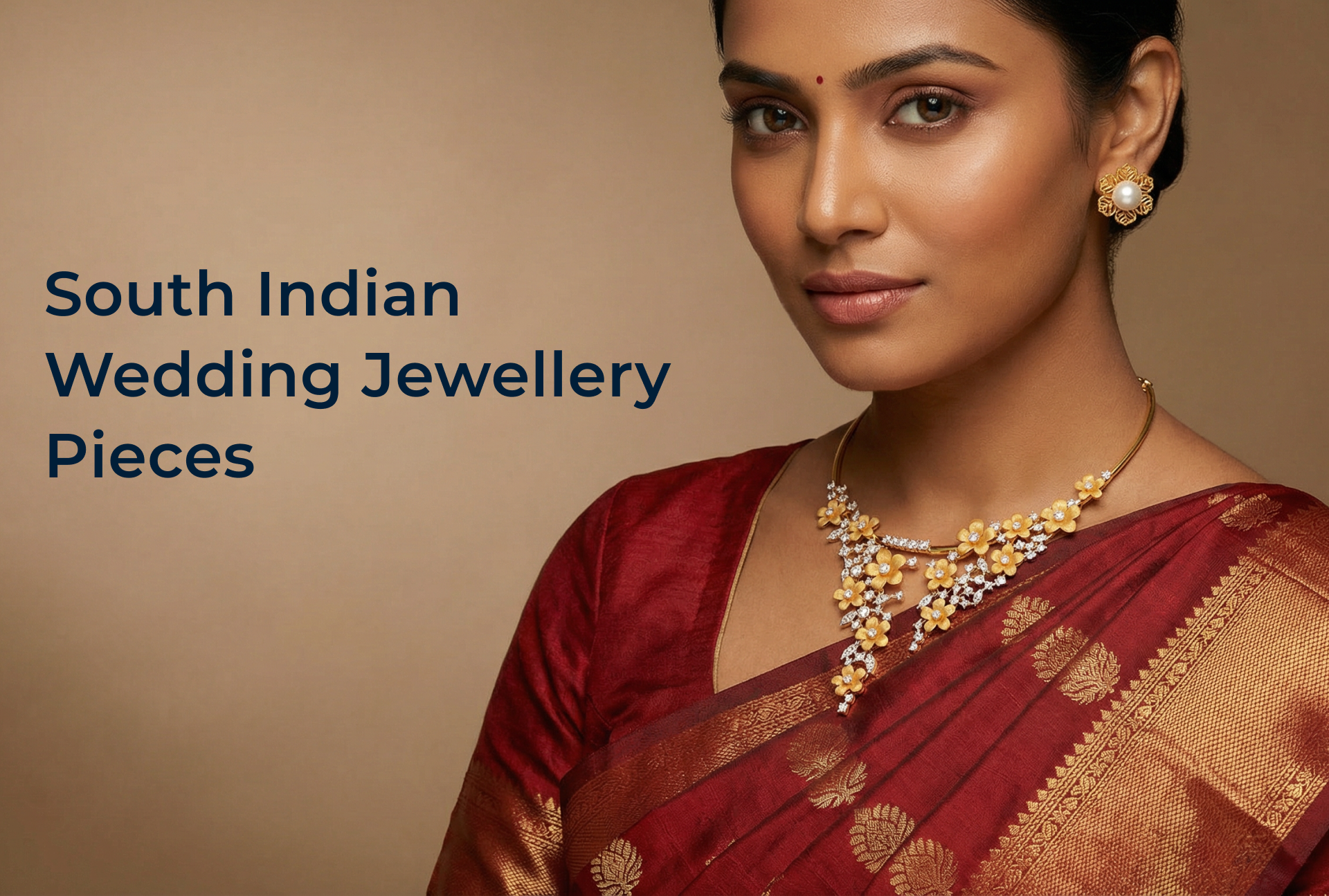
South Indian weddings are known for their rich traditions, sacred rituals, and grand gold jewellery. Jewellery is not just an accessory in a South Indian wedding. it symbolises heritage, prosperity, and blessings passed down through generations. From intricately crafted temple jewellery to meaningful gold ornaments worn by the groom, every piece holds cultural and emotional significance.
Here are nine essential types of South Indian wedding jewellery pieces for the bride and groom, along with their meaning and importance.
1. Temple Jewellery (Bride)

Temple jewellery is the heart of South Indian bridal adornment. Inspired by ancient temple carvings, these pieces feature motifs of deities, peacocks, flowers, and traditional patterns. They are usually crafted in high-purity gold and complement silk sarees beautifully.
2. Maang Tikka / Nethi Chutti (Bride)

The Nethi Chutti frames the bride’s forehead and hairline, enhancing facial symmetry and completing the bridal hairstyle. It is a defining element of the traditional South Indian bridal look.
3. Vanki (Armlet) (Bride)
The Vanki, or armlet, is worn on the upper arm and symbolises strength and elegance. Often made in gold and studded with gemstones, it is a signature South Indian bridal ornament.
4. Kasu Mala (Gold Coin Necklace) (Bride)
Kasu Mala is a traditional necklace made of gold coins, symbolising prosperity and abundance. It is commonly layered with other necklaces and is especially popular in Tamil and Telugu weddings.
5. Oddiyanam (Waist Belt) (Bride)
The Oddiyanam is a gold waist belt that enhances the bride’s posture while securing the saree. It adds grandeur and balance to the heavy upper-body jewellery.
6. Jhumkas and Ear Chains (Bride)

Large gold jhumkas paired with ear chains are a hallmark of South Indian bridal jewellery. They add movement, richness, and visual balance to the bridal ensemble.
7. Mangalsutra / Thali (Bride)
The Thali is one of the most sacred jewellery pieces in South Indian weddings. Its design varies by community, but it universally symbolises marriage, commitment, and protection.
8. Gold Chains and Rings (Groom)

South Indian grooms traditionally wear simple gold jewellery such as chains and rings. These pieces symbolise responsibility, stability, and prosperity in married life.
9. Angavastram Brooch and Buttons (Groom)

Modern grooms often accessorise their angavastram with a gold brooch or decorative buttons. These subtle details enhance the ceremonial look while maintaining traditional elegance.
Final Thoughts
South Indian wedding jewellery represents far more than beauty—it reflects culture, faith, and family legacy. Each piece worn by the bride and groom carries deep-rooted meaning, making the wedding ceremony both visually grand and spiritually significant.
Frequently Asked Questions
What jewellery is essential for a South Indian bride?
Essential jewellery for a South Indian bride includes temple jewellery, a nethi chutti, vanki, kasu mala, oddiyanam, jhumkas with ear chains, and the sacred thali or mangalsutra.
Is South Indian wedding jewellery always made of gold?
Traditionally, South Indian wedding jewellery is predominantly gold due to its cultural and religious significance, though gemstones and pearls may also be incorporated.
What jewellery does a South Indian groom usually wear?
A South Indian groom typically wears a gold chain, ring, and sometimes a bracelet, along with accessories like an angavastram brooch for ceremonial occasions.
Can South Indian bridal jewellery be reused after the wedding?
Yes. Many pieces such as gold chains, earrings, bangles, and necklaces are worn for festivals, family functions, and important occasions after marriage.
Does South Indian wedding jewellery differ by region?
Yes. Jewellery designs and styles vary across Tamil, Telugu, Kannada, and Malayali communities, especially in thali designs, necklace styles, and ceremonial ornaments.
Related Blogs
- Best Jewellery for Hot & Humid Weather That Won’t Tarnish or Irritate Skin
- Jewellery Certification Explained: What Buyers Must Know
- 5 Must Have Engagement Jewellery for Bride & Groom
- 5 Must Have Roka Ceremony Jewellery Ideas for a Punjabi Bride
- 10 Must Have Gold Jewellery Pieces Every Indian Bride Should Have in Her Trousseau
Leave a Reply