
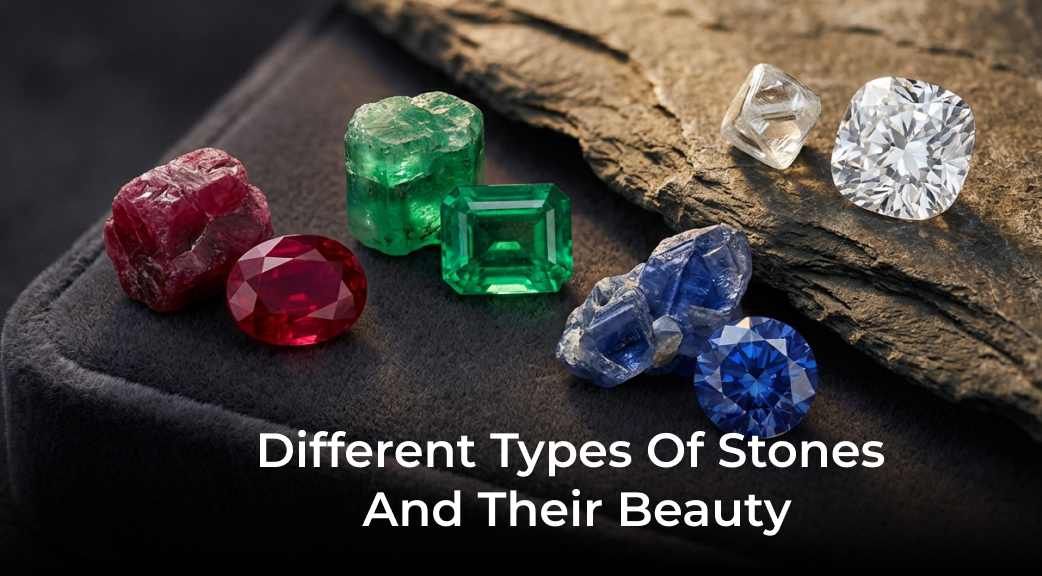
For centuries, gemstones have fascinated humanity. Formed deep within the Earth over millions of years, these natural treasures combine science, rarity, and artistry in one brilliant creation. Each stone carries its own story shaped by pressure, minerals, and time.
From the fiery ruby stone to luminous emeralds and timeless diamonds, gemstones are more than decorative elements. They represent heritage, symbolism, and enduring beauty.
Let’s explore the different types of stones, their characteristics, and what makes them extraordinary.
Understanding the Types of Precious Stones

Historically, gemstones were divided into “precious” and “semi-precious” categories. Traditionally, the types of precious stones included:
- Diamond
- Ruby
- Emerald
- Sapphire
These four were considered precious due to their rarity, durability, and historical value.
However, modern gemology no longer formally uses this classification. Today, a gemstone’s value depends on quality, rarity, color, clarity, and demand not simply its category. Many so-called semi-precious stones, such as amethyst and citrine, can be exceptionally beautiful and highly valued.
Understanding this distinction adds depth to appreciating gemstones beyond labels.
Diamond – The Benchmark of Brilliance

Diamond remains one of the most celebrated gemstones in the world. Known for being the hardest natural substance on Earth, it symbolizes strength, eternity, and clarity.
Its brilliance comes from its ability to reflect and refract light intensely. While most people associate diamonds with clear white sparkle, they also naturally occur in yellow, pink, blue, and even rare red shades.
Diamonds are valued based on the four Cs: cut, color, clarity, and carat weight. Their durability makes them ideal for everyday jewellery.
Ruby Stone – The Gem of Passion

The ruby stone is prized for its deep red hue, caused by the presence of chromium. The finest rubies display a vivid “pigeon blood” red color and are among the rarest gemstones.
Rubies belong to the corundum mineral family the same family as sapphires. Their hardness makes them durable, while their intense color symbolizes passion, vitality, and power.
Historically worn by royalty and warriors, rubies remain a bold and luxurious choice today.
Panna Stone & Emeralds – The Green Treasure

The panna stone, commonly known as emeralds, belongs to the beryl mineral family. Its vibrant green color comes from traces of chromium and vanadium.
Unlike diamonds, emeralds almost always contain natural inclusions, often referred to as “jardin.” These inclusions are considered part of the stone’s identity and authenticity. Completely flawless emeralds are extremely rare and highly valuable.
Emeralds symbolize renewal, wisdom, and growth, making them deeply meaningful gemstones.
Types of Sapphires

Sapphires are also part of the corundum family, like rubies. While blue sapphires are the most well-known, there are many types of sapphires in different colors.
- Blue
- Pink
- Yellow
- Green
- White
- Purple
- Color-changing varieties
Blue sapphires are associated with loyalty and wisdom. Yellow sapphires are often linked to prosperity. Pink sapphires represent love and creativity.
Their excellent hardness makes them suitable for daily wear.
Topaz – Versatile and Radiant

Topaz is admired for its clarity and wide color range. Natural topaz can appear colorless, yellow, pink, and pale blue.
It is important to note that many vibrant blue Topaz stones available in the market are heat-treated to enhance color a common and accepted practice in the gemstone industry.
Topaz symbolizes calmness and clarity. Its brilliance and affordability make it a popular alternative to more expensive stones.
Amethyst – Royal Purple Quartz
Amethyst is a variety of quartz known for its striking purple shades, ranging from soft lavender to deep violet.
It has historically been associated with royalty and spiritual balance. Because it belongs to the quartz family, it is more abundant than precious stones, yet its beauty remains captivating.
Amethyst combines elegance with accessibility.
Citrine – Warm and Radiant
Citrine is another member of the quartz family. Its golden-yellow to amber shades resemble sunlight.
Like blue topaz, many citrine stones in the market are heat-treated to achieve deeper color a widely accepted enhancement.
Citrine is often associated with positivity and abundance. Its warm tones pair beautifully with gold settings.
Quartz – Nature’s Versatile Mineral
Quartz is one of the most abundant minerals on Earth, yet it produces stunning gemstone varieties.
Clear quartz is known for its transparency. Rose quartz displays a soft pink hue linked to love. Smoky quartz offers earthy brown tones. Amethyst and citine are also quartz varieties.
Quartz may not be rare, but its versatility and beauty make it widely used in jewellery.
Navaratna – The Nine-Gem Symbolism

Navaratna jewellery features nine gemstones arranged together. Each stone represents a celestial body in traditional Indian astrology.
- Ruby
- Pearl
- Red Coral
- Emerald
- Yellow Sapphire
- Diamond
- Blue Sapphire
- Hessonite
- Cat’s Eye
Navaratna pieces are believed to balance planetary influences and bring harmony. Beyond symbolism, the colorful arrangement creates a visually striking design.
Evil Eye – Symbolic Beauty

Unlike natural mineral gemstones, the Evil Eye is typically crafted from glass, enamel, or synthetic materials. It is not a geological gemstone like ruby or diamond.
However, its cultural significance is immense. Traditionally blue with a white and black center, it symbolizes protection against negative energy.
Evil Eye jewellery blends symbolism with modern style.
Final Thoughts
Nature’s finest creations from ruby stone and emeralds to diamond and quartz epresent more than color and sparkle. They are shaped by time, geology, and history.
Understanding the types of precious stones and the types of sapphires available helps deepen appreciation for their rarity and craftsmanship. Whether drawn to the fiery intensity of ruby, the calm green of panna stone, or the brilliance of diamond, each gem carries its own identity.
In the end, the true beauty of a gemstone lies not just in its value but in the meaning it holds for the wearer.
FAQ
1. What are the main types of precious stones?
Traditionally, diamond, ruby, emerald, and sapphire are considered precious stones.
2. Is panna stone the same as emerald?
Yes, panna stone is another name for emerald.
3. Are there different types of sapphires?
Yes, sapphires come in various colors including blue, pink, yellow, green, and white.
4. What is Navaratna jewellery?
Navaratna jewellery features nine gemstones representing celestial bodies and is believed to bring balance and protection.
5. Is quartz a valuable gemstone?
Quartz is abundant but comes in beautiful varieties like amethyst and rose quartz, making it popular in jewellery.
Leave a Reply