
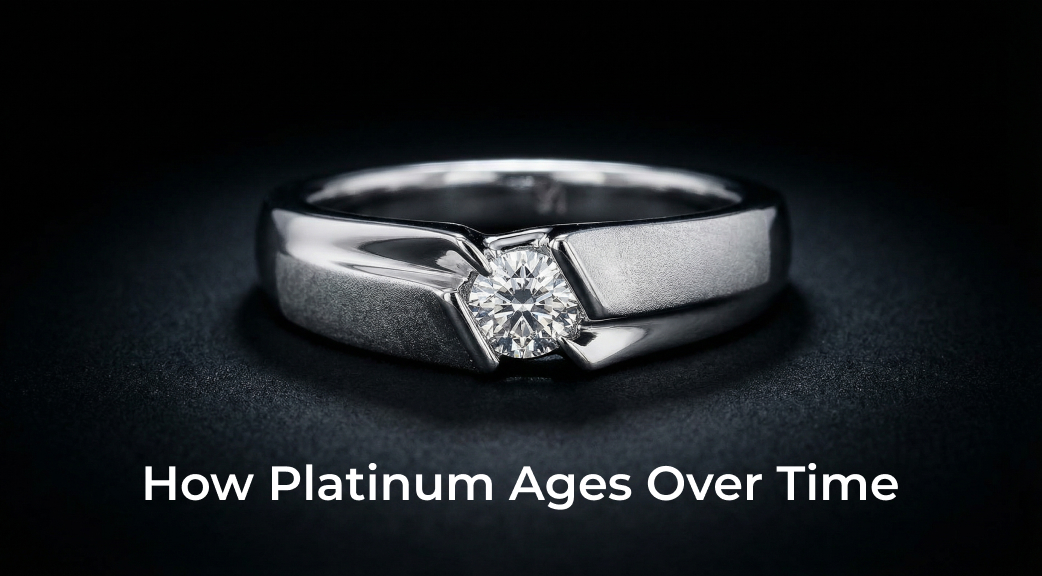
If you’ve ever worn platinum jewellery, you already know this metal has a personality of its own. The shine you see on day one isn’t the same shine you see a few years later, and honestly, that’s part of its charm. Some people love the soft glow it develops over time. Others miss the crisp polish and want that brightness back. Either way, knowing how platinum ages makes the whole journey easier and a lot less surprising.
In this guide, We’ll walk you through what actually happens as platinum ages, why platinum patina shows up, what’s the use of platinum polish, and what happens to your platinum jewellery over time when you wear it daily.
What Happens as Platinum Ages

Wearing platinum feels a bit like watching something slowly break in, the same way leather softens or denim fades. Tiny marks on platinum start showing up with everyday use—whether you are holding your phone, cooking, typing, or just living your life. This slow shift is simply how platinum ages naturally.
Even though the surface of platinum changes, the metal underneath stays solid. Platinum doesn’t lose metal the way other jewellery metals do, and that is why it holds its shape beautifully year after year.
What is Platinum Patina

People often imagine platinum patina as something dull, but it’s really more of a soft sheen. Over time, those tiny marks on your metal settle into a gentle, satin-like finish called platinum patina. It gives the metal a warmer, more lived-in look—almost like it has its own quiet story.
Every platinum jewellery piece gets patina, whether it’s platinum jewellery for men or platinum jewellery for women. If you’ve ever wondered, “Does platinum develop patina for all wearers?” the answer is yes. It depends on your lifestyle, how fast it shows up on your platinum jewellery.
Should You Keep the Patina or Polish It?
If you prefer the fresh, bright look, a quick platinum polish brings the shine back. It’s a simple job for a jeweller, and polishing doesn’t harm the metal. Some people polish their platinum jewellery once a year, others wait longer—it’s completely your choice.
There’s no right answer here. It’s really about what you enjoy more — that slightly matte glow or the clean, mirrored finish.
How Platinum Holds Up in Daily Life
Here’s the honest truth: platinum is strong, but it isn’t scratch-proof. You’ll see little marks come and go. They’re part of normal platinum wear over time, and they don’t weaken the piece.
What makes platinum special is that those marks don’t shave metal off. The metal simply shifts instead of disappearing. This is why it keeps stones secure even after years of regular wear.
Platinum vs White Gold: They Age Very Differently

If you’re confused between platinum vs white gold, just remember this— they don’t age the same way.
Platinum ages naturally and forms patina on its surface over time. White gold, on the other hand, relies on rhodium coating, which fades away and needs to be reapplied. Platinum stays dense through the years, while white gold loses tiny layers every time it’s polished.
This is why many people choose platinum for engagement rings and daily-wear pieces.
Platinum Maintenance: Keeping the Desired Look
If you like the shine of platinum, regular cleaning and occasional polish can keep your jewellery bright. Just use warm water, mild soap, and a soft brush.
If you enjoy the aged look of platinum, you don’t need to do much at all. The metal settles into its glow naturally. Simple cleaning is enough.
Caring for Platinum at Home

Most people overthink this, but caring for platinum jewellery is easy. A quick wipe with a soft cloth removes oils. Occasionally, give your platinum jewellery a warm-soapy rinse.
Stick to gentle products and non-abrasive tools — that’s all it takes.
Why Platinum Sometimes Looks Dull
If your platinum looks muted, it’s usually just the patina settling in. This is natural metal aging, not wear and tear. And polishing can reverse it anytime.
Real-Life Experience of Platinum Rings Over Years
People who have worn platinum for years will tell you — it ages gracefully. The real wear experience is less about damage and more about transformation.
The main difference you’ll notice before and after is the soft patina that forms. The structure stays the same, the strength stays the same.
Storing Your Platinum Jewellery Properly

Store your platinum pieces in separate compartments or pouches so they don’t rub against other metals. This minimizes surface marks and keeps the metal looking its best.
FAQs
1. Why does platinum develop patina?
Platinum develops patina due to everyday wear. It’s completely natural and doesn’t affect the metal’s strength.
2. How can I remove patina from my platinum jewellery?
You can remove patina by getting your platinum jewellery professionally polished.
3. How often should I polish platinum?
You can polish your platinum jewellery once or twice a year, depending on how much shine you prefer.
4. Is platinum stronger than white gold?
Yes. Platinum stays dense and secure, while white gold loses a little metal with each polish and needs re-plating.
5. How do I keep my daily wear platinum rings shiny?
Regular cleaning with mild soap and water keeps your platinum rings shiny. You can also get them polished whenever you want a bright finish.
Related Blogs
- Is Platinum Worth It? Pros, Cons & Real Buying Guide for First-Time Shoppers
- Platinum Jewellery Care: Cleaning, Maintenance & When to Polish
Leave a Reply