
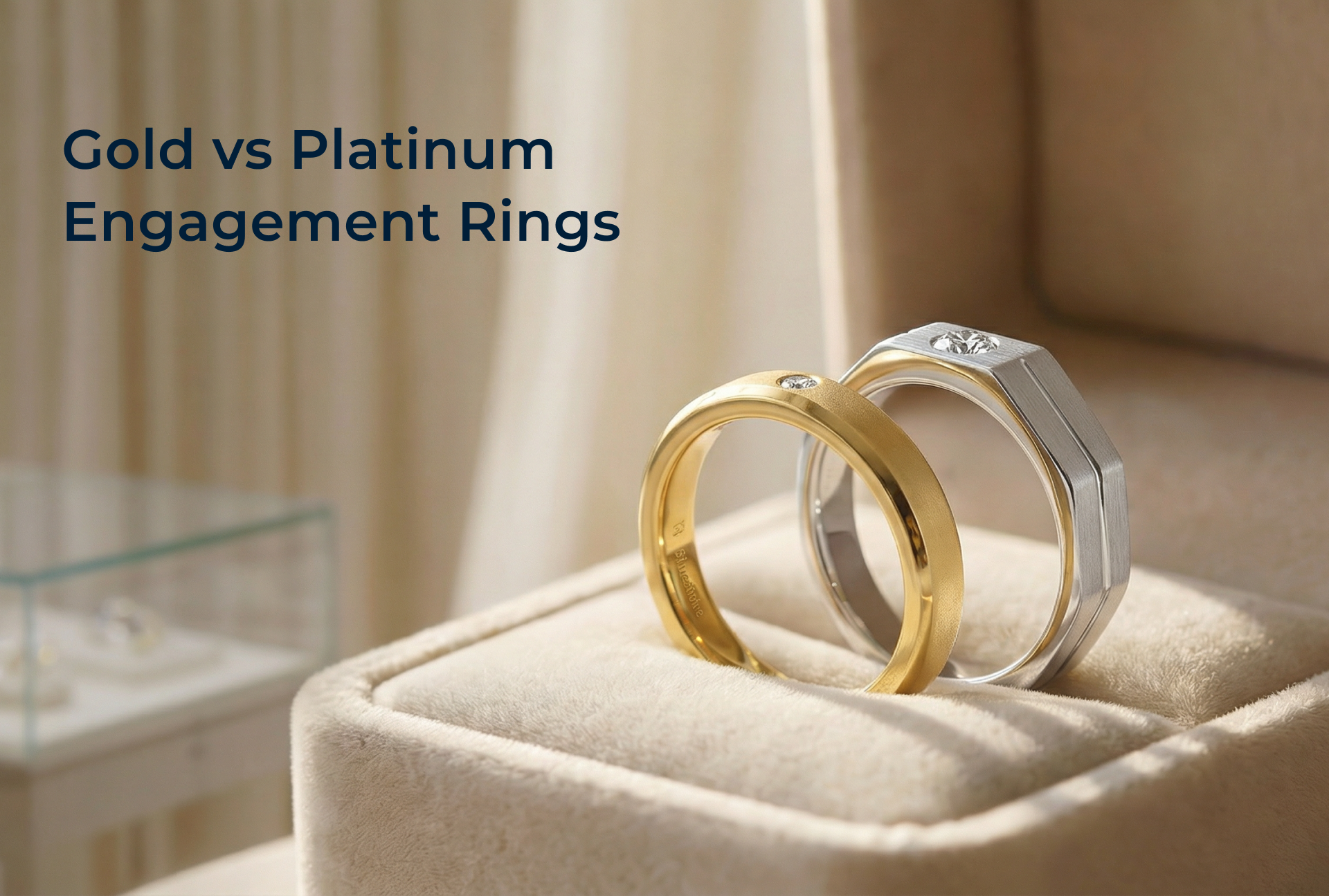
When it comes to choosing engagement rings, we tend to focus too much on the central gemstone and forget all about the wedding band. This rookie mistake is made by most of us. This is why this blog will be focused on two of the most common wedding bands – gold and platinum. While both are luxurious and long-lasting, they differ in terms of their colour, durability, price, aesthetic and maintenance needs.
So, when it is time to choose the ring for your big day, which option should you go for – gold or platinum? To answer this question properly, let us break down the pros and cons of both.
What’s the Difference Between Gold and Platinum?

1. Composition & Purity
When it comes to composition and purity, the two metals differ heavily.
Gold is a comparatively softer metal and is usually alloyed with other metals to improve its durability. Otherwise it can get dented and damaged easily, making it unfit for daily wear jewellery like engagement rings. The most common types for engagement rings use either 14 kt gold (58.3% pure gold) or 18 kt gold (75% pure gold).
Platinum is denser as compared to gold. Due to its durability and hardness, platinum is usually used in nearly pure form or mixed with small amounts of other metals to make it hypoallergenic and more luxurious.
2. Colour & Appearance
The aesthetic appeal of the metals also plays a major factor in making the choice between gold and platinum.
Gold is usually associated with a deep yellow colour. However, in today’s time, gold comes in multiple shades, such as:
- Yellow Gold: Yellow gold is THE classic, traditional choice that comes to mind when one thinks of gold. If you are someone who wants a traditional, timeless element in their wedding ring, go for a nice yellow gold band.
- White Gold: No, white gold is not another name for silver, and yes, white gold is real gold. Rhodium-plated for a bright white finish, many people often make the mistake of thinking that white gold is extremely expensive. While it can be priced slightly higher due to additional materials and processes involved in its production, its price mainly depends upon the carat of gold and specific alloys used.
- Rose Gold: Known for its extremely romantic pinkish hue due to copper alloys, rose gold is a very popular choice when it comes to choosing the band of engagement rings.
Platinum has a natural white-silver colour and maintains its lustre over time without the need for re-plating. With its classic and timeless look, a platinum band is the epitome of modern luxury.
3. Durability & Maintenance
Platinum – When it comes to durability, platinum is known for being tougher and more scratch resistant than gold. However, it does require some maintenance over time. An interesting fact is, when platinum is scratched, it develops a patina which exudes a matte finish look that many customers find desirable!
Gold – The durability and maintenance of a gold ring depend upon the type of gold you’ve chosen. White gold needs periodic rhodium plating to maintain its colour. Whereas, yellow and rose gold may require polishing over time.
4. Weight & Feel
Platinum is heavier than gold, which gives it a more substantial feel. This feature is often associated with the higher quality of platinum.
Gold is lighter and more comfortable. Making it convenient for those who prefer a more practical ring.
5. Price Point
Due to certain factors like rarity, density and higher purity, platinum is about 40-60% more expensive than gold. This is why, for many people, gold offers more flexibility in terms of its pricing, with 14K gold being the most affordable option for engagement rings.
Gold vs Platinum: Pros and Cons Summary

| Feature | Gold | Platinum |
|---|---|---|
| Color Options | Yellow, white, rose | Natural white |
| Durability | Softer, may scratch easily | Very durable, develops patina |
| Maintenance | Needs polishing/re-plating | Low-maintenance |
| Allergies | May contain nickel (white gold) | Hypoallergenic |
| Cost | More budget-friendly | More expensive |
| Weight | Lighter | Heavier |
Which Is Worth the Price?

The answer will depend on what matters most to you: Go for platinum if you’re concerned with long-term toughness, hypoallergenic qualities, and a luxurious look and feel. Choose gold if you prefer additional colour options, reduced maintenance expenses (for yellow or rose gold), or a less expensive engagement ring.
Final Thoughts
When it comes down to making the final decision, there are many external factors that can influence your choice, but the final decision should always be yours. This is so because in the end, it is you and your significant other who will be adorning the engagement ring. If you are looking for a timeless luxury piece with prolonged durability, platinum is worth the splurge. However, if you want elegance with flexibility in style and budget, gold is a classy and traditional choice.
FAQs
1. Which metal is more durable, gold or platinum?
When it comes to durability, platinum takes the point. It is denser and tougher as compared to gold, so it’s more scratch resistant and durable. For this reason, it’s said to be best suited for daily wear, particularly for those with a highly active life.
2. Does platinum tarnish like silver or gold?
No, as opposed to silver and gold, platinum does not tarnish. But it does form a natural patina that develops over time, which causes it to have a soft, antique finish. No need to worry though; if you are someone who isn’t too keen on antique jewellery, the natural patina can be polished off easily.
3. Is platinum better for sensitive skin?
Yes, as compared to gold, platinum is certainly a better option for people with sensitive skin. Platinum is hypoallergenic and therefore safer for individuals with metal sensitivities, particularly those who react to nickel in white gold.
4. Why is platinum more costly than gold?
Platinum is less common, denser, and utilised in greater purity than gold. All these contribute to its higher cost.
Related Blogs
- Platinum vs White Gold: Which Metal Should You Choose?
- Is Platinum a Good Choice for Mangalsutra? Top Designs & Benefits Explained
- Platinum vs Silver: Which One Should You Choose?
Leave a Reply