

Gemstones are captivating. Their color, brilliance, and symbolism make them highly desirable which is exactly why imitation and synthetic versions exist in the market. If you’re investing in a ruby, emerald, or sapphire, knowing how to separate real from fake becomes essential.
Understanding real vs fake gemstones isn’t just about value. It’s about confidence, authenticity, and making informed choices.
Here’s your complete guide to identifying genuine gemstones and understanding natural vs lab grown differences.
Why Fake Gemstones Exist

Gemstones can be rare and expensive. Because of this, imitation stones made from glass, plastic, or synthetic materials are widely produced. Some are easy to spot, while others are created to closely resemble natural stones.
Before diving into specifics, remember one key principle:
No at-home test replaces professional gemological certification.
However, there are visible clues that can help you make smarter decisions.
How to Identify Real Gemstone
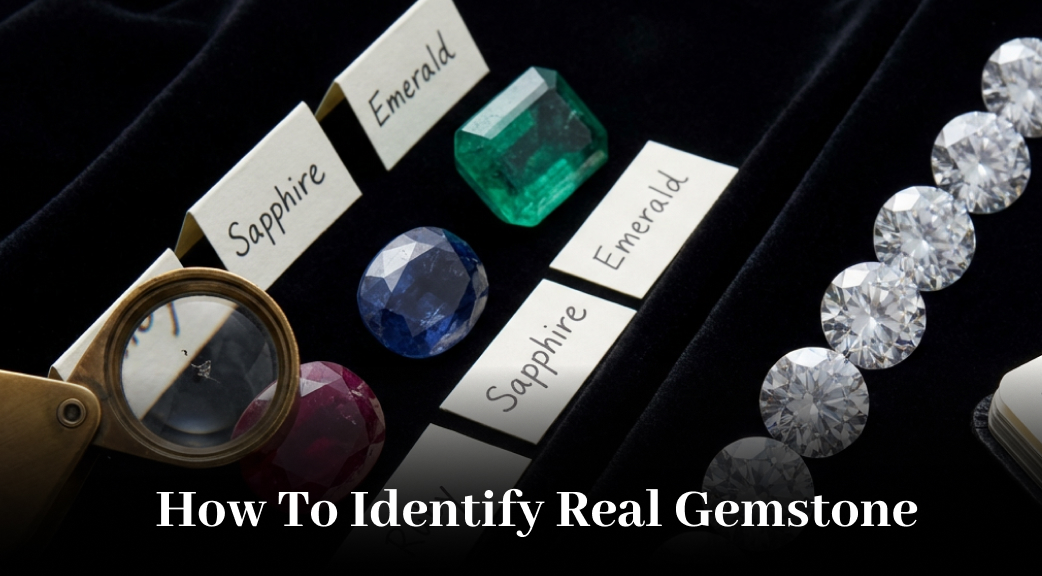
If you’re wondering how to identify real gemstone, start with observation.
Natural gemstones usually have small imperfections called inclusions. These internal characteristics are formed naturally over millions of years. If a stone looks perfectly flawless and extremely affordable, that may raise questions.
Check the following:
- Look for inclusions under magnification
- Observe uneven color distribution (natural stones rarely have uniform color)
- Feel the weight real gemstones are typically denser than glass
- Notice temperature real stones feel cool to the touch
Also, ask for certification from a reputable gemological laboratory. Documentation adds credibility and peace of mind.
Real vs Fake Gemstones

Understanding real vs fake gemstones requires clarity.
A real gemstone can be either:
- Natural (formed in the Earth)
- Lab grown (created in controlled conditions but chemically identical)
A fake gemstone is usually:
- Glass
- Plastic
- Cubic zirconia (in place of diamond)
- Synthetic imitations with different chemical structures
The key difference lies in composition. Lab-grown stones share the same chemical structure as natural stones. Fake stones do not.
Appearance alone isn’t always enough. That’s why proper evaluation matters.
Natural vs Lab Grown Gemstones

The topic of natural vs lab grown gemstones often causes confusion.
Natural gemstones are formed deep within the Earth over millions of years.
Lab grown gemstones are created in laboratories using advanced technology that replicates natural formation conditions. They have the same chemical, physical, and optical properties as natural stones.
The difference is origin not composition.
Natural stones are rarer and usually more expensive. Lab grown stones are more affordable and environmentally controlled.
Both are considered “real.” Fake stones, however, are entirely different materials designed to mimic appearance.
How to Tell If a Ruby Is Real
If you’re asking how to tell if a ruby is real, look closely at color and clarity.
Real rubies are rarely perfectly clear. They often contain tiny inclusions and may show slight variations in red tone. The most valuable rubies display a deep, vibrant red sometimes called “pigeon blood.”
A fake ruby made of glass may appear overly bright and uniform. It may also contain visible air bubbles a common sign of glass imitations.
Real rubies are also very hard (9 on the Mohs scale). If a stone scratches easily, it is unlikely to be genuine.
For complete confirmation, professional gem testing is recommended.
How to Identify Real Emerald
When learning how to identify real emerald, inclusions become your biggest clue.
Emeralds are famous for their natural inclusions, often called “jardin.” Completely flawless emeralds are extremely rare and highly valuable.
If an emerald looks perfectly clear and inexpensive, it may be synthetic or imitation.
Natural emeralds also tend to have a rich green color with slight variations. Overly uniform color may indicate a lab-created or glass version.
Because emeralds are softer than sapphire and ruby, they should not feel extremely heavy or overly polished compared to their size.
How to Tell If Sapphire Is Real
If you’re wondering how to tell if sapphire is real, examine color depth and clarity.
Natural sapphires often show slight color zoning areas where the blue varies subtly within the stone.
A fake sapphire made of glass may look too perfect, too bright, or overly transparent.
Sapphires are also extremely durable (9 on the Mohs scale). They should not scratch easily.
Under magnification, natural sapphires often reveal fine silk-like inclusions.
Again, certification from a recognized gem lab remains the most reliable method.
Why Certification Matters

The safest way to confirm authenticity is through certification from a reputable gemological laboratory.
A certificate will state:
- Whether the stone is natural or lab grown
- Any treatments applied
- Weight and measurements
- Origin (in some cases)
When investing in valuable gemstones, certification protects you.
Final Thoughts
Learning how to identify real gemstone pieces requires awareness, patience, and proper evaluation.
Understanding the difference between real vs fake gemstones, knowing how to tell if a ruby is real, how to identify real emerald, and how to tell if sapphire is real helps you shop confidently.
Remember, natural vs lab grown gemstones are both real the difference lies in origin, not authenticity. True fakes, however, are entirely different materials designed to imitate.
When in doubt, always choose transparency, documentation, and trusted sellers.
Because true brilliance isn’t just about sparkle it’s about authenticity.
FAQs
1. How to identify real gemstone at home?
Look for natural inclusions, weight, cool temperature, and color variation. However, professional certification is the most reliable method.
2. What is the difference between natural and lab grown gemstones?
Natural stones form in the Earth. Lab grown stones are created in laboratories but share the same chemical structure.
3. How to tell if a ruby is real?
Check for slight inclusions, deep red tone, and avoid stones that look perfectly flawless and cheap.
4. How to identify real emerald?
Look for natural inclusions (jardin) and subtle color variation. Perfect clarity is rare in natural emeralds.
5. Are lab grown gemstones fake?
No. Lab grown gemstones are real gemstones with the same composition as natural ones. Fake stones are different materials entirely.
Leave a Reply