
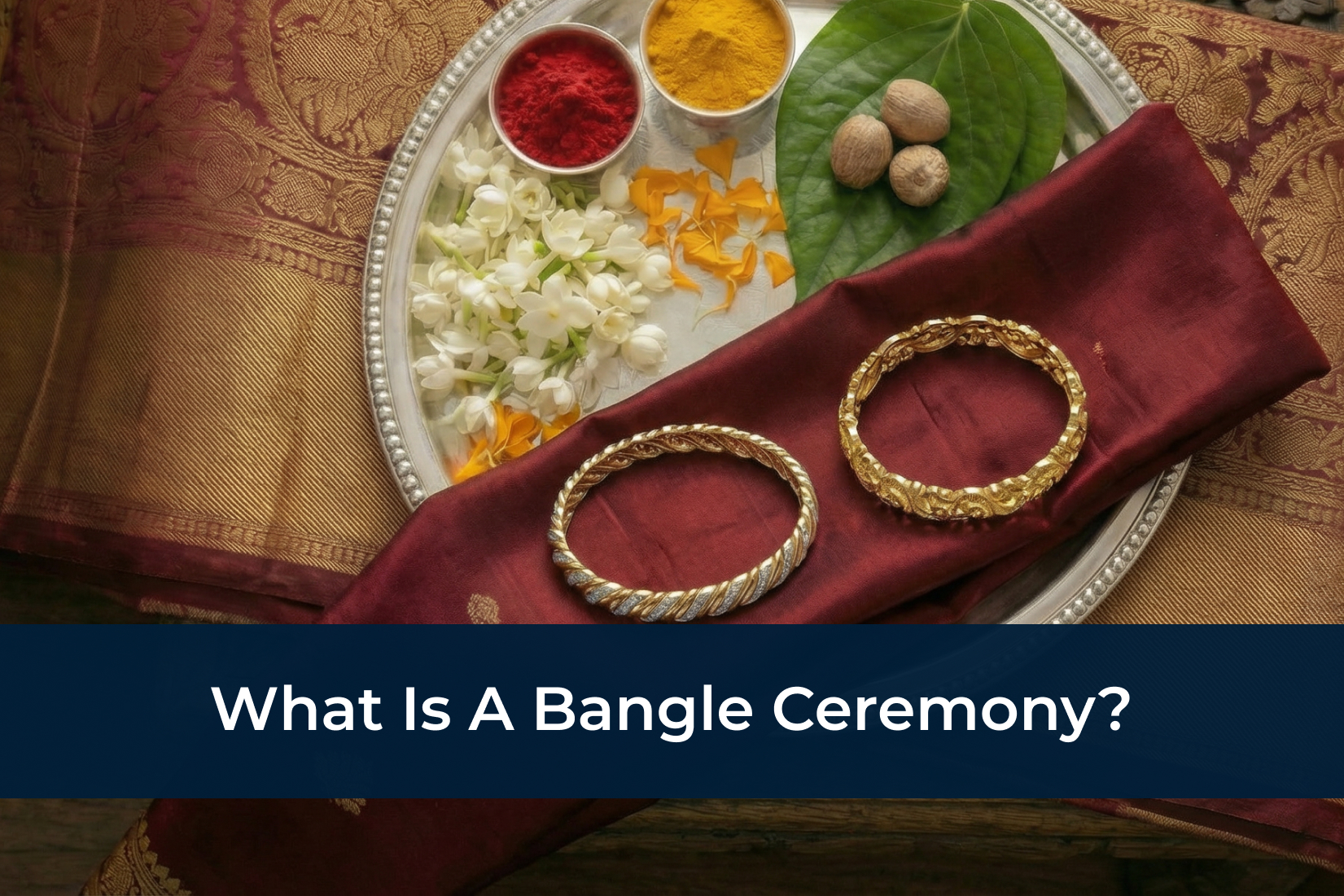
The bangle ceremony, a loved pre wedding ceremony in Indian society, carries emotional and spiritual importance. Also referred to by different names like Chooda in Punjab, Valaikappu in Tamil Nadu, or Seemantham in other South Indian societies, this ceremony marks a bride to be’s entry into married life or, in some societies, a mother-to-be’s entry into motherhood.
It is a colorful celebration full of blessings, music, dance, and fine decoration which represents prosperity, protection, and wedded happiness.
This blog explores the meaning of the bangle ceremony, its variations within South and North India, ideas for bangle ceremony dress for the mom-to-be and guests, inspiration for tray, cake, and home decor, and the best bangles to present as gifts for the event.
What is a Bangle Ceremony?

The bangle ceremony is a traditional ceremony that is mainly celebrated in Indian weddings, but it also takes place as a baby shower in certain areas, especially in South India.
During the wedding ceremony, it involves getting ready the bride to be with bangles, which denote wedded prosperity, and evil protection. The ritual is usually conducted at the bride’s house or a small venue, days or weeks prior to the wedding, and includes elders’ blessings, traditional music, and celebrations.
In the context of the baby shower, Valaikappu or Seemantham, the ritual honors an expecting mother, usually in her seventh month of pregnancy, with bangles to guarantee the health of mother and child.
Importance & Regional Significance of Bangle Ceremony: South India vs. North India
Banglegos have a very deep symbolic value. Red bangles symbolize prosperity and positivity, blue symbolize wisdom, and green symbolize fertility and luck. In wedding rituals, bangles are usually combined with other symbols such as sindoor and mangal sutra. For pregnant women, the bangles are said to build a friendly atmosphere, their sound causing calmness and peace for the child. The ceremony strengthens family relationships, with maternal relatives, especially the maternal uncle of the bride or mother-to-be, presenting the first pair of bangles as a symbol of protection.
South Indian Bangle Ceremony

In South India, the bangle ceremony is linked with the Valaikappu or Seemantham, a baby shower in the seventh or ninth month of pregnancy. The ceremony is organized by the mother’s family, usually her mother, in which married women place glass bangles, usually green or red in color, on the mom-to-be, representing fertility and safety. The ritual is followed with chants, blessings, and offerings of coconuts and sweets. In Tamil Nadu, the tinkling of the bangles is thought to excite the baby positively. In the function, the visitors engage in rituals such as applying mehendi and blessing the mother with a safe delivery. In other South Indian communities, such as among Tamilians, the bangles can be made out of gold or silver in addition to glass.
In South Indian weddings, bangle ceremonies are not as common but can happen during pre-wedding rituals, with brides getting ready with glass or gold bangles. If simplicity and religious importance are the focus, the ceremony takes place at home or temples.
North Indian Bangle Ceremony

In North India, the bangle ceremony is commonly referred to as the Chooda ceremony in Punjab, is one of the major pre-wedding rituals. It is usually conducted during the morning of the wedding or a couple of days earlier, and the bride’s maternal uncle presents a pair of red and white bangles, referred to as chura. Such bangles, usually plastic in today’s time, are kept in milk and rose petals before wearing them, representing purity and wedded bliss. The ceremony in traditional Punjabi families is only for women, although in modern celebrations, male members of the family can be present. Brides in other North Indian states such as Rajasthan, bangles made of lac, studded with stones and pearls, means royal heritage.
The ceremony is colorful, with music, dance, and traditional songs. In contrast to South India, the North Indian bangle ritual is purely wedding oriented and is related to the bride’s entry into married life. The bangles are kept for a limited time after the wedding, usually for a year, showing the bride’s new status as a married woman.
Bangle Ceremony Dress Ideas for Mom to Be and Guests
The bangle ceremony requires festive, traditional clothing that fits the atmosphere. The dress code is different for a bride and a mom.
For the Mom-to-Be
South India (Valaikappu/Seemantham): The mom-to-be is the main member and wears a traditional lehenga or saree in bright or attractive pastel colours such as coral, lime green, or pink. Banarasi or Kanjivaram silk sarees in gold zari work are favoured in Tamil Nadu and Karnataka, with heavy gold ornaments such as bangles, necklaces, and jhumkas (earrings). A jasmine or mogra floral hairdo provides a traditional touch. For a modern look, some wear Anarkali suits in delicate colours such as peach or mint green, with heavy work on them.
North India (Chooda Ceremony): Brides-to-be usually dress in a lehenga choli or Anarkali suit in bright hues of red, pink, or gold. Punjabi brides can opt for an embroidery-heavy lehenga with mirror work or phulkari embroidery, with traditional accessories such as maang tikka and nath. A dupatta with embroidery is also opted.
For Guests
Visitors, mostly women, wear traditional clothes that match the ceremony’s colourfulness without dominating mom-to-be or bride-to-be’s look.
South India: Sarees or salwar kameez in vibrant colours such as yellow, green, or blue are worn by the guests. Cotton silk sarees or chiffon sarees with minimal work on it are most loved for their simplicity and comfort. Palazzo suits or dhoti pants and kurtis could be worn by young guests, with minimalist bangles and earrings.
North India: Guests often choose lehengas, Anarkali suits, or sarees in jewel tones like emerald, royal blue, or maroon. Punjabi guests may wear phulkari dupattas or suits, while Rajasthani guests might opt for bandhani sarees. Light jewellery, including bangles, is preferred to go with the ceremony’s theme.
Bangle Ceremony Decoration Ideas: Trays, Cakes, and Home Setup
The beauty of the bangle ceremony comes from its colourful and different decorations. The following are suggestions for trays, cakes, and home arrangements.
Trays
- Floral Arrangements: Fresh rose, jasmine, or marigold petals in circular patterns on the edge of the tray.
- Mirror and Lace: Employ mirrorwork and a lace trim on the tray and have bangles arranged in a pretty way.
- Personalised Touches: Incorporating a bride’s initial is a very thoughtful way.
Cakes
A bangle cake can be an attraction during the ceremony:
- Bangle Box Design: Design a cake in the shape of a bangle box, with edible bangles fashioned out of fondant or sugar paste in red, green, or gold colours.
- Floral and Bangle Combo: Create a tiered cake with floral designs and edible bangle details.
- Minimalist Elegance: Choose a single-tier cake in pale colours.
Home Setup
Converting the home into an event is important for a memorable bangle ceremony:
- Bangle and Floral Backdrops: Design a photo booth with a bangle backdrop of multicoloured bangles hanging on ribbons. Add fairy lights for a touch of elegance.
- Bangle Bar: Set up a bangle bar where people can select bangles as favours, placed on a table covered in flowers and mirrors.
- Minimalist Setup: For a contemporary look, include white curtains, a floral halo, and a cushioned bench for ceremonies.
- DIY Elements: Make bangle trees by colouring branches and hanging bangles on them. Set these near the entrance or as centrepieces on tables.
Ideal Bangles to Gift for the Occasion

Selecting proper bangles as gifts is important, as they hold deep value and are treasured memories. Following are some ideas:
For Wedding Bangle Ceremony
- Punjabi Chura: Red and white bangles, usually made of plastic, with gold kalire (decorative hangings), given by the maternal uncle.
- Rajasthani Lehariya Bangles: Stone and pearl-decorated lac bangles, showing royal tradition.
- Gold and Diamond Bangles: For a high-end present, opt for gold bangles featuring diamonds or meenakari work.
- Jadau Bangles: Ruby and flat-cut diamond pairs for a traditional look.
For Valaikappu/Seemantham
- Glass Bangles: Red or green glass bangles are said to promote fertility and safety. Set gifts of 12 or 24 for symmetry on each wrist.
- Silver Bangles: Plain silver bangles with little engraving are commonly worn until birth.
- Personalised Bangles: Initials or baby-themed charms on custom bangles provide a trendy look.
- Shankh and Paula Bangles: Red coral bangles are offered as Bengali symbols of maternal and marital happiness.
Gift bangles in a lovely jewellery box or in a velvet bag. To make the gift hamper more festive, include sweets or dry fruits for the occasion of Valaikappu.
FAQs About Bangle Ceremony
What happens in a bangle ceremony?
Family members of the woman, usually the bride’s mother, aunt, or uncle put bangles on her wrist. This shows her transition into married life and spreads happiness and harmony among family members.
What are the guests supposed to wear to a bangle ceremony?
Women usually choose light traditional wear such as a lehenga, saree, or salwar suit, and men may opt for a kurta or sherwani. Pastels or bright colours are preferred.
What sort of bangles do brides get?
Bangles differ from place to place: Punjabi brides receive red‑and‑ivory chooda, Bengali brides wear white sankha and red pola, and green glass and gold bangles are popular in Maharashtra—all signifying good luck, fertility, and prosperity.
How do you decorate the bangle tray?
Add an attractive tray with coloured fabrics or flowers to line it. Place the bangles in order and complement them with tiny add-ons such as ribbons, bells, flowers, or candies to suit the wedding atmosphere.
Related Blogs
Leave a Reply