
By Satyam, BlueStone Editorial
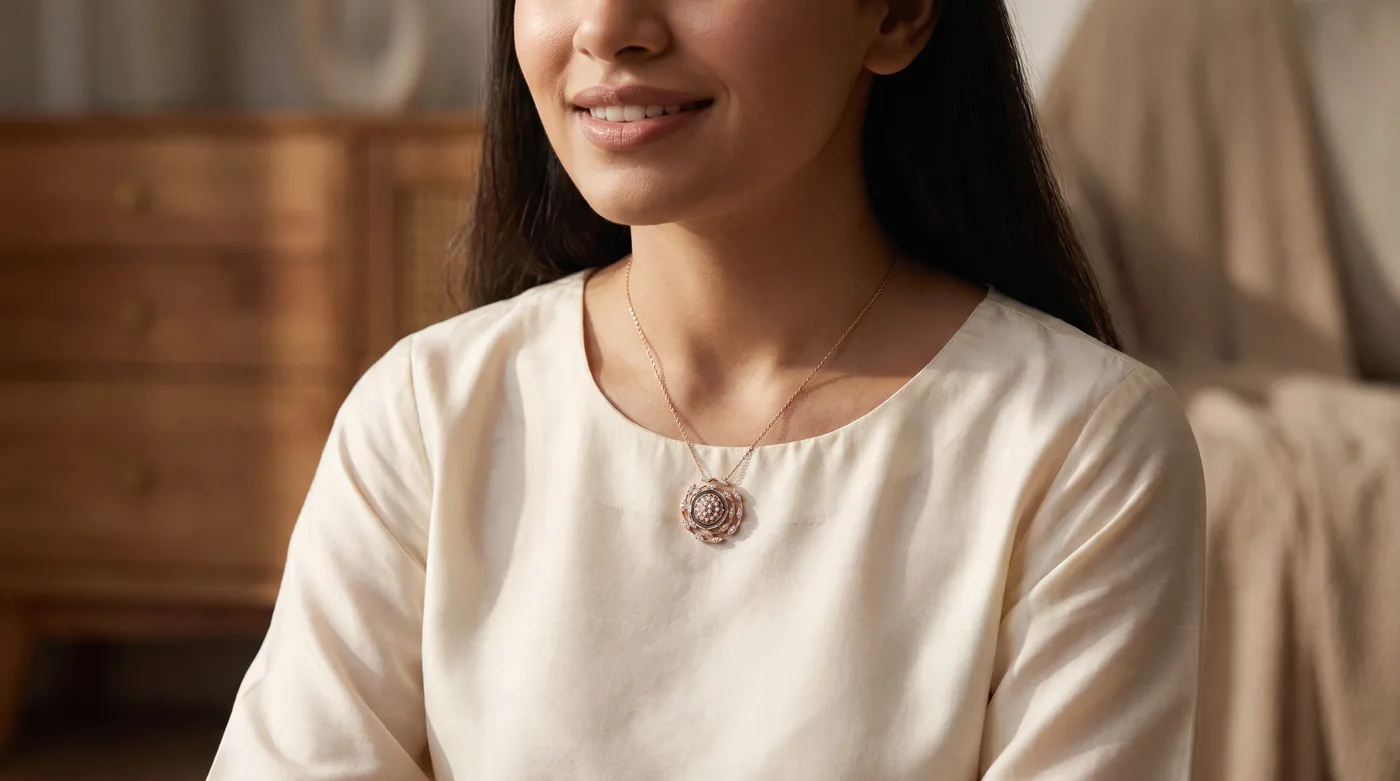
A white necklace represents one of the most versatile, radiant investments in contemporary fine jewellery. Defined by clean architectural silhouettes, silvery-white precious metals, and luminous colourless gemstones, a white necklace captures ambient light with understated brilliance. Whether crafted in shimmering 18K white gold, resilient platinum, or accented with certified natural diamonds and iridescent pearls, this jewellery staple moves effortlessly between corporate boardrooms, festive Indian celebrations, and intimate evening galas.
Many jewellery buyers searching for a white necklace assume that the category refers solely to silver or casual fashion jewellery. In authentic fine jewellery, however, a white necklace combines precious noble metals like hallmarked white gold or platinum with exquisite stones. In this definitive 2026 buying guide, we explore metal foundations, analyze gemstone varieties across stone necklaces for women, evaluate setting security, explain BIS hallmarking and transparent invoice billing, and share expert styling advice to help you find your signature luminous necklace.
Quick Buying Summary:
- Metal Choices: 18K and 14K white gold finished with rhodium plating offer mirror-bright luster and high structural strength; platinum offers hypoallergenic purity and natural density; fine jewellers like BlueStone craft strictly in certified gold and diamonds rather than silver.
- Stone Classifications: Natural diamonds and white sapphires provide heirloom durability (Mohs 9 to 10) for daily wear; cultured pearls offer vintage opulence; cubic zirconia serves as an accessible decorative accent.
- Prong and Setting Integrity: Opt for 18K or 14K gold for delicate prongs, pavé bands, and floating halos to ensure maximum stone retention and everyday wearability.
- Billing and Hallmarking: Under Bureau of Indian Standards (BIS) regulations, verify the 6-digit alphanumeric HUID and demand an invoice billing gold strictly on net gold weight with stone weights fully deducted.
What Defines a White Necklace: Precious Metals, Luster, and White Stones
In the lexicon of modern jewellery design, a white necklace is characterized by a monochromatic, cool-toned optical profile. Rather than drawing warmth from traditional yellow gold, it celebrates clarity, crisp contrast, and neutral sophistication. This distinctive visual identity originates from two key components: the metal substrate and the white gemstone embellishments.
The foundation of any luxury white necklace is its noble metal framework. Pure gold is inherently yellow, which means white gold must be meticulously alloyed with white metals, such as nickel, zinc, silver, or palladium, and coated with micro-thin electroplated rhodium. This precious platinum-group element imparts an ultra-reflective, mirror-white sheen that enhances the brilliance of set gemstones. When paired with colourless diamonds or white sapphires, the setting prongs blend visually into the stones, creating the illusion of larger, uninterrupted radiance.
Because white reflects the full spectrum of ambient visible light, a white necklace functions as the ultimate sartorial neutral. It neither clashes with vibrant jewel tones nor overpowers subtle pastel palettes, making it a foundational piece for women who value high aesthetic adaptability.
White Gold vs Platinum vs Silver: Selecting the Right Metal Foundation
Choosing the right metal for your white necklace determines its daily durability, maintenance cycle, and long-term monetary value. Discerning fine jewellery buyers compare three primary white metals, keeping in mind that reputable fine jewellers focus exclusively on precious gold and platinum.
- 18K and 14K White Gold: White gold is created by alloying 75% (18K) or 58.5% (14K) pure yellow gold with robust white metals, finished with an electrolytic layer of rhodium. White gold provides high tensile rigidity, making it the premier choice for intricate claw prongs, channel tracks, and multi-stone necklaces. It resists bending, retains crisp facet lines, and delivers radiant brilliance. A routine rhodium replating every 18 to 24 months restores factory-fresh brightness after everyday friction.
- Platinum (Pt 950): Naturally white and hypoallergenic with a purity of 95%, platinum requires no rhodium plating. It is approximately 30% to 35% denser than gold, lending a substantial, luxurious drape against the collarbones. When scratched, platinum does not lose metal volume; instead, the surface metal displaces into an elegant, velvety patina admired by connoisseurs.
- Silver (Fashion Context): While sterling silver (92.5% purity) is common in costume jewellery, it is softer, prone to rapid surface oxidation (tarnishing), and lacks the structural resilience needed to securely grip precious diamonds long-term. As a fine gold and diamond jeweller, BlueStone crafts exclusively in authentic hallmarked gold and platinum, ensuring every necklace maintains lifelong durability and verified intrinsic value.
For most daily wearers seeking an optimal balance of brilliance, affordability, and prong security, 18K or 14K white gold remains the undisputed gold standard.
Stone Necklaces for Women: Diamonds, White Sapphires, and Cultured Pearls
When exploring stone necklaces for women within the white jewellery category, the variety of colourless and milky white gems allows for expressive personal styling. Each stone type carries distinct optical properties, hardness ratings, and care requirements.
Here is how the leading white gemstones compare for fine necklace settings:
- Natural Diamonds: The pinnacle of luxury with a perfect score of 10 on the Mohs mineral hardness scale. Natural diamonds exhibit superior adamantine luster and high refractive index (2.42), splitting white light into vibrant rainbow fire. Resistant to surface scratches and chemical degradation, a diamond-studded white necklace is a generational heirloom that retains lifelong beauty.
- White Sapphires (Safed Pukhraj): Ranking 9 on the Mohs scale, white sapphires represent an extraordinary natural corundum gemstone. They offer exceptional clarity and an icy, crisp luster. While they display subtle silvery light return rather than high dispersion fire, their durability makes them fantastic for substantial everyday necklace collars.
- Cultured White Pearls: An organic gem formed within molluscs, featuring a soft, iridescent nacre glow. Whether strung as an unbroken strand or suspended as a baroque drop pendant, white pearls exude regal poise. Because pearls register between 2.5 and 4.5 on the Mohs scale, they must be shielded from harsh acids, cosmetics, and abrasive contact.
- Moissanite: A lab-created crystalline silicon carbide gem measuring 9.25 on the Mohs scale. Known for high refractive dispersion, it creates dynamic fiery sparkle and serves as a durable accent in contemporary fashion pieces.
- Cubic Zirconia (American Diamond): A synthetic zirconium dioxide crystal with a hardness of 8 to 8.5. While initially luminous and budget-friendly, cubic zirconia is porous to skin oils and atmospheric dust, which can cause facet clouding over extended wear.
Investing in natural certified diamonds or genuine sapphires guarantees that your necklace remains brilliant, scratch-free, and valuable through decades of wear.
Popular White Necklace Silhouettes: From Chokers to Lariats and Pendant Drops
White necklaces are sculpted into a diverse array of silhouettes designed to complement different anatomical features, style preferences, and event codes. Understanding these designs helps you identify the most flattering piece for your jewellery collection.
- Solitaire and Cluster Pendant Necklaces: A minimalist focal piece suspended from a fine 16 to 18-inch cable or box chain. A solitaire diamond or floral cluster necklace rests gently along the suprasternal notch, creating an understated point of light that flatters daytime office attire and casual weekend outfits alike.
- Articulated Chokers and Tennis Collars: Measuring 14 to 16 inches, tennis necklaces and chokers sit closely around the base of the neck. Crafted with individual articulated links housing uniform white stones, tennis chokers flex smoothly across collarbone contours, delivering continuous sparkle for formal evenings.
- Lariat and Y-Necklaces: Designed with a central junction that descends into a vertical drop. Lariat necklaces add graceful verticality to deep necklines, creating an elongating effect that works remarkably well with plunge cocktail dresses, silk shirts, and modern tailored blazers.
- Layered Multi-Strand Chains: Pre-curated or custom-combined chains of staggered lengths (such as 15 inches, 17 inches, and 19 inches) accented with bezel-set stones or geometric charms. Layered designs offer rich tactile volume and contemporary flair without feeling heavy.
- Traditional Haar and Festoon Sets: Extended multi-tier necklaces measuring 22 to 30 inches, featuring elaborate floral or geometric motifs. When paired with matching earrings, these ornate white stone necklaces provide regal drama for festive Indian weddings.
Curated White Necklaces from BlueStone
Explore our editorially selected white necklaces and pendants, crafted in certified gold and embellished with shimmering stone accents designed for everyday luxury and milestone celebrations.


Curated Design Highlights: Explore signature creations including The Ailia Evil Eye Layered Necklace for modern multi-strand charm, The Rapett Evil Eye Charm Necklace for delicate talismanic elegance, The Yfel Evil Eye Pendant Necklace for geometric minimalism, The Sarvanya Pendant for graceful diamond sparkle, The Aagarna Pendant for contemporary everyday brilliance, and The Thyvarne Pendant for balanced symmetry.
Setting Security and Craftsmanship: Protecting Your Stones
The longevity of a white necklace depends directly on the mechanical integrity of its gemstone settings. Because necklaces rest on dynamic collarbones and encounter continuous movement, settings must withstand friction without snagging on fine garments or releasing precious stones.
- Prong (Claw) Settings: Slender metal uprights grip the stone at its girdle while allowing maximum ambient light to penetrate from the sides and base. For maximum security, four or six prongs should be rounded, smooth, and evenly spaced. An 18K or 14K gold alloy provides the required rigidity to prevent prongs from loosening under daily friction.
- Bezel Settings: A solid metal rim encircles the complete circumference of the gemstone. Bezel settings provide unmatched edge protection against accidental bumps and eliminate snagging on silk or woollen clothing, making them ideal for active daily wear.
- Channel and Pavé Settings: Channel settings align stones between smooth parallel metal walls, creating a seamless stream of sparkle. Pavé settings nestle micro-stones into tiny drilled recesses secured by miniature beads of gold, producing a paved floor of uninterrupted white brilliance.

Before taking your new necklace home, conduct a simple fabric test: lightly sweep a scrap of soft silk or chiffon across the stone settings. If the cloth catches or pulls, ask the jeweller to burnish and smooth the prong tips.
BIS Hallmarking, Net Gold Weight Deductions, and Pricing Calculations
Purchasing a fine gold or diamond white necklace in India requires careful verification of statutory quality standards. Regulatory safeguards ensure you receive pure materials and honest, transparent pricing.
1. Mandatory BIS Hallmarking Marks:
Under Bureau of Indian Standards (BIS) regulations, every gold necklace sold by registered jewellers must carry three distinct laser-engraved hallmarks:
- The BIS Triangular Logo: The official symbol certifying national assay compliance.
- Purity and Fineness Grade: Stating the precise precious metal proportion, such as 750 for 18K gold (75.0% pure gold), 585 for 14K gold (58.5% pure gold), or 916 for 22K gold (91.6% pure gold).
- 6-Digit Alphanumeric HUID (Hallmark Unique Identification): A unique code traceable in the BIS Care mobile application, displaying the registered jeweller, hallmarking center, and assay date.
2. The Net Gold Weight Billing Mandate:
When buying studded jewellery like a stone-accented white necklace, consumer protection regulations mandate that the gold rate can only be billed on the net gold weight. The total gross weight includes chains, clasps, diamonds, and gemstones. Jewellers must weigh the stones accurately, subtract their weight from the gross weight, and calculate precious metal costs exclusively on the remaining net gold. Never accept an invoice where gold rates are applied to the total weight.
3. Transparent Retail Price Formula:
A trustworthy tax invoice calculates the complete purchase value through this clear equation:
- Total Price = [Net Gold Weight in grams × Prevailing Gold Rate for Karatage] + Making Charges (craftsmanship fee) + Gemstone Valuation + 3% GST (Goods and Services Tax on entire invoice value).
Neckline and Outfit Styling: Harmonizing with Indian Ethnic and Western Silhouettes
The neutral luminosity of a white necklace makes it an extraordinary asset across diverse fashion wardrobes. By coordinating necklace lengths with garment necklines, you create harmonious visual balance.
- V-Neck and Plunging Necklines: Pair structured V-neck blouses, blazers, and wrap dresses with delicate lariats, Y-necklaces, or tapered pendant drops that follow the angle of the neckline, drawing graceful focus toward the face.
- Sweetheart and Scoop Necklines: Accentuate open décolletage with an articulated tennis necklace or curved cluster necklace (16 to 18 inches) that rests neatly along the collarbones without overlapping garment fabric.
- Boat Neck, Mandarin Collars, and High Turtlenecks: High collars call for longer station necklaces or opera-length chains (24 to 30 inches). A white stone pendant hanging against a solid black, navy, or jewel-toned fabric creates striking architectural contrast.
- Sarees and Festive Lehengas: When wearing rich silk sarees or heavily embroidered pastel lehengas, a multi-tier white necklace or layered white gold choker provides modern royal elegance without competing with intricate zari embroidery.

Skin Undertone Matching: Choosing Settings for Cool, Warm, and Neutral Complexions
While white gemstones flatter every skin tone, the underlying precious metal setting creates subtle visual harmony with your complexion:
- Cool Undertones (Bluish veins, rosier undertones): White gold and platinum harmonize naturally with cool complexions. The crisp silvery metal amplifies skin clarity and accentuates the icy brilliance of natural diamonds.
- Warm Undertones (Greenish veins, golden or peachy undertones): If your skin carries rich golden warmth, consider white stone necklaces set in two-tone gold (such as yellow gold chains with white gold stone prongs). The yellow gold complements skin warmth while the white prongs preserve stone sparkle.
- Neutral Undertones (Balanced olive or wheatish tones): Neutral complexions can effortlessly carry all-white platinum, radiant 18K white gold, or mixed-metal styles with equal flair.
Everyday Care, Cleaning, and Rhodium Longevity for White Necklaces
Daily exposure to skin sebum, cosmetics, perfumes, and ambient pollutants deposits a micro-film over gemstone facets and dulls metal luster. Following gentle maintenance practices ensures your white necklace retains pristine brilliance.
- Gentle Soak and Cleanse: Immerse your necklace in a shallow bowl of lukewarm water mixed with a few drops of mild, pH-neutral liquid soap for 10 to 15 minutes. Use an ultra-soft baby toothbrush to gently clean beneath the stone basket. Rinse thoroughly with clean water, ensuring the sink drain is securely plugged, and pat dry with a lint-free microfibre cloth.
- The ‘Last On, First Off’ Rule: Always apply body lotions, sunscreen, perfume, and hairspray before putting on your necklace. Chemical mists cause microscopic buildup and accelerate rhodium wear.
- Chemical and Chlorine Shield: Never wear white gold jewellery into chlorinated swimming pools or hot tubs. Chlorine causes stress corrosion cracking in gold alloys and damages prong tips.
- Rhodium Replating Cycle: A white gold necklace naturally experiences gentle wear on high-friction areas over 18 to 24 months. A certified jeweller can clean, polish, and apply a fresh rhodium bath, restoring factory-fresh mirror brilliance in minutes.
- Individual Velvet Pouch Storage: Because diamonds can easily scratch gold and softer stones, store your necklace flat inside a dedicated velvet-lined compartment or soft fabric pouch.
Final Thoughts
A finely crafted white necklace is a celebration of luminous simplicity and modern sophistication. By selecting durable 18K or 14K hallmarked gold, choosing certified natural diamonds or sapphires, verifying net gold weight billing, and mastering neckline styling, you invest in an enduring piece that elevates every outfit. Whether worn as a discreet daily pendant or a breathtaking evening choker, your white necklace will continue to shine with timeless elegance for generations to come.
More Jewellery & Buying Guides
Expand your fine jewellery knowledge with our curated editorial guides. Learn how to check gold purity accurately, understand GST on gold jewellery in India, discover is buying gold jewellery online safe, explore long necklace for women buying guide, and consult our white stone necklace gold guide for expert styling insights.
Frequently Asked Questions About White Necklaces
1. Can I wear a white necklace every day without damaging the metal?
Yes, provided the necklace is crafted from durable 18K or 14K white gold or platinum and features secure bezel or prong settings. White gold is alloyed for structural resilience, making it ideal for daily office and casual wear. An occasional rhodium replating every 18 to 24 months will easily maintain its crisp, mirror-white luster.
2. What is the difference between a white necklace in white gold and silver?
White gold is a precious gold alloy (typically 75% or 58.5% pure gold) electroplated with rhodium for unmatched brightness and durability, holding its value and resisting tarnishing. Silver is softer, oxidizes rapidly in humid environments, and lacks the structural tensile strength required to secure fine diamonds. BlueStone crafts exclusively in fine hallmarked gold and platinum.
3. Which stones are best for stone necklaces for women in daily wear?
Natural diamonds and white sapphires are the premier choices for daily stone necklaces for women due to their superior hardness (Mohs 10 and 9 respectively). They resist surface scratching, retain light dispersion, and do not cloud under normal environmental exposure, unlike softer or porous synthetic materials.
4. How is the price of a stone-studded white gold necklace calculated?
Under Indian consumer protection and BIS hallmarking laws, the gold rate must strictly be billed on the net gold weight (gross weight minus the weight of all studded stones). The final invoice price equals: [Net Gold Weight in grams × Live Gold Rate] + Making Charges + Gemstone Value + 3% GST on the composite invoice value.
5. Does white gold turn yellow over time?
White gold contains natural pure yellow gold alloyed with white metals. Over time, the outer micro-thin rhodium plating may gently wear down in areas of high friction, revealing a very subtle warm undertone. A quick professional cleaning and rhodium dip completely restores the original mirror-white sheen.
6. How do I choose the best white necklace length for my neck and outfits?
A 16-inch collar or choker sits along the collarbone and flatters scoop, sweetheart, and off-shoulder tops. An 18-inch princess length is universally flattering for everyday crewnecks and V-necks. Longer 20 to 24-inch matinee chains or lariats look magnificent over high turtlenecks, closed collars, and ethnic kurtas.
Leave a Reply