
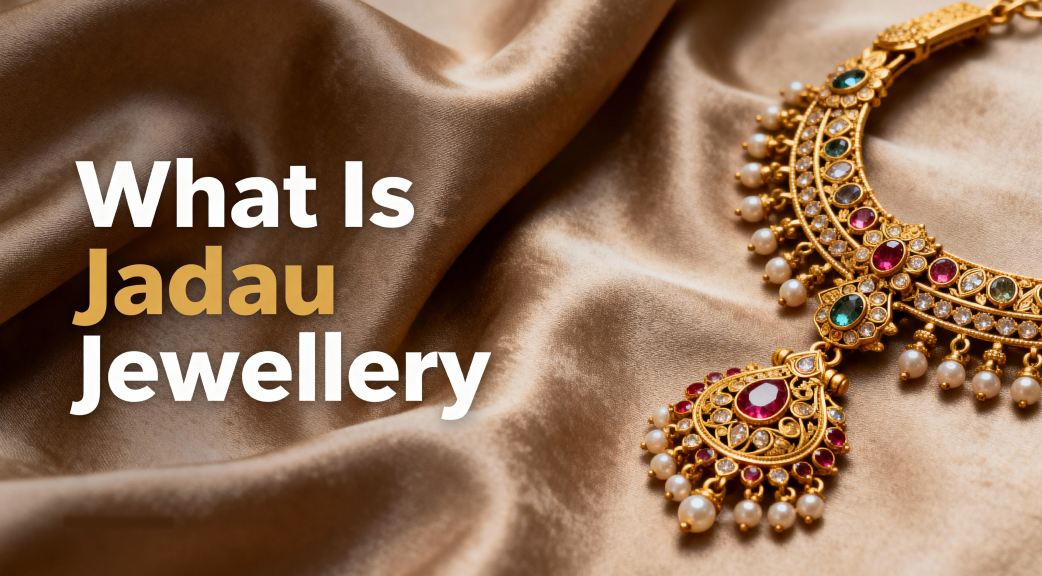
Do you want to experience the living legacy of Indian craftsmanship, tradition, and royal heritage? Then you should explore Jadau jewellery a magnificent art form that goes beyond adornment to embody India’s cultural and artistic brilliance.
Whether we trace its origins from Mughal courts or its revival in contemporary bridal fashion, Jadau jewellery has maintained its status as the epitome of luxury, elegance, and heritage. This timeless jewellery form beautifully connects the past and present, reflecting the artistry that makes Indian jewellery unique.
The Meaning and Origin of Jadau Jewellery

The word ‘Jadau’ is derived from the Hindi word ‘Jad’, which means “to embed.” This perfectly describes the technique used in making Jadau jewellery embedding gemstones, pearls, or uncut diamonds (Polki) into gold without using modern soldering methods.
The art form dates back to the Mughal era, where artisans from Rajasthan and Gujarat created these intricate masterpieces for royal families. Over centuries, this craft has been preserved and passed down through generations, making Jadau jewellery an integral part of India’s wedding and festive culture.
How Is Jadau Jewellery Made?

Crafting Jadau jewellery is a meticulous process that involves several skilled artisans and weeks sometimes months of handwork. Here’s how it’s made:
1. The Base Creation (Ghaat)
The foundation of Jadau jewellery is called Ghaat a gold framework made using 22K or 24K gold. Artisans mold this base into intricate designs that form the structure for setting gemstones.
2. The Stone Setting (Jadayi)
In this step, uncut diamonds (Polki), rubies, emeralds, or pearls are carefully embedded into the softened gold base using age old hand techniques. No adhesives or claws are used the stones are pressed and secured by hand to ensure precision and seamless beauty.
3. The Enamel Work (Meenakari)
The reverse side of Jadau jewellery is often decorated with Meenakari colorful enamel designs featuring floral or geometric motifs. This dual sided craftsmanship makes Jadau pieces exquisite from every angle.
4. The Finishing (Khilana & Pakai)
Finally, the piece is polished and refined to enhance its brilliance. The result is a luxurious, heirloom worthy piece of Jadau jewellery that radiates artistry, culture, and emotion.
Each Jadau piece is entirely handcrafted a reason why it holds such immense value, similar to gold jewellery or diamond jewellery.
Different Types of Jadau Jewellery
Each form of Jadau jewellery carries its own distinctive charm. Here are some of the most popular types:
1. Jadau Polki Jewellery
Features uncut natural diamonds known as Polki, giving the jewellery a vintage and royal appeal. Jadau Polki is highly sought after by brides for its classic elegance.
2. Jadau Kundan Jewellery
Uses layers of gold foil behind gemstones to enhance their brilliance. This reflective technique gives Jadau Kundan jewellery its luminous, regal finish perfect for weddings and festive occasions.
3. Jadau Meenakari Jewellery
Combines gemstone setting with detailed enamel work on the back, making it wearable from both sides. Jadau Meenakari jewellery is a favourite among collectors who admire craftsmanship from every angle.
4. Jadau Pearl Jewellery
Blends the grace of pearls with traditional design to create soft, sophisticated pieces often seen in necklaces and earrings that bridge traditional and modern fashion beautifully.
Why Jadau Jewellery Is So Special

- Handcrafted Perfection: Each piece is made by skilled artisans using centuries old techniques, making every creation unique.
- Royal Aesthetic: Jadau jewellery captures the grandeur of India’s royal legacy and timeless beauty.
- Intricate Detailing: The delicate patterns, Polki diamonds, and Meenakari art distinguish Jadau from all other jewellery styles.
- Cultural Significance: Deeply rooted in Indian weddings, festivals, and rituals, Jadau jewellery remains a cultural symbol of opulence and artistry.
How to Identify Real Jadau Jewellery
Authenticity is crucial when buying Jadau jewellery. Here are some tips to ensure you get the real masterpiece:
- Authentic Jadau jewellery is made with 22K or 24K gold making it heavier and more valuable.
- Check for Meenakari work on the back, which is a key sign of authenticity.
- Gemstones are hand embedded, not glued or claw set.
- The weight of real Jadau jewellery will be slightly higher due to the gold and stone content.
- Always buy from a trusted jeweller and request an authenticity certificate.
Styling Tips: How to Wear Jadau Jewellery

Once reserved for brides and royalty, Jadau jewellery has now entered modern wardrobes thanks to contemporary reinterpretations. Today’s designers blend traditional Jadau artistry with minimal and fusion designs, making it wearable across occasions.
- Pair a Jadau necklace or Jadau earrings with a saree or lehenga for weddings and festive celebrations.
- Style Jadau chokers or rings with Indo Western outfits to create a fusion look.
- Keep your outfit subtle to let your Jadau piece shine as the statement element.
FAQs
1. What makes Jadau jewellery different from Kundan jewellery?
While both involve gemstone setting, Jadau focuses on embedding stones directly into gold without soldering, whereas Kundan jewellery uses gold foil to enhance shine and reflection.
2. Is Jadau jewellery made only in gold?
Traditionally, yes it’s made in 22K or 24K gold. However, modern Jadau jewellery may also feature silver or other metals for more affordable options.
3. Can Jadau jewellery be worn with modern outfits?
Absolutely. Contemporary Jadau designs are versatile and can complement both traditional and Indo Western outfits effortlessly.
4. How do I know if my Jadau jewellery is real?
Check for Meenakari work at the back, ensure the gemstones are uncut and hand embedded, and verify gold purity and certification from trusted jewellers.
5. Why is Jadau jewellery so expensive?
Because it’s entirely handcrafted using pure gold and often features uncut diamonds or precious gemstones, making each piece one of a kind and highly valuable.
Related Blogs:
Leave a Reply