By Satyam, BlueStone Editorial
The significance of Lohri lies in harvest gratitude, shared celebration and the warmth of community. Associated especially with Punjab, its bonfires, food, songs and dance bring families together. Dulla Bhatti’s story belongs to Lohri’s cultural background as folklore. In 2027, Lohri falls on Thursday 14 January 2027; customs and devotional meanings vary between families and communities.
TL;DR
- Harvest gratitude and community gathering shape Lohri’s meaning.
- Dulla Bhatti’s legend should be distinguished from documented history.
- Lohri falls on Thursday 14 January 2027.
Last updated: January 2027
What Is the Significance of Lohri?
Its meaning becomes visible through shared food, a communal fire and time spent singing or dancing together.
Devotional accounts also describe thanks expressed through reverence for the sun and fire. The festival can symbolise hope for longer, warmer days, as BeeBuddy’s cultural explainer describes.
What Does the Name Lohri Mean?
The name has competing explanations, and none is settled.
- The Times of India tentatively connects loh with an iron griddle.
- Sanfort’s account offers a fire-warmth explanation instead.
Why Lohri Matters in Punjab and Beyond
Its harvest themes and shared celebrations connect agricultural life with Punjabi cultural expression.
Observance also extends to Haryana, Himachal Pradesh, Delhi and the Jammu region of Jammu and Kashmir, according to the reference overview. The same account reports participation by Hindu and Sikh families.
For someone attending a gathering for the first time, asking the host about their family’s customs is useful. One household may emphasise prayer, while another places more attention on food, music or welcoming relatives.
The History of Lohri and the Dulla Bhatti Story
- A historical reference can show that people celebrated it.
- A legend can explain the stories associated with it.
Recorded Mentions Do Not Establish an Origin
Wikipedia’s Lohri overview reports mentions in accounts of Maharaja Ranjit Singh’s royal court. It also notes that these accounts do not explain the festival’s origins.
Dulla Bhatti, Sundri and Mundri in Folklore
Punjabi folklore links Dulla Bhatti with Lohri and its songs. In the reported legend, he rescues girls, including Sundri and Mundri, whose names become associated with the story.

Caption: The Zigra Pendant, an optional personal keepsake.
Why a First Lohri Can Feel Especially Meaningful
The first Lohri after marriage or childbirth receives particular attention in reported family celebrations. It brings a personal milestone into a wider occasion for gathering.
Jewellery may be an optional keepsake, with no prescribed design or required gift.
The Zigra Pendant pictured above shows that personal choice: a small rose-gold pendant with a green stone. If choosing jewellery, consider what the recipient already enjoys wearing.
For outfit ideas, explore our Lohri clothing and jewellery guide. Explore six optional designs, from green-accent pendants and pearl huggies to a diamond mangalsutra necklace and an oval bangle.


Curated Design Highlights: The Thyvarne Pendant brings green malachite panels to a pendant choice. The Asya Huggie Earrings add white pearl drops near the face. The Estrella Oval Bangle offers wristwear with an interlocking diamond-set centre. Choose according to personal taste and how the piece will be worn afterwards.
What the Lohri Bonfire and Shared Celebrations Represent
The bonfire provides a shared centre for Lohri gatherings. Around it, devotional customs and social celebration can sit alongside each other.
Prayer and Offerings as Reported Customs
The Times of India’s festival explainer describes sun and fire worship as expressions of harvest gratitude. Reported practices include walking around the fire and offering foods such as sesame, jaggery and rewri, a festive sweet.
Families may attach different devotional meanings to the gathering, and some people pray while going around the fire.
Songs, Dance and Togetherness
Accounts of Lohri describe bhangra and giddha, Punjabi dance forms, accompanied by the dhol, a drum.
They also describe children singing from house to house and receiving treats.
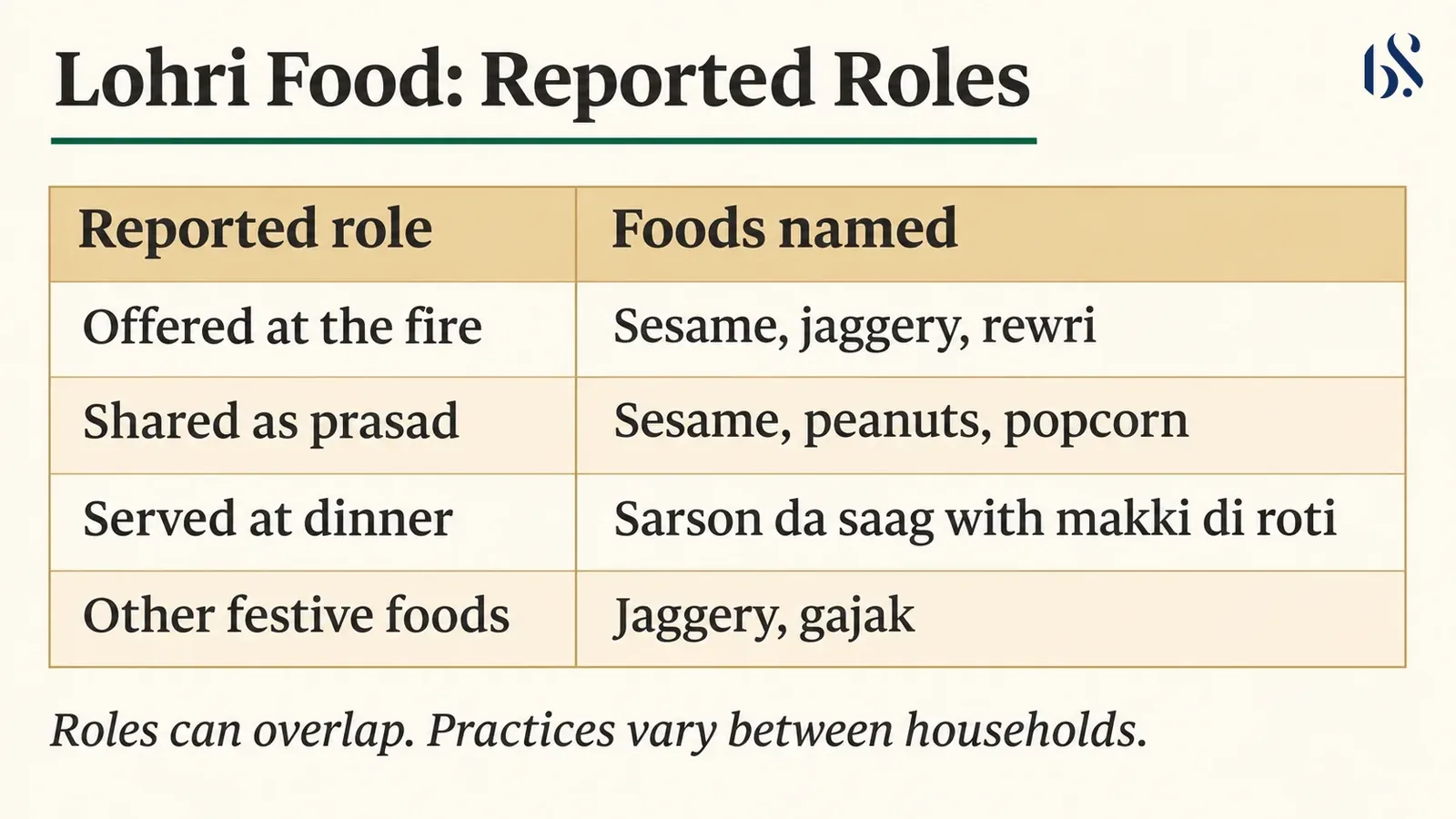
Lohri Food: Offerings, Shared Prasad and Dinner
Til means sesame; prasad is food shared after a devotional offering.

Caption: Reported food roles can overlap and vary between households.
The Times of India names sesame, jaggery and rewri as fire offerings. It separately describes sesame, peanuts and popcorn being shared as prasad.
The reference overview describes sarson da saag, a mustard-greens dish, with makki di roti, maize flatbread, at dinner. It also names jaggery and gajak, another festive sweet, among festive foods.
Conclusion
Lohri’s meaning brings together harvest gratitude, community and family milestones. Understanding its customs also means recognising where recorded history ends and folklore begins. If you are preparing for a gathering, our Lohri outfit and jewellery guide can help you choose a look that feels comfortable and personal.
Related Guides
- Lohri outfits and jewellery for women
- Lohri Date 2027: Day, Bonfire Timing and Holiday Guide
- Happy Lohri Wishes 2027: English Messages & Quotes
- लोहड़ी की शुभकामनाएं 2027: हिन्दी संदेश, स्टेटस और शायरी
- Gudi Padwa meaning and traditions
Frequently Asked Questions
Why Do We Celebrate Lohri?
Lohri celebrates harvest gratitude and community togetherness. Families and neighbours gather around bonfires, share food and enjoy songs or dance. Its seasonal meaning can include hope for warmer days ahead. Devotional expressions vary, so the occasion need not carry an identical meaning for every household.
What Is Lohri?
Lohri is a midwinter folk and harvest festival principally associated with Punjab. Bonfires, shared foods, songs and dancing are among its identifying customs. Some families also use the occasion to mark a recent marriage or childbirth. Reported participation includes Hindu and Sikh families, reflecting its shared cultural character.
Why Do Sikh Families Celebrate Lohri?
Sikh families participate in Lohri as part of Punjabi seasonal and community celebrations. The cultural overview also reports Hindu participation. That establishes shared observance, but does not identify a specific Sikh historical event commemorated by the festival. Individual households may understand and mark the occasion differently.
How Is Lohri Traditionally Celebrated?
Reported Lohri customs include gathering around a bonfire, offering foods, sharing prasad, singing and dancing. Some people pray and walk around the fire. These practices vary between households and communities. Sesame, jaggery and rewri feature among reported offerings, while children may sing from house to house and receive treats.
Why Is Lohri Celebrated in Punjab?
Lohri is closely associated with Punjab’s agricultural and community life. Harvest gratitude finds expression through gathering, food sharing, music and dance. These connections help explain its strong Punjabi identity, although observance extends beyond Punjab. Reported celebrations feature bhangra and giddha, Punjabi dance forms, accompanied by the dhol, a drum.
When Is Lohri in 2027?
Lohri falls on Thursday 14 January 2027. If you are planning a gathering, confirm arrangements with your family or host before organising travel, food or clothing. Ask when guests should arrive and whether you can contribute a dish, as household plans and customs can shape the gathering.
In Which States and Regions Is Lohri Celebrated?
Lohri is principally associated with Punjab. Reported observance also extends to Haryana, Himachal Pradesh, Delhi and the Jammu region of Jammu and Kashmir. Participation also crosses community boundaries, including Hindu and Sikh families. Within these places, households may differ in their emphasis on prayer, food, music or family milestones.
What Is the Dulla Bhatti Story Associated With Lohri?
The Dulla Bhatti story is a Punjabi folk legend linked with Lohri and its songs. In the reported account, he rescues girls, including Sundri and Mundri. Children often sing songs that name him while going door to door. The legend does not establish a documented founding event or independently verified biography.
Which Foods and Sweets Are Associated With Lohri?
Sesame, jaggery, rewri, peanuts, popcorn and gajak are associated with Lohri in reported accounts. Their roles differ: some appear as offerings or shared prasad. Sarson da saag with makki di roti is described as dinner. Food choices and uses can overlap, so this is not a compulsory menu.