
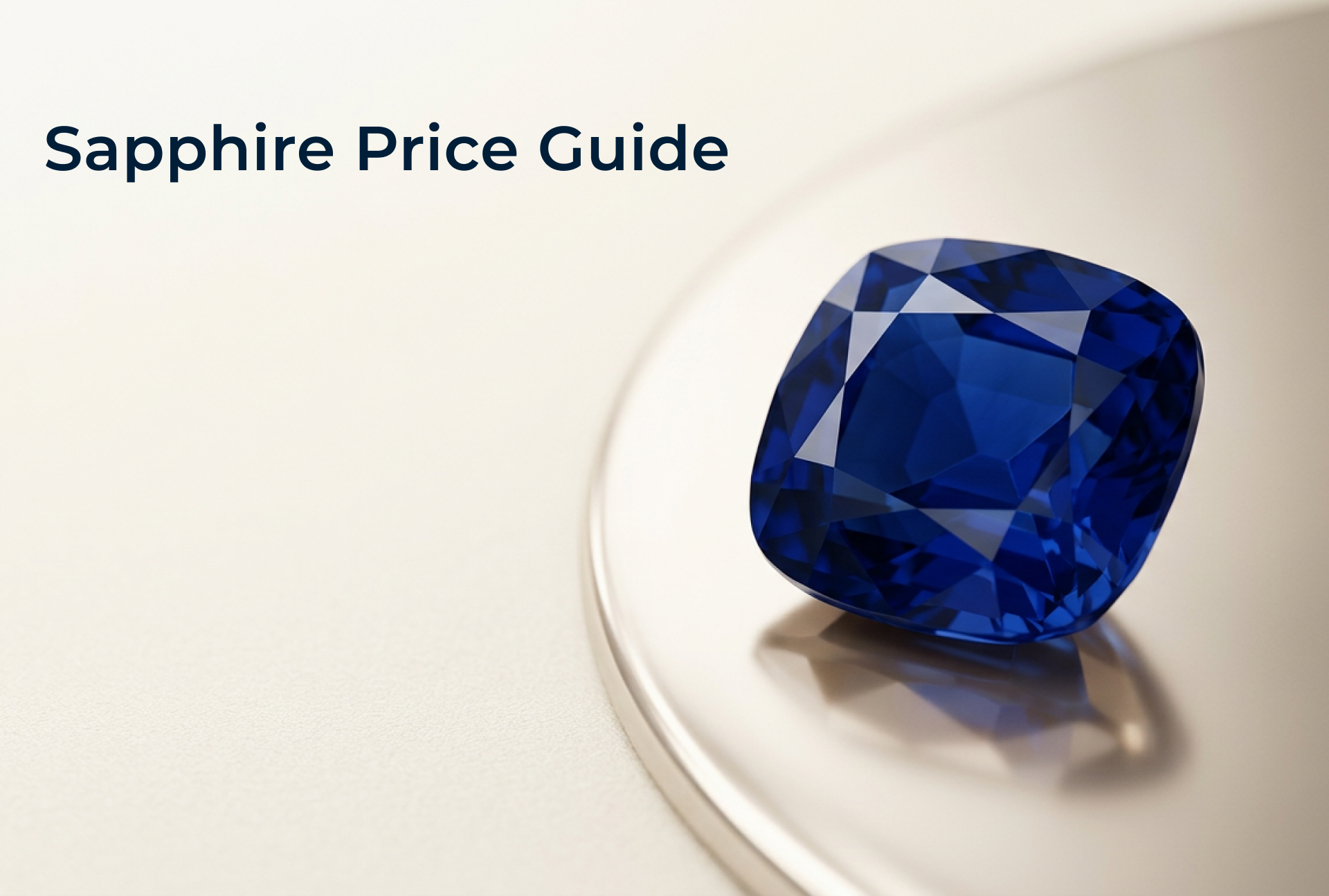
Sapphire is one of the most precious and durable gemstones in the world. Famous for its deep blue colour and royal elegance, sapphire represents wisdom, loyalty, and power. It has been cherished by royalty, collectors, and astrologers for centuries.
Whether you are planning to buy sapphire for jewellery, astrology, or long term investment, understanding sapphire gemstone prices, quality factors, and authenticity is essential. This buyer’s handbook explains everything you need to know before purchasing a sapphire gemstone in 2026.
What Is a Sapphire Gemstone and Why Is It So Valuable?

A sapphire gemstone belongs to the corundum mineral family, which is known for its exceptional hardness and durability. Blue sapphire is the most popular variety, but sapphires also occur in yellow, pink, green, purple, and white shades, known collectively as fancy sapphires.
The rich blue colour of sapphire is caused by iron and titanium. Stones with deeper, vibrant blue tones and good clarity are considered more valuable in the gemstone market.
Key Features of a Natural Sapphire Gemstone
The following characteristics help identify and evaluate sapphire gemstones:
- Color: Light blue to deep royal blue
- Hardness: 9 on the Mohs scale
- Transparency: Transparent to translucent
- Luster: Vitreous (glassy shine)
- Durability: Extremely high, suitable for daily wear
Sapphire Gemstone Price in India (2026 Estimate)

Sapphire gemstone prices in India depend on several factors, including colour quality, origin, treatment, carat weight, and certification. Natural and untreated sapphires are the most expensive, while commercial-grade stones are more affordable.
Imported sapphires from reputed origins such as Kashmir and Sri Lanka command premium prices due to rarity and superior colour.
| Quality Grade | Price Range (₹ per carat) |
|---|---|
| Low Quality | ₹1,500 – ₹5,000 |
| Medium Grade | ₹5,000 – ₹25,000 |
| Good Quality | ₹25,000 – ₹80,000 |
| Premium Grade | ₹80,000 – ₹6,00,000+ |
Note: Genuine Kashmir sapphires can exceed ₹15 lakh per carat.
Factors That Affect Sapphire Gemstone Price and Quality

Several visual, physical, and commercial factors determine the final price of a sapphire gemstone. Understanding these factors helps buyers evaluate value correctly and avoid overpaying.
No single factor decides price on its own—overall balance and quality matter most.
1. Sapphire Color Quality (Most Important Price Factor)
Color is the most critical factor in sapphire gemstone valuation. The finest sapphires display a deep, vivid blue with strong saturation and medium tone.
The most desirable shade is often described as royal blue or cornflower blue, which commands the highest prices.
Pale, greyish, or overly dark sapphires are less valuable.
2. Sapphire Clarity and Natural Inclusions
Most natural sapphires contain inclusions, which are acceptable and help confirm authenticity. However, too many inclusions reduce brilliance and transparency.
High-quality sapphires appear clean to the naked eye.
Minor inclusions lead to higher value.
Heavy inclusions or cloudiness lead to lower price.
Completely flawless sapphires are rare and expensive.
3. Sapphire Cut and Shape Impact on Value
The cut of a sapphire affects how well it reflects light and displays colour. A well-cut sapphire appears brighter and more evenly coloured.
Poor cutting can make even high-quality stones look dull.
| Cut Type | Price Impact |
|---|---|
| Oval / Cushion | Highest |
| Round | High |
| Pear / Emerald | Medium |
| Cabochon | Low |
Oval and cushion cuts are the most popular shapes for sapphire jewellery.
4. Sapphire Carat Weight and Price Growth
Larger sapphires are rarer, especially in fine quality. As carat weight increases, sapphire prices rise sharply.
Large sapphires are often used in luxury rings and statement jewellery.
| Size | Price Trend |
|---|---|
| < 1 ct | Affordable |
| 1–3 ct | Premium |
| 5+ ct | Luxury |
Prices increase exponentially rather than linearly with size.
5. Sapphire Origin and Mining Location
The origin of a sapphire gemstone significantly influences its reputation and market value. Certain regions are known for producing superior-quality sapphires.
| Origin | Quality | Price |
|---|---|---|
| Kashmir | Best | Highest |
| Sri Lanka (Ceylon) | Excellent | High |
| Myanmar (Burma) | Very Good | High |
| Madagascar | Good | Medium |
| Thailand | Commercial | Moderate |
Kashmir sapphires are considered the global benchmark.
6. Sapphire Treatment and Heat Enhancement
Most sapphires undergo heat treatment to enhance colour and clarity. This practice is widely accepted in the gemstone industry.
However, untreated sapphires are much rarer and command significantly higher prices.
| Treatment Type | Value |
|---|---|
| Untreated | Highest |
| Heat Treated | Good |
| Diffusion / Heavy Treatment | Low |
Always request full treatment disclosure before purchasing.
Certified vs Non-Certified Sapphire Gemstones

Certification verifies the authenticity, treatment status, and sometimes the origin of a sapphire gemstone. It protects buyers from synthetic or imitation stones.
For high-value purchases, certification is strongly recommended.
Certified sapphires offer better resale value and buyer confidence, while non-certified stones carry higher risk.
Sapphire Gemstone Benefits in Astrology (Neelam Stone)

In astrology, blue sapphire (Neelam) is associated with Saturn (Shani) and is believed to deliver fast results. Due to its intensity, sapphire should only be worn after expert consultation.
Astrological Benefits of Sapphire
The following benefits are traditionally associated with sapphire gemstones:
- Enhances discipline and focus
- Improves career stability
- Reduces financial obstacles
- Strengthens mental resilience
Sapphire Jewellery Price Range in India
Sapphire jewellery prices depend on gemstone quality, metal purity, design complexity, and brand reputation. Diamond-studded and designer pieces are priced higher.
| Jewellery Type | Approx Price |
|---|---|
| Ring | ₹6,000 – ₹1,20,000+ |
| Pendant | ₹8,000 – ₹1.8L+ |
| Earrings | ₹15,000 – ₹2.5L+ |
| Necklace | ₹70,000 – ₹8L+ |
How to Buy a Sapphire Gemstone: Expert Buying Tips
Buying a sapphire gemstone requires careful evaluation and patience. A rushed purchase often leads to low-quality stones.
Always verify documentation, compare options, and inspect stones in natural light.
Frequently Asked Questions (FAQs)
Q1. What is the minimum price of sapphire in India?
Low-quality sapphires in India usually start from around ₹1,500 per carat. These stones often have lighter color, visible inclusions, or commercial-grade quality. Prices increase significantly with better color, clarity, origin, and certification.
Q2. Which sapphire is the best in the world?
Kashmir sapphires are considered the finest in the world due to their rare velvety blue color and limited availability. Because the mines are no longer active, genuine Kashmir sapphires are extremely rare and command very high prices in the global market.
Q3. Can I wear sapphire daily?
Yes, sapphire is highly suitable for daily wear because it has a hardness of 9 on the Mohs scale, making it very durable. However, it should still be worn in protective settings and removed during heavy physical activities to avoid damage to the jewellery setting.
Q4. How long does sapphire last?
With proper care and maintenance, sapphires can last a lifetime and even generations. Their high durability makes them resistant to scratches, but regular cleaning and safe storage help preserve their brilliance and overall appearance.
Q5. Is sapphire better than ruby or emerald?
Sapphire, ruby, and emerald are all precious gemstones, and none is universally “better” than the others. Sapphire is valued for its durability, ruby for its intense color, and emerald for its rarity and beauty. The value ultimately depends on quality, origin, treatment, and personal preference.
Related Blogs
Emerald Ring (Panna): Benefits and How to Wear it as per Astrology
Leave a Reply